You can pick a movie in about two minutes by answering four questions before you open any app: how long you have, how much energy you have, whether you are watching alone or with someone, and whether you want something familiar or new. It's 9 p.m. on a Friday. You have 90 minutes before you need to be asleep like a responsible person. You open Netflix, then switch to HBO Max because something caught your eye in a notification, then remember there was a movie someone mentioned at work, then Google that movie, find it's only on a service you don't subscribe to, and return to Netflix. Forty minutes later you're no closer to a decision, and now you're also vaguely resentful, which is not a feeling anyone intends to bring to a Friday evening.
This is not a streaming catalog problem. The catalogs have never been larger. This is a process problem, and the process is fixable in about two minutes if you run it before you open any app. The framework has four questions. They have to be answered in order. Each one cuts the viable option space in half, which means by the time you actually open a streaming app, you're choosing from a set small enough to make a real decision.
Why does scrolling make the decision harder, not easier?
The intuitive theory of movie selection goes something like this: more options visible on screen means a better chance of finding something good. This theory is wrong. Barry Schwartz laid out the mechanics in The Paradox of Choice: beyond a certain threshold, more visible options don't produce more satisfaction, they produce more time spent deciding, more anticipated regret about the option you didn't pick, and more anxiety about whether you made the right call. Streaming apps have crossed that threshold by a significant margin.
The deeper issue is that scrolling conflates two activities that should be kept separate: setting constraints and browsing options. Constraint-setting is a question-answering activity. Browsing is a stimulus-response activity. When you do them simultaneously, which is what scrolling forces, neither one works properly. The constraints keep shifting as new posters catch your eye, and the browsing never terminates because the constraints haven't been fixed. The session extends until you're too tired to keep going, at which point you pick something arbitrary or give up entirely.
The framework inverts this. You answer the four questions before you open any app, which fixes the constraints. Then you open the app and browse inside a defined space. The browsing phase is fast when the space is small, and the space becomes small the moment you've answered four real questions about your situation. The whole thing runs in under two minutes. What takes time is the part people skip, which is the questions themselves.
Question 1: how long do you actually have?
This is the most important constraint and the one most frequently lied about. "However long I want" is not an answer. It's a way of expanding the search space to include every film ever made, which is not useful. A specific runtime constraint cuts the viable set immediately and more dramatically than any other single filter.
Three categories cover most situations. Under 90 minutes is the tight window: you have somewhere to be or somewhere to be tomorrow, and anything longer is going to create friction at the end. 90 to 120 minutes is the standard watch: a full evening commitment without requiring you to clear your entire schedule. Over two hours is the committed watch: you've explicitly decided this is what tonight is for, you've planned around it, and you're prepared for the experience to extend past the point where you'd normally call it.
The question to answer is not how long you'd ideally like to watch in theory. It's when you realistically need to be done. A film that runs 2 hours and 40 minutes, started at 10:30 p.m. when you're up at 6 a.m., is not a viable option regardless of its quality. Starting it is a commitment to either finishing it exhausted or stopping halfway and feeling unsatisfied about that. The runtime filter isn't about what sounds appealing. It's about what's actually compatible with your evening.
Answer this one first, accurately, and commit to it. The other three questions build on it.
Question 2: what is your energy level right now?
Three tiers, and the real answer matters more than the aspirational one.
Depleted means you want something that requires nothing from you. Low stakes, familiar structure, comfort over challenge. A film where you can look at your phone for 30 seconds and not lose the plot. Genre films with reliable conventions, comedies you've half-seen before, anything where the outcome is not ambiguous and the viewing experience does not demand active interpretation. This is not a criticism of your taste. Depleted is a real state and there are good films for it.
Moderate means you can follow a plot and care about characters, but you're not up for something that requires patience or demands interpretation. Solid narrative filmmaking with clear stakes. Thrillers that keep moving, dramas where you know what you're supposed to feel and feel it, comedies that are actually funny rather than dry and slowly rewarding. Still accessible, but with real craft behind it.
High means you want something that challenges you. Slow cinema, demanding narratives, films that operate in a register that only rewards sustained attention. Anything where the point is not immediately obvious and you need to bring something to the viewing experience to get something back from it.
The critical thing here: this question is about quality matching, not quality evaluation. Watching Tarkovsky on a Thursday night when you're depleted is not an act of cinematic virtue. It's a setup for resentment, clock-watching, and a vague feeling that you've failed at appreciating something you intellectually respect. Match the film to the viewer you actually are tonight, not the viewer you aspire to be on a hypothetical Saturday afternoon with nowhere to be.
Question 3: are you watching alone or with someone?
This changes the viable set dramatically and needs to be answered before browsing, not discovered as a complication midway through the session. The two situations have almost no overlap in their failure modes, so solving them with the same process produces bad results in both.
Solo watching opens categories that don't survive the social filter: slow cinema and demanding narratives that require individual patience; genre films the other person doesn't share your taste for; foreign-language films, which carry the small but real social friction of subtitle negotiation with a partner who'd rather not; documentaries on subjects that are specific interests rather than shared ones. When you're watching alone, the only constraint is your own state, which is what the first two questions addressed. The set that survives is wider, more specific to you, and more likely to produce genuine satisfaction.
Group watching introduces a shared constraint: the film needs to be compatible with every person present. That means ruling out anything that requires prior context one person might not have, anything one person has strong negative feelings about, and anything that depends on a particular mood alignment that not everyone will share. The correct process here is to answer this question first, acknowledge the shared constraint, and then look for options. The incorrect process is to start browsing individually and then negotiate between specific titles, which converts the decision into a veto exercise where the narrowest taste wins by elimination.
Set the solo vs. group constraint, then look at options. Not the other way around.
Question 4: do you want something known or new?
This is the final filter and the one most people skip entirely, defaulting to "new" without considering whether that's actually the right answer for tonight.
"Known-liked" means a film you've seen and genuinely liked, watched with full attention this time rather than as background. A deliberate rewatch. "New" means something you haven't seen. Both are valid answers. The point of asking the question explicitly is that a rewatch is often a more satisfying evening than a new film that might not land, and people tend to underweight it as an option because it feels like settling.
If you're depleted, slightly social, and want something low-risk, a rewatch of something you genuinely love is frequently the right answer, and the psychology of the comfort rewatch explains why. You already know the film works for you. You can be less than 100 percent present and still get something from it. There's no risk of the first 20 minutes failing to hook you, which is the specific failure mode of new films on nights when your energy is low. If you're energized, patient, and want to discover something, new is right. But commit to the answer before you open any app. "New or rewatch?" is a question you can answer in 10 seconds. Left unasked, it generates 20 minutes of halfhearted browsing interrupted by "wait, what about just rewatching something."
The decision isn't about finding the perfect film. It's about finding a good film that matches who you are tonight. Those are different problems, and only one of them is solvable in under two minutes.
What are the anti-patterns that extend the decision?
Each of the following is a common behavior that feels productive during a movie-picking session and is, in fact, extending the session without getting you closer to a choice. Naming them helps because they're all recognizable the moment you're doing them, and recognizing them is most of the fix.
Reading synopses mid-scroll
You've seen a title, the title sounds interesting, the genre matches your constraints, and then you click through to read the synopsis. The synopsis is not a decision tool. It's marketing copy designed to make the film sound compelling to the widest possible audience. Reading it during the decision phase doesn't tell you whether you'll like the film; it replaces the title's natural intrigue with a summary that's usually less interesting than the title suggested. If the title, genre, and runtime match your four constraints, add it to a mental short list of two or three candidates. Save the synopsis for after you've narrowed it to finalists, not during the main browsing pass. Every synopsis read during the browsing pass adds 90 seconds to the session without meaningfully reducing the choice space.
Mid-decision rating checks
You're looking at a film. The title sounds right. And then you go to check the Rotten Tomatoes score. You find the score, and now you're reading a critic blurb from 2019, and then you're reading the audience score breakdown, and then you're comparing it to a similar film's score to see whether the 72% is high or low relative to the genre. Twenty minutes later you know the critical consensus on four films and you still haven't picked one.
Ratings are not a substitute for taste, and the gap between critic and audience scores matters more than either number. A 72% film that matches your four constraints is a better choice tonight than a 95% film that doesn't. The score tells you how a mixed population of critics responded to a film on average, across all possible viewing conditions and states of mind. It tells you almost nothing about whether this film, on this night, given your specific energy level and available time, will be satisfying. Use ratings as a rough filter before you've built your constraint set, not as a decision tool once you've already narrowed to candidates.
The "what do YOU want?" loop
This one has its own guide for couples and groups, but the short version: the reciprocal politeness trap is a decision deadlock disguised as generosity. Both parties want to appear accommodating, so neither states a preference. Neither gets what they actually want. The loop continues for 35 minutes until someone picks something at random while the other person wished they'd been more decisive. This is a bad outcome for everyone involved and it's entirely preventable.
The fix is a structural one: whoever suggests the session proposes three specific options before any browsing happens. Three real titles, not "I don't know, comedy maybe?" The other person picks one of the three. Three picks from one person, one choice by the other. The decision is made in 90 seconds. The person who chose the three titles has genuine input over the genre and tone. The person who picked from the three has final authority over the specific film. Both people have done something real, and neither has capitulated to the other.
Filter before you scroll
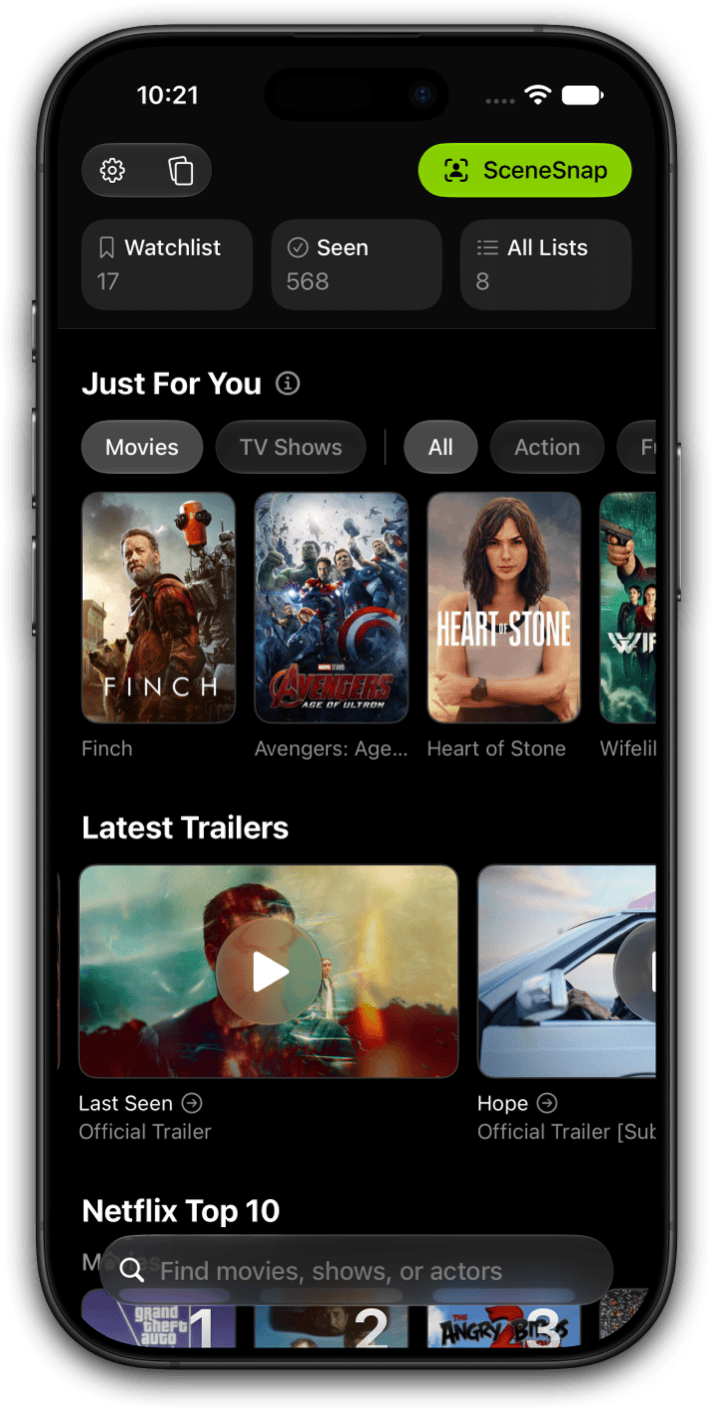
Limelight's runtime, mood, and platform filters set your constraints in 30 seconds before you start browsing.

How does Limelight compress this into 30 seconds?
The four questions map directly to Limelight's filter set, which is why the app was built the way it was. The same four answers drive the What to watch quiz if you would rather be asked than filter. Runtime filter handles question one: set a max runtime before you browse and the results that come back are already within your window. Mood filter handles question two: a handful of options (light, engaging, challenging, comfort) correspond closely to the depleted, moderate, and high energy tiers. The solo vs. group distinction is handled by whether you're browsing your personal Watchlist or building a shared one. The known vs. new question is answered before you open the app, and if you're rewatching, you don't need the app at all for the initial selection.
The difference between arriving at Limelight with your constraints already set versus arriving without them is the difference between a 30-second browse and a 30-minute scroll. With constraints, you're looking at a filtered result set that matches your actual situation tonight. Without them, you're looking at everything, which is what produces the 9 p.m. Friday scenario described at the top of this article.
The framework doesn't require Limelight. You can run it on paper, or in your head, or as a two-minute conversation before anyone touches a remote. But if you're going to open an app anyway, opening one that lets you set the four constraints in 30 seconds before you see any titles is a better starting point than opening one that shows you everything immediately and hopes something jumps out. Something rarely just jumps out. That's the whole problem.
Putting it together
Four questions, in order, before you open anything. How long do you have: under 90 minutes, 90 to 120, or over two hours. What is your energy level: depleted, moderate, or high. Are you watching alone or with someone. Do you want something known or new. Answer them accurately, commit to the answers, and then open an app. The browsing phase, with constraints already set, takes under two minutes. You'll have a film running before the 9 p.m. version of you would have made it past the first streaming app.
The point of the framework isn't to guarantee a great film every night. It's to guarantee a film, selected from a set that matches who you actually are tonight, without spending the best part of the evening deciding. The occasional great film from a long search is not worth the average outcome of all the sessions where the long search produces nothing at all. Find a good match. Start it. The watching is the point.
Frequently asked questions
The four questions narrow the constraint space, but they don't automatically surface a title. If you've answered them and still don't have a specific film, the next step is to open your Watchlist and filter it by the constraints you've set. If your Watchlist is empty or unhelpful, set a time limit: browse for five minutes, take the first title that fits all four constraints, and start it. The decision being imperfect is fine. The film being unwatched is not.
Not inherently, but synopsis reading during the decision phase is expensive. A synopsis takes 90 seconds to read, it usually replaces the title's natural intrigue with a marketing summary, and it rarely changes whether you want to watch something. If the genre and runtime match your constraints and the title sounds interesting, add it to a short list. Read synopses after you've built the short list, not during the browsing phase when each synopsis extends the session by another 90 seconds.
You don't need them to adopt the framework explicitly. Before you sit down together, answer questions one through three yourself: how long you have, what your energy level is, and that you're watching with someone else. Then come to the session with three specific options that fit those constraints. When you propose three real titles instead of asking an open question, the other person can respond to something concrete. The framework running on your end alone is enough to shorten the session significantly.
Moderate is the widest category, which means it does the least narrowing work. If you're at moderate energy, the other three questions carry more of the filtering load: runtime, solo vs. group, and known vs. new. A 90-minute new film you're watching alone is a manageable set even with moderate energy as your only mood constraint. The energy question is most powerful at the extremes: depleted and high. At moderate, let the other constraints do more work.
It works for TV with one adjustment: replace "how long you have" with "how many episodes you have time for." A single episode is roughly the depleted or short-runtime equivalent. The energy question applies directly. Solo vs. group applies directly. Known vs. new applies directly. The main difference is that TV shows have a sunk-cost dynamic that films don't: you're more likely to continue a mediocre show past a few episodes than to rewatch a mediocre film. Factor that in when choosing between a new show and a rewatch.
Start with constraints, not options
Limelight's filters compress the four-question framework into 30 seconds. Set them once, browse what actually fits. Free.