When nobody can agree, cap the decision at five minutes, agree on one shared constraint, have each person name three films that fit it, and flip a coin between the last two. It starts as a reasonable question. "What do you want to watch?" "I don't know, what do you want?" Thirty minutes later, you've scrolled through three streaming apps, rejected eight suggestions without quite finishing the sentence about why, and the person who suggested movie night in the first place is now questioning all of their decisions. You end up watching the first episode of something nobody was sure about and falling asleep.
This is a design problem rather than a compatibility problem. The trouble is rarely that you and whoever you're watching with have irreconcilably different tastes. It is that the decision structure is badly designed from the first word. Infinite options with no framework produce paralysis, and paralysis produces bad outcomes. The fix is a process, not a better algorithm for picking films.
Why does picking a movie together feel harder than it should?
Several things are happening at once. The most significant is decision fatigue, which is real and measurable and predictable. By the time most people sit down for a movie, they've made hundreds of small decisions already that day. The cognitive load of open-ended film selection, from a catalog of tens of thousands of options, lands at the exact moment when the brain's appetite for deliberation is lowest. The result is the same as asking someone to pick a restaurant at 9 p.m. after they've been making decisions since 7 a.m.: the process stalls.
The second thing happening is veto safety. Rejecting a suggestion is always lower-risk than proposing one. If you propose a film and the other person doesn't want to watch it, you've lost something. If you reject every proposal and offer nothing in return, you haven't technically done anything wrong. This asymmetry produces the loop where nobody proposes anything and the session stalls at "I don't know, what do you want."
The third issue is interface design. Streaming apps are built for discovery, not for decision-making. Browsing is pleasant; choosing is hard; the apps are optimized for the former and ignore the latter. Scrolling through a grid of 80 posters is not a useful input to the decision of what to watch tonight. It's a way to feel like you're making progress without actually getting closer to a choice.
And then there's the "I don't care" answer, which deserves its own paragraph. "I don't care, you pick" sounds like generosity. It is often a trap. When the picker chooses something and the other person turns out to actually have opinions about it after all, the person who picked is now responsible for a bad outcome they were explicitly invited to own alone. If you genuinely don't care, say so and commit to it. If you have preferences, say so and name them. The middle position, where you claim not to care but reserve the right to be disappointed, is what extends the process by forty minutes.
What is the four-step movie-picking framework?
The framework is designed to break the loop at each of the four points where it typically stalls. It's not complicated, and it works best if you agree to it before you sit down rather than negotiating it during the session when everyone is already tired.
Time box the decision
Five minutes maximum. Set an actual timer. The constraint sounds arbitrary but it works because it shifts the goal from "find the perfect film" to "find a good film before the timer ends." Those are different goals, and the second one is achievable. Perfectionism about film selection is the engine of the loop. A hard time limit disables it.
Agree on one constraint first
Before anyone proposes a specific film, agree on a single parameter: genre, runtime, mood, or platform. Just one. The constraint cuts the option space from tens of thousands of films to something manageable. "Comedy on Netflix" is a decision environment. "Anything" is not. This step also surfaces the actual disagreements before they're attached to specific titles, which makes them easier to resolve. You can negotiate "comedy vs. thriller" faster than you can negotiate two specific films.
Three picks each, no more
Each person names exactly three films that fit the constraint from Step 2. No more. The limit forces real preferences to surface. With three picks on the table, you have a working set of options. With unlimited picks, you have another browsing session in a different format. The person who says "I can't think of three" should browse their Watchlist, not open a streaming app. That's what the Watchlist is for.
The coin flip decides the finalists
If you arrive at two films that both people could live with, flip a coin. This is not random decision-making. It's a commitment device. The coin flip removes the social calculus of "who gives in this time" from the equation. The loser gets priority next time, which should be stated explicitly and remembered. Over enough sessions, the system is perfectly fair. On any given night, it ends the session.
How does the framework change for couples?
The veto-safety problem is most acute in couples because the social stakes of losing feel more personal. If a friend doesn't want to watch your film, that's fine. If a partner doesn't want to watch your film, it can feel like a small rejection of your taste, your judgment, or you specifically. That feeling is worth naming, because naming it makes it easier to set aside.
A useful couples-specific addition is the genre amnesty round. The person who gave in last time gets one free pass: they can skip the constraint-negotiation step and name their genre directly. The other person then picks from that genre. This builds in a visible equity mechanism that makes giving in feel less like losing and more like banking a future pick. Track it loosely, not obsessively. The point is that both people feel the system is fair over time, not that the spreadsheet balances perfectly.
Couples also benefit from maintaining separate Watchlists actively, not just as archives, which is the whole point of a watchlist system that works. When each person adds films throughout the week as they encounter them, the picking session starts with a pool of real candidates rather than blank-slate browsing. The decision reduces to choosing between films both people already wanted to see, which is a much faster and more satisfying version of the problem.
How does it work for friend groups?
Groups of three or more have a different failure mode: majority rule produces resentment. If four people vote and three choose a horror film, the one person who doesn't watch horror is now stuck. The session might technically be decided, but it doesn't feel good for everyone involved, and the social cost gets paid somewhere.
The variant that works better for groups is approval voting. Everyone marks which of the available films (three picks per person in a five-person group is 15 films, which is too many, so cap total picks at nine by giving each person three marks to distribute however they choose) they'd be genuinely happy watching. The film with the most approvals wins. More usefully: any film with zero disapprovals wins automatically over any film with higher approval but at least one strong objector. This is a more socially stable outcome even if it's not the majority preference.
For larger groups, designate a movie-picker in advance who has full authority and ask everyone to text them one preference constraint before the session. The picker incorporates those constraints and decides. A benevolent dictatorship is often more efficient and more satisfying than a negotiated committee outcome when the group is large enough that real consensus is impossible.
How does it work for families with kids?
Kids don't have decision fatigue about movies. They have genuine preferences and they'll tell you exactly what they are, repeatedly, for several minutes. The problem isn't getting kids to decide; it's that their unfiltered preferences often conflict with adult needs (subtitles, violence, length, the specific film you've been meaning to watch for three months).
The most functional structure is a two-stage filter. Adults filter first: spend 10 minutes building a shortlist of five to eight films that are age-appropriate, available on current subscriptions, and at a runtime that fits the evening. Then let the kids choose from that list. They get real agency over the outcome and the adults get a set they're comfortable with. The key is that the shortlist has to feel genuinely optional to the kids. If it's one film with four decoys, they'll notice.
A separate rule that pays off over time: one adult pick per month, announced in advance. It works best inside a movie night routine you actually keep. Adults pick a film they want to watch that the kids will join for. State it clearly: "This month I'm picking, and I'm picking Spirited Away." Kids understand rules better than they understand last-minute overrides. If the adult pick comes as an announcement rather than a negotiation, there's less friction around it.
What about long-distance watch parties?
Synchronized browsing doesn't work well over distance. Latency turns "what about this one?" into a half-second conversation delay and a screen share that's slightly out of sync, and the session degrades fast. The fix is to separate the picking from the watching more explicitly than you would in person.
The cleanest protocol: designate a picker for the session in advance, share a shortlist of five films by text or group chat at least 30 minutes before the start time, and collect preferences by reply. Pick the film with the most enthusiasm. Once the film is chosen, everyone uses a synchronized playback tool like Teleparty for Netflix, Amazon Watch Party for Prime, or the native Discord Watch Together feature. These tools handle the synchronization and the chat so the session feels shared rather than parallel.
The advance notice matters more than it sounds. Part of what makes synchronized watching work is that everyone feels settled when they start, not rushed and still deciding. A film that's been agreed on for 30 minutes feels different to watch than one that was chosen 90 seconds before the opening titles.
The film doesn't need to be perfect. It needs to be watched. Analysis paralysis about finding the ideal choice costs more than just starting a good-enough one.
What's the one rule that matters more than the system?
The film doesn't need to be perfect. It needs to be watched. This sounds obvious, but it's the thing most people implicitly reject when they spend 45 minutes searching for a film and then give up and rewatch something familiar. The sunk-cost of a mediocre film is 90 minutes. The sunk-cost of a stalled picking session can be an entire evening, plus a low-grade feeling that movie night wasn't worth it.
The framework above is designed to get you to a good film quickly, not to guarantee the best possible film every time. Those are different goals. A reliable process that produces a good film in five minutes is worth more than an unreliable process that occasionally produces a great film after 40 minutes of negotiation. The occasional great pick from the long process is not worth the average outcome of all the sessions where the long process produces nothing at all.
Start something. You can always turn it off after 20 minutes if it's genuinely not working. Giving a film 20 minutes before deciding it's wrong is a better use of time than spending 40 minutes in pre-session paralysis. Most films that feel iffy in the first five minutes are fine by the 15-minute mark. Most sessions that stall don't recover on their own. The asymmetry favors starting. If you want to tighten the decision window even further, the 2-minute movie picker is a strict four-question framework for getting to a pick before you open any app.
Build the shortlist before you sit down
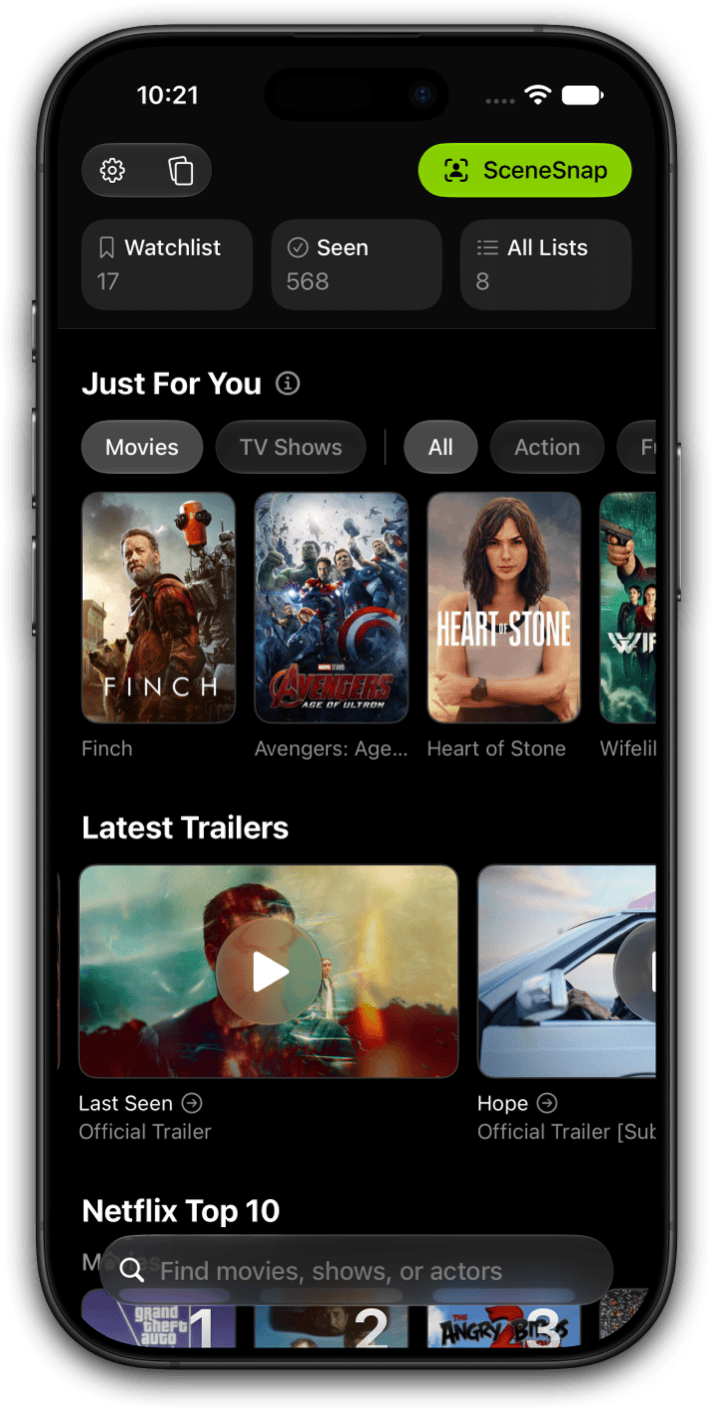
Limelight lets you maintain a Watchlist and share it directly. Build your pool of candidates during the week and the picking session starts with real options, not a blank streaming app.

The short version
Five minutes, one constraint, three picks each, coin flip. That's the framework. Adjust it for your specific situation: genre amnesty for couples, approval voting for groups, adult filter-then-kids-choose for families, advance shortlist for long-distance. The underlying principle is the same across all of them: structure the decision before you're tired, not after. The browsing phase and the decision phase should be separate. The deciding happens in five minutes. The watching happens for the rest of the evening.
And when even five minutes of process feels like too much ceremony, we built a shortcut: the What to watch quiz takes six taps (mood, company, time, genres, era, dealbreakers) and hands you three picks with streaming logos attached. It's the constraint step from this framework, automated.
Limelight exists partly because the watchlist and discovery problems and the decision problem are related. When you've been adding films throughout the week to a real Watchlist, the picking session starts with a pool of options that both of you actually want to see. The negotiation is between real preferences, not between blank-slate scrolling sessions that generate more options than decisions. That's a better starting point. The framework handles the rest.
Frequently asked questions
The time box expiring without a decision is data, not failure. It usually means nobody actually proposed anything concrete. Everyone was waiting for someone else to go first. If the five minutes runs out without a film on the table, the person who suggested movie night picks. That rule alone, agreed on in advance, prevents the time box from expiring indefinitely.
Shared watchlists are genuinely useful here. When both people maintain a Watchlist in advance, the picking session starts with real options rather than a blank slate. Limelight lets you share a list directly, so one person can browse during the week and add candidates without any commitment, and the decision happens from that pre-assembled pool rather than from infinite scroll.
Perpetual deferral isn't generosity. It's a way of avoiding responsibility for the outcome. If one person always says "whatever you want," ask them to name three films they'd be happy watching before the session starts. The three-pick structure makes it harder to defer because the question is specific: not "what do you want to watch" but "name three films from your Watchlist." Most people can answer that.
Narrow taste is fine. It just changes the math. If one person will only watch thrillers and comedies, the constraint in Step 2 of the framework should be "genre: thriller or comedy" so that person's three picks aren't automatically veto-able. The framework works best when the constraint accommodates the narrowest taste rather than fighting it. You're trying to find something everyone will watch, not something everyone's equally excited about.
Before. Picking after you've already sat down adds physical inertia to decision fatigue, which reliably extends the browsing phase. The best version of the framework runs the decision 30 to 60 minutes before you intend to start. Each person adds their three picks via text or a shared list, you apply the coin flip, and the film is already decided when you sit down. The couch becomes a place to watch something, not a place to negotiate.