A movie night routine that survives contact with a real week has six parts: protected time, a film picked in advance, an environmental reset, a short ritual before, a short ritual after, and no phones mid-watch. I want to draw a distinction that took me longer than it should have to make explicit: there's a difference between watching a film and having a film night. The film is the same either way. What differs is everything around it, and that everything turns out to matter enormously. When I started treating movie night as a deliberate thing rather than an accidental one, the films themselves didn't change. But my relationship to them did. I remembered more. I thought about them longer. I looked forward to them in advance. The ritual, it turns out, is the point.
What follows is the framework I've built over a few years of watching intentionally. It has six components. You don't need all six to feel the difference, though the more you have in place, the more the whole thing coheres. Three or four is enough to start.
Why does a movie night routine change the experience?
The short answer is anticipation. The longer answer is that attention is not something you bring automatically to a film by pressing play. Attention is something you cultivate, and the conditions you create before, during, and after a film have a direct effect on how much of yourself you're able to bring to it.
Think about the difference between two versions of the same evening. In the first, you arrive on the sofa at 9pm with nothing decided. You spend 40 minutes scrolling through options, argue gently about what mood you're in, settle on something that neither of you is especially excited about, and press play while your brain is still processing the decision fatigue of the selection process. The film runs. You watch it. By the time it's over, you're tired, and the experience fades almost immediately.
In the second version, you decided 24 hours ago what you were watching tonight. You've been looking forward to it in a low-key way throughout the day. You know what's playing, which creates a specific, directed kind of anticipation rather than the vague idea of "watching something." When you sit down, the film is already waiting. The evening has a shape before it starts.
The film is the same in both versions. The experience is not. I've noticed this repeatedly in my own watching: the films I've been most moved by were rarely the ones I stumbled into. They were the ones I arrived prepared for, even modestly. A routine creates the conditions for a film to land. Without those conditions, most films simply pass through you.
Component 1: Protected time
The first component, and the one the rest rests on, is picking a time and protecting it. Unscheduled movie nights happen in theory and get replaced in practice. A standing appointment with a specific film night, even a rough one, is more durable than an open intention.
The mechanism matters more than the specific day. Some people need a calendar block. Others need a verbal commitment with their partner or the people they're watching with. Others find that a habit anchor works best: every Friday after dinner, every Sunday before the week starts, every other Saturday. The anchor makes the commitment implicit rather than requiring a fresh decision each week.
Protection is the harder part. Movie night, when it's not defended, becomes the default thing that gets displaced when something better comes up, or when work runs long, or when energy is low and the sofa feels like enough without a film attached. The decision to protect movie night isn't about being rigid. It's about recognizing that the default state is not watching, and that you have to make an active choice to override it. A standing commitment makes that choice automatic rather than requiring willpower each time.
I use a simple rule: movie night doesn't get traded for convenience. It can move earlier or later in the week if something legitimate requires it, but it doesn't just disappear. The bar for cancellation is higher than "I don't feel like it tonight." That bar being explicit is the whole mechanism.
Component 2: The pre-picked film
This is the single change that has the largest impact on the experience, and it's the one most people skip. The research on this is consistent: US viewers spend an average of 12 minutes finding something to watch, according to Nielsen's 2025 Gracenote report. Those 12 minutes aren't benign. Decision fatigue is real, and walking into a film already mildly depleted by the selection process degrades the quality of the watching experience before the film has even started.
The fix is simple: pick the film before movie night, using the four-question picker or the What to watch quiz. Ideally 24 to 48 hours in advance, but even a few hours creates a meaningful difference. The evening starts with a film already waiting rather than a problem to solve.
The pre-pick does two things. First, it eliminates the decision process from movie night itself, which means you arrive at the film with your attention intact rather than tired from negotiating. Second, it creates anticipation. Knowing what you're watching tonight means you've had hours to look forward to something specific. That specificity is part of the pleasure. Looking forward to watching "something good" is diffuse. Looking forward to watching a particular film you chose yesterday is focused. The experience is different.
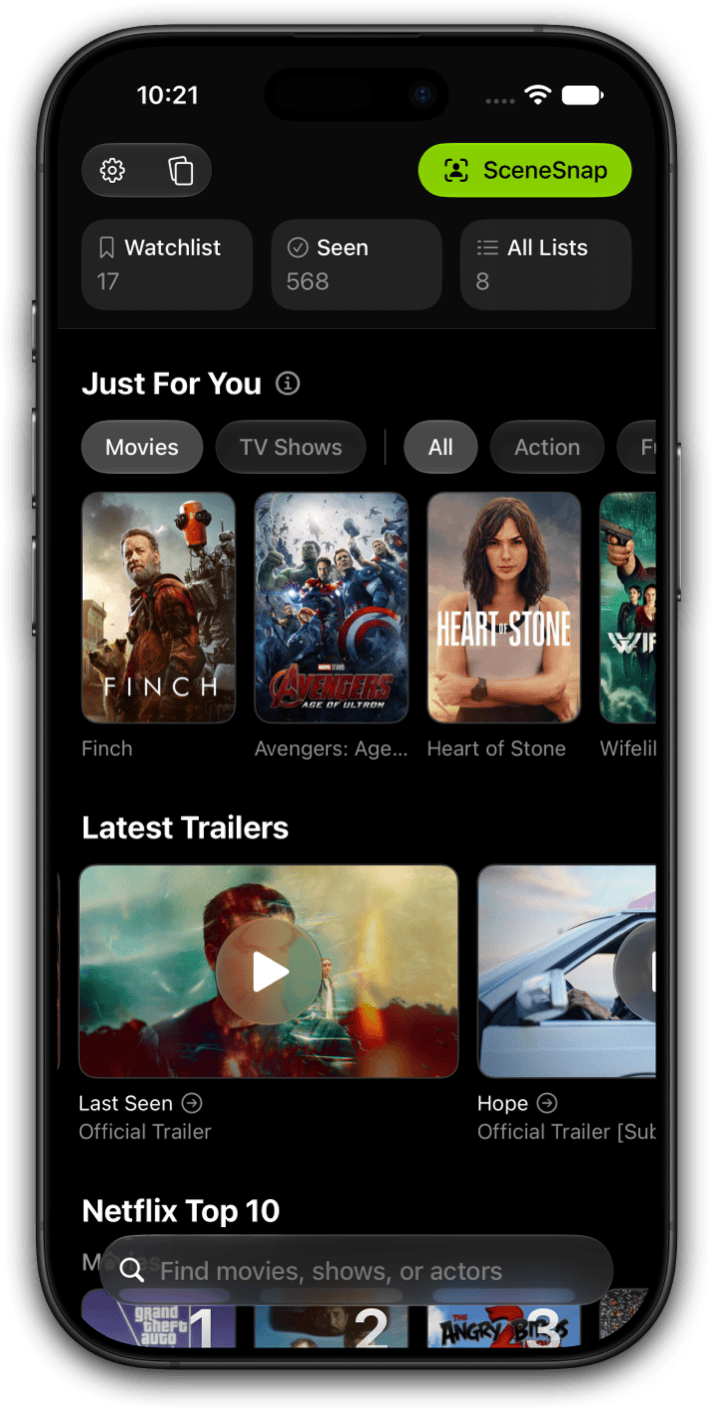
The practical tool for this is a watchlist system. Limelight's watchlist is built for exactly this purpose: add films as you encounter them, whether you read about them, hear about them from someone, or discover them through a director's filmography. When movie night approaches, draw from the list. The pre-pick is then a one-tap decision rather than a cold-start from nothing. The list does the discovery work in advance; the pre-pick does the selection work in advance; movie night gets to just be movie night.
Component 3: Environmental reset
Cinema feels different from home watching even when the film is the same, which is part of why comfort rewatches land the way they do at home. Part of that difference is social, but a significant part of it is environmental: the room is dark, the sound is loud, your phone is put away, and there's nothing else available to do. The environment primes a particular quality of attention before the film starts.
You can replicate a meaningful fraction of that effect at home with a small environmental reset. Not a production, not a ritual that requires setup time. Four things: lights down to watching level, which means the screen is the dominant light source in the room. Phone on do-not-disturb or, better, in another room. Snacks and drinks prepared before sitting down, not retrieved mid-film. The TV or projector already on when you sit down, not something to set up after.
These changes work because they create a sensory transition. They signal to your nervous system that this part of the evening is different from the ambient evening that preceded it. The transition is what matters, not the particulars. A lit room where your phone is still in your pocket and you're still mid-conversation about something else is a different physiological state than a dark room where you've settled, the phone is away, and the film is waiting. The first state produces distracted watching. The second produces something closer to the quality of attention you'd bring to a cinema.
The reset doesn't need to take more than five minutes. That's all it takes to change the conditions you're watching under.
Component 4: The before ritual
This one is optional, but I've found it meaningfully improves the quality of the watching experience, especially for films that ask a lot of the viewer. The before ritual is a brief pause, five to ten minutes, between the environmental reset and pressing play.
There are a few versions of this. The simplest: sit in silence for two minutes before starting. No phone, no conversation, just a brief settling. You're giving your nervous system a chance to stop processing the previous activity and arrive at the film. Most people skip straight from the chaos of the evening to pressing play, and then wonder why the first ten minutes of the film feel like they're watching through glass. The before pause is a transition that your attention needs and rarely gets.
A slightly more involved version: read one short piece about the film before watching. Not a full review, and definitely not a spoiler-laden synopsis. A director's statement, a paragraph of production context, or simply the year and country of origin if you know nothing about the film's background. This isn't research for its own sake. It's a way of directing your attention before the film starts, giving it something to hold onto as the opening sequence plays. Context doesn't diminish a film. It opens more of the film up for you.
For group watching, the before ritual can be as simple as a few minutes of quiet conversation about what you know or expect. The point is to arrive at the film, rather than collide with it. The film deserves a moment of approach, not just a press of play.
Component 5: The after ritual
The after ritual is the most consistently skipped component in my experience, and one of the most valuable. It's also the one with the lowest barrier to entry: it requires nothing except not immediately reaching for your phone when the credits roll.
The practice is this: when the film ends, before opening a laptop or checking Letterboxd or reading what anyone else thought, spend five minutes on your own first reaction. What struck you. What you're still thinking about. What surprised you. What didn't land. That first, uncontaminated reaction, before other people's opinions have started shaping your memory of what you felt, is worth preserving.
I've noticed that my memory of films I processed this way is richer and more durable than my memory of films I immediately contextualized with external opinion. The external opinion isn't bad, it often adds real depth. But if it comes before you've articulated your own reaction, it tends to replace your reaction rather than complement it. You end up remembering what critics thought rather than what you felt.
After the five minutes of first reaction, open whatever you want. The director's filmography, the Letterboxd average, reviews you trust. The after context is part of the pleasure. It just works better when it comes second rather than first.
Component 6: The no-mid-watch-phone rule
This is the hardest component for most people to implement, and the one with the clearest, most immediate impact. A phone in hand during a film produces a split-attention state that degrades comprehension, emotional engagement, and reported enjoyment, even when the phone use feels minor. Checking one notification is enough to break the attention thread that the film needs to work on you. The research on divided attention is consistent on this: it doesn't feel like it costs much, but it costs substantially.
The practical problem is that willpower is a bad enforcement mechanism for this rule. A phone face-down on the coffee table is still a visible object, still a presence, still something your hand knows is there. The temptation is triggered by proximity rather than notifications. Face-down doesn't neutralize the pull; absence does.
The implementation that actually works: phone in another room before the film starts, not placed on the table at any point. This sounds extreme until you do it once and notice the difference. The quality of attention available to you when there's no phone in the room is different from the quality available when there is one, even if you never pick it up. The absence of the option is what matters.
The rule needs to be decided before the film starts, stated explicitly if you're watching with others, and applied consistently rather than negotiated each time. A rule that gets renegotiated on each occasion is not a rule; it's a preference that loses to convenience. State it once, make it the default, and let it run.
How do the protocols change for solo, couple, family, and friend group watching?
The six components apply to all four contexts, but they solve slightly different problems in each one. Here's how the emphasis shifts.
Solo watching
The pre-pick and after ritual matter most for solo watching, and for related reasons. When you're watching alone, there's no shared conversation to provide structure before or after the film. The pre-pick creates the anticipation that would otherwise be generated by the social element of planning a film night with someone else. The after ritual preserves your own reaction in a context where no one else is around to prompt you to articulate it. Both components become load-bearing in a way they're not when you're watching with others.
The phone rule also matters more for solo watching because there's no social deterrent to picking it up. When you're watching with someone else, picking up your phone has a social cost. When you're alone, it doesn't. The rule has to be more explicit and the enforcement mechanism has to be more physical, which means phone in another room rather than just face-down.
Date night
The pre-pick removes the negotiation problem that can turn the start of a date night into a low-grade argument about what to watch. The best mechanism I've found: one person picks two options in advance, the other chooses between them. The decision is easy, neither person is making it unilaterally, and it's done before the evening starts. The evening opens with a film already waiting rather than a problem to solve.
The after ritual becomes the best part of the date night if you let it. Fifteen minutes minimum after the credits before looking anything up: just talk about what you watched. Not a formal review, just a conversation. Films are an extraordinary prompt for learning what the other person notices, what moves them, what confuses them. The after ritual, in a couple context, is a conversation prompt with built-in content.
Family night with kids
The environmental reset matters more with kids because children respond strongly to physical cues. The transition from regular evening to movie night needs to be marked by something concrete: lights changed, snacks prepared, everyone settled before the film starts. The reset tells kids that this is a different mode, and different behavior is appropriate in it. Without the reset, movie night is just more television, which is a different thing.
The pre-pick needs to account for everyone's runtime tolerance and attention tier. A two-hour film is not a family film night if children are in the room. Build the list from films that actually fit the context: age-appropriate, right length, manageable pace. The after ritual for family watching is simpler than for adults, two questions work well: what was your favorite part, and what would you have changed? Children answer these readily, and the answers are often more perceptive than you'd expect.
Friend group
The pre-pick needs a nominated picker. A group cannot pre-pick collaboratively without the process becoming the social event rather than the film. The most functional system: a rotating weekly picker who has full authority to choose, with no negotiation required. The picker can ask for genre preferences from the group in advance, but the final decision is theirs. Everyone knows this going in, which removes the social friction from the selection entirely.
The no-phone rule needs explicit consensus in a group context. State it before the film starts, not during it. A rule announced mid-film feels like a correction; a rule announced before feels like a social contract. In a group, one phone out creates permission for others, which is why the consensus has to come first. The after ritual, for a group that's spending any time together after the film, happens naturally: the conversation is already there. The main job is to let the first five minutes of it be about the film before it drifts.
Watching a film and having a film night are different experiences. The ritual is the difference, and the ritual is learnable.
The six components don't need to arrive all at once. Start with one, ideally the pre-pick, and let the others follow as they feel right. That builds something more durable than overhauling the whole evening in a single week. The goal is a set of habits that become automatic, not a checklist you run through consciously each time.
What tends to happen when people build this out over a few months is that the individual components stop feeling like components and start feeling like just how movie night works. The pre-pick becomes a reflex. The environmental reset takes two minutes. The no-phone rule stops requiring willpower. At that point, the whole framework has done its job: it's turned a casual maybe into something protected, and something protected into something you look forward to.
Your pre-picked film is waiting
Limelight's watchlist is built for exactly this, add films as you discover them, draw from the list when movie night arrives.

There's a version of this that sounds like I'm making too much of a simple thing. It's just watching a film, after all. But the things we make simple tend to stay simple, and the things we make intentional tend to become meaningful. I've watched more films than I can count in conditions where nothing was set up in advance and I was distracted throughout, and I can remember almost none of them. The films I remember, the ones that have actually changed how I think about cinema, were films I arrived at deliberately. The routine is how you arrive deliberately.
Build the watchlist, protect the night
Limelight keeps your watchlist ready so the pre-pick is a one-tap decision. Free.
Frequently asked questions
Assign one person to pick two options in advance, and let the other person choose between them on the night. The key constraint is that the decision has to be made before movie night starts, not during it. Maintaining a shared watchlist helps enormously here: when both people add films as they discover them, the pre-pick becomes a matter of drawing from an existing list rather than generating options from scratch under pressure. The loop exists because both people are trying to generate and evaluate options simultaneously in real time, which is a bad structure for any decision.
Four things matter more than anything else: light level, sound, phone status, and whether snacks are ready before you sit down. Lights down to a level where the screen is the dominant light source in the room. Sound at a level where dialogue is clear without needing to lean in. Phones on do-not-disturb or in another room before the film starts, not placed face-down on the coffee table where they're still a visible presence. Snacks and drinks prepared before pressing play, not retrieved mid-film. These four changes, taken together, produce a meaningfully different viewing environment than the ambient evening-at-home state.
The most reliable method is physical separation: phone in another room, not face-down on the coffee table. A phone that's visible is a temptation even when it's silent, because the habit of reaching for it is triggered by proximity rather than by notifications. Face-down doesn't break the habit; absence does. If that's too extreme, try enabling the built-in screen time or focus modes to block everything except emergency calls for 90 to 120 minutes. The rule needs to be decided before the film starts, not negotiated during it.
Once a week is the threshold that most people find turns it from an intention into an actual habit. Less frequent than that and each movie night becomes a special occasion that requires coordination energy, which makes it easier to skip. More frequent than that and it starts competing with other evening routines. The specific day matters less than consistency: a standing Friday is easier to protect than a floating "sometime this week" that gets displaced by whatever is most urgent. Pick a day, anchor it to something that already happens reliably, and keep it there.
Synchronize start times precisely and use a shared watchlist to pre-pick the film together a day or two ahead of time. The pre-pick is even more important for long-distance because there's no in-person negotiation fallback: if you haven't decided in advance, the decision process eats into the limited shared time. For the film itself, most streaming platforms now have watch-party features that keep playback synchronized. For the after ritual, stay on the call for at least 15 minutes after the credits: the conversation that follows a film is part of the experience, and cutting it short because you've hit the end of the film undercuts the whole thing.