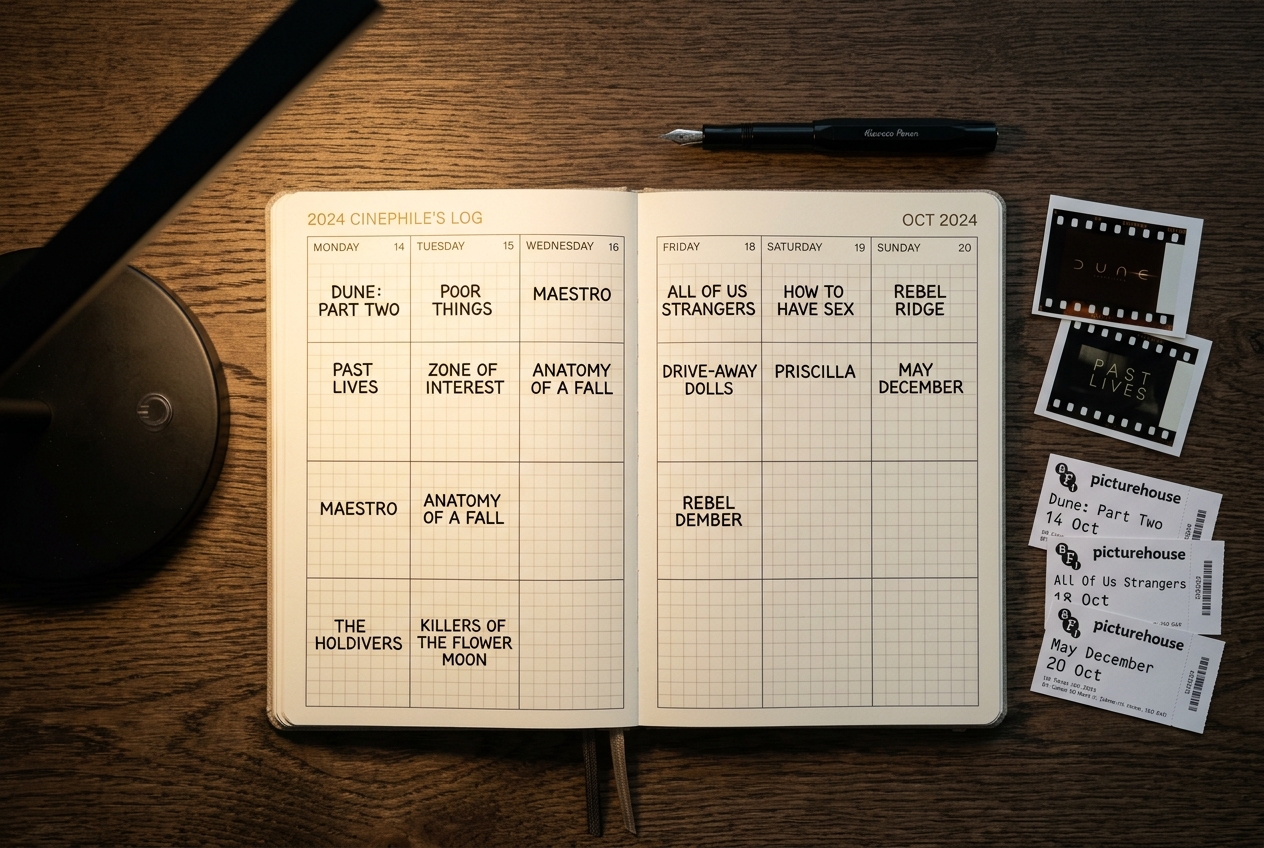
A personal movie canon is the roughly 100 films that shaped how you see, think, and watch, sorted into five categories and revisited once a year. This guide covers the rules for inclusion, the five categories, how to build the list, and the annual revisit.
First, a distinction that gets collapsed all the time: the difference between a list of your favorite films and a personal canon. They feel like the same thing. They're not. A favorites list is a record of what you've enjoyed. A personal canon is a claim about who you are as a viewer, and specifically which films shaped how you see, think, and watch. These two lists will overlap considerably, but the overlap is not the point. The distinction between them is where the real thinking happens.
The reason it's worth making this distinction carefully is that it changes the exercise entirely. A favorites list is low-stakes. You add what you've loved, you don't feel obligated to justify anything, and nothing gets removed. A personal canon has admission criteria. Not every film you love qualifies, and some films that qualify aren't films you'd describe as favorites. That tension between what you love and what has actually done something to you is what makes building a personal canon a worthwhile project rather than a pleasant afternoon of nostalgia.
I've been maintaining a personal canon for about five years. It has changed significantly in that time, and the changes have told me things about my own taste that I wouldn't have noticed otherwise. Here is how I think about building one.
What is a personal canon and why is it different from a favorites list?
A personal canon is a deliberate selection of the films that have shaped your identity as a viewer. The key word is "shaped." These are films that changed something: how you understand cinema, how you engage with story, how you see the world outside of movies. Not every film you love has done that. Some films you love because they're excellent entertainment. Some films you love because they arrived at the right moment. Some films you love for reasons you can't quite articulate.
Those films might still belong in the canon, but they have to earn their place by doing something more than landing well on a single viewing. The admission cost for a personal canon is that the film has to have done something to how you think. That's a higher bar than "I really enjoyed this," and applying it strictly requires you to be rigorous about which films have actually moved you and which ones you just remember fondly.
This distinction does something important to the quality of the exercise. When you sit down to build a favorites list, you're essentially making choices about enjoyment: what you'd recommend, what you'd rewatch on a Saturday night. When you sit down to build a personal canon, you're making choices about identity. You're asking: what are the films that made me the kind of viewer I am? That's a more serious question, and it produces a truer answer.
The personal canon will include some films that surprised you by how much they affected you, films you might not have chosen as favorites but that have stayed with you in a way that requires explanation. It will exclude some films you love but that haven't changed anything about how you see. Both kinds of inclusion and exclusion are informative. They show you the shape of your taste in a way that a straight favorites list can't.
What are the rules for including a film in the canon?
Two rules. Both are strict, and they're strict for a reason.
Rule 1: You must have seen it at least twice. A single viewing, however overwhelming, doesn't give you enough access to a film to claim it as part of your canon. Films reveal themselves differently on second and third viewings. The first time you watch something, you're orienting yourself: tracking plot, establishing characters, absorbing the world of the film. The second time, you're actually watching it. You see how the film is constructed, what it's doing underneath the surface, what it rewards attention. If a film belongs in your canon, it should be able to survive the second viewing as something more than a surprise. If you're not willing to watch it again, that reluctance is information. It probably means you're confusing the experience of being caught off guard with the experience of encountering something that actually matters to you.
Rule 2: You must be willing to defend it. Not to win the argument, but to make the case. You need to be able to articulate what the film gives you and why it belongs in a list that represents who you are as a viewer. "I don't know how to explain it, I just love it" is a real response, but it's not a defense. Films you love that you can't explain are candidates for the favorites list. Films in the canon require you to know what they're doing for you. The act of articulating that defense, even privately, even just in your own head, is part of what gives the canon its value. It makes your taste legible to yourself.
These two rules together do most of the filtering work. A lot of films fall away when you apply them. What remains is a more precise account of what actually constitutes your sensibility as a viewer.
What are the five categories every personal canon should have?
I structure the 100-film target around five categories of roughly 20 films each. The categories aren't rigid, and a film can belong to more than one, but thinking in categories prevents the canon from tilting entirely toward one kind of film and forces you to account for the full range of what cinema has done to you.
Formative films. These are the films you saw at an age when they permanently changed how you understood something: people, cinema, what stories are capable of. They're often films that don't hold up perfectly when you return to them as an adult. That doesn't disqualify them. They belong in the canon because of what they did to you when you first saw them. The fact that you can now see their seams is its own kind of data. It shows you how much your taste has developed since the version of you that needed that film. Formative films are the archaeology of your sensibility.
Comfort films. Films you return to not because they challenge you but because they reliably deliver something you need. I want to be careful about this category, because it can become a catch-all for films that don't actually belong in a canon. The difference between a comfort film and a guilty pleasure is that a comfort film is one you understand. You know why you love it, you can articulate what it gives you, and you're not embarrassed to claim it. A guilty pleasure is something you watch despite knowing it doesn't really hold up. Comfort films belong in the canon. Guilty pleasures belong on the favorites list. If the idea of comfort films resonates, I've written more about what makes a true comfort film and why the category is more serious than it sounds.
Films of awe. Films that showed you something you had never seen before, technically, formally, emotionally, or some combination of all three. These are films where you remember exactly where you were watching them and what you felt when they were over. The experience of watching them changed what you thought cinema was capable of. They set a new reference point for what's possible, and you've been measuring things against them ever since.
Films of devastation. Films that wrecked you. Grief films, horror films, films that confronted you with something you'd been avoiding or hadn't known how to face. They belong in the canon because they changed something, and it wasn't necessarily something pleasant. These are not films you'd put on for a comfortable evening, and that's exactly why they belong here. The canon should represent the full range of what film has done to you, not just the pleasant registers. The films that devastated you are often the ones that accessed something that other art couldn't reach.
Secret favorites. Films that nobody in your orbit talks about, that you discovered through some oblique path, that feel specifically yours in a way that consensus favorites don't. Every personal canon should have films that aren't on anyone else's list. These are the films that reveal something about the idiosyncratic shape of your particular taste: the things you respond to that don't map onto any obvious category, the films that got to you through a combination of circumstance, timing, and sensibility that nobody else shares. These are often the most revealing films in the canon.
How do you actually build the list?
Start with the films you know immediately belong. Give yourself five minutes and write down every film that comes to mind without deliberating. These are your anchor films, the ones that are so clearly part of your canon that you don't have to argue for them. Most people can get to 30 or 40 films this way without much difficulty.
Then work through your viewing history more systematically. Letterboxd logs are the most efficient tool for this if you use the app. Scroll through your diary and your ratings, and flag every film that produces a reaction stronger than "I liked this." A film journal works just as well if you keep one. Old journal entries, conversations about films you remember, moments when you recommended something to someone and then spent twenty minutes explaining why it mattered: all of these are trails back to films that belong in the canon.
The goal is to get to around 150 candidates and then cull to 100. Apply the two rules to everything on the 150-film list. Which films have you only seen once and have been meaning to rewatch for years? Move those to the road-to-the-canon list. Which films can you not actually defend? Remove them. The culling process is where the real thinking happens. If you want a starting point outside your own history, the 50 best films of the 21st century is a useful shelf to argue with. The films you fight hardest to keep are often the most revealing ones about what you actually value.
What is the annual revisit ritual and why does it matter?
Once a year, on the same month, on your birthday, on New Year's Day, whenever you can make it a consistent ritual, review the canon. Ask three questions.
First: which films would you remove? Taste changes. A film that defined you at 25 may not define you at 35, not because the film got worse but because you got different. The films you remove are not failures. They served their purpose at the time. Removing them cleanly is how you keep the canon current rather than calcified.
Second: which films would you add? You've seen more films in the past year, and some of those films will have passed the two-rule test. Apply the admission criteria and add the ones that genuinely qualify.
Third: which films on the canon have you not watched in more than five years? These are your rewatch candidates for the coming year. The canon should be a living relationship with the films in it, not a permanent archive. If a film belongs in your canon, you should want to return to it occasionally, and if you've been avoiding one for years, that avoidance is information worth examining.
The annual revisit keeps the canon alive. It's also how you notice your taste evolving over time. The removals are often more interesting than the additions. A film you'd have defended passionately at 28 that you can no longer quite get behind at 36 tells you something real about what changed in how you see.
What about the films you haven't seen yet but know should be in your canon?
The road to the canon is as valuable as the canon itself. This is your active watchlist of films you believe belong in your canon based on everything you know about your own taste: films you haven't seen yet, or films you've seen once but not twice. They're films you believe are waiting to become part of who you are as a viewer. You just haven't gotten there yet.
This is a different kind of watchlist than the algorithmic recommendation queue, and it rewards a watchlist system with real structure. The algorithm gives you films it thinks you'll complete, films that fit your recent watch history, films that are being promoted. The road to the canon is films you've identified through deliberate discovery: through directors whose work you're working through, through critical traditions you're exploring, through the specific territories of taste you're trying to map. It requires you to know yourself as a viewer well enough to make a claim about which films you haven't seen are waiting for you.
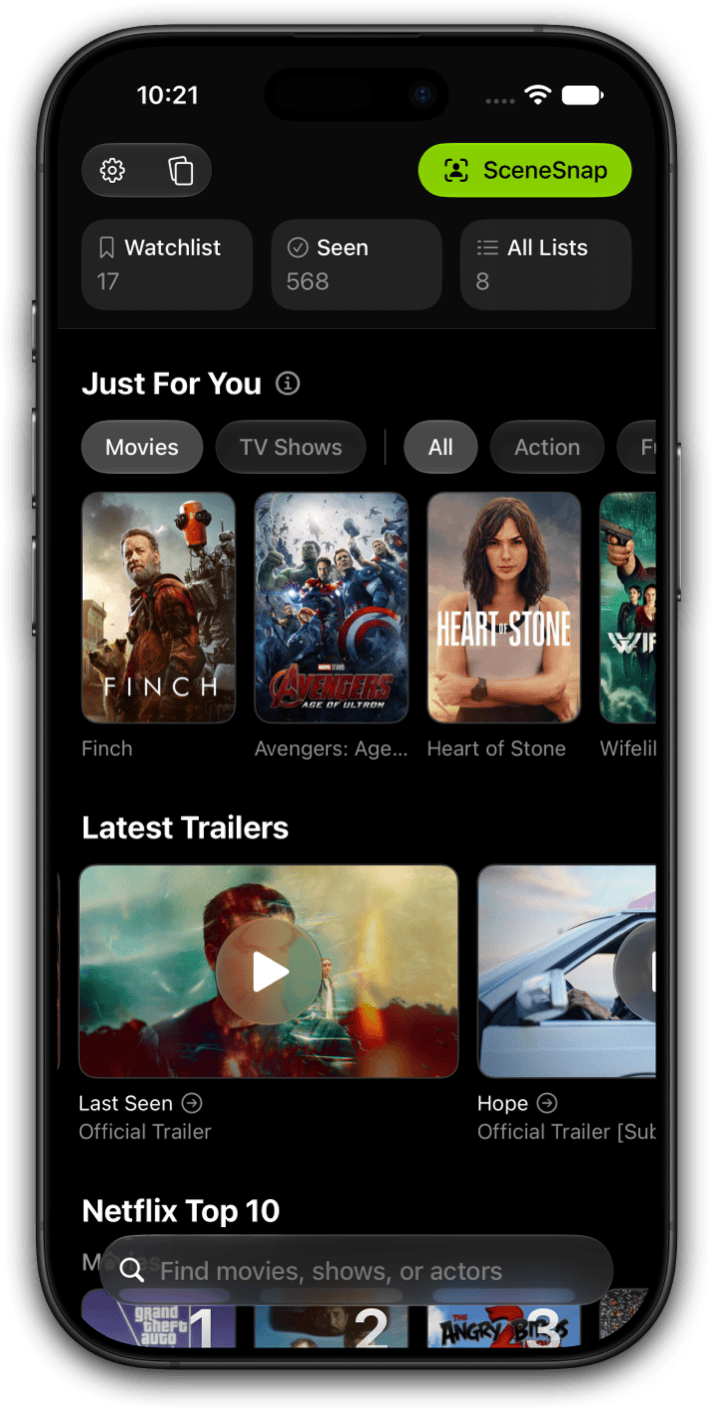
This is where Limelight earns its place in the process. The watchlist in Limelight isn't just a queue for things you might get around to someday. Used intentionally, it's a curated document of films you believe are on the path to your canon. Keeping that list separate from everything else, from the films you're tracking casually, from the recommendations you've bookmarked but aren't sure about, gives you a cleaner signal about what you're actually working toward as a viewer.
A personal canon is the antidote to algorithmic taste flattening. The algorithm learns what you're likely to click. The canon requires you to know what you actually think. Those are completely different exercises, and only one of them produces anything worth having.
The road to the canon is also where you put films that have been on the 150-candidate list but haven't passed the two-rule test yet. You've seen them once and know they might belong. Watch them a second time and apply the defense test. If they pass, they move into the canon. If they don't, they move off the road entirely, and that movement is itself useful information about what they actually were to you.
Building a personal canon takes time, and it's never finished. That's exactly what makes it worthwhile. A list that stays fixed is a list that stopped telling you anything. The canon works because it changes as you change, and because the act of maintaining it requires you to be straight with yourself about what the films in your life have actually done to you, rather than what you wish they'd done or what you think they should have done. That kind of candor is rare in how we talk about movies, and it's what separates a canon from a ranking.
Keep your canon and the road to it in one place
Limelight's watchlist and seen list travel with you across platforms. Add the films you're watching toward your canon, track what you've seen.

Frequently asked questions
100 is a constraint, not a magic number, but it's a useful one. 50 is too few: it forces you to exclude films that genuinely shaped you in favor of a short-list that feels more like a highlight reel than a real canon. 200 is too many: it removes the pressure to decide what actually belongs and turns the list into a favorites dump. 100 is tight enough that inclusion requires a real argument, but large enough to accommodate the range of films that make up a real identity as a viewer: the formative films, the comfort films, the films of awe, the films that wrecked you, and the private favorites that feel specifically yours.
Yes, but test them against the two rules first. If you've seen the film at least twice and you can articulate what it gives you (even if that articulation isn't prestigious), it belongs in your canon. A film you love and understand belongs there. A film you love but feel you shouldn't is often a film you haven't given yourself permission to examine closely. The personal canon is not a public document. Build it for accuracy, not for how it will look to someone else.
No. Films you haven't seen belong on the road to the canon: the active watchlist of films you believe are waiting to become part of who you are as a viewer. They don't belong in the canon itself, because the canon is a record of what has already done something to how you see. You can't make that claim about a film you haven't watched. The road to the canon is a legitimate and valuable list in its own right. It's where the aspirational work happens.
A Letterboxd favorites list is typically four or five films: it's a calling card, a curated first impression. A personal canon is 100 films organized around what each one did to you as a viewer. The Letterboxd list is outward-facing; the canon is inward-facing. The Letterboxd list shows people who you are at a glance; the canon is a working document of how you got there and what you keep returning to. They're compatible projects, but they're not the same one.
Once a year is the right cadence for most people. Less often and the canon calcifies: films stay in it past their usefulness. More often and you lose the signal of time: a film you loved three weeks ago hasn't had enough time to prove it belongs. The annual revisit works best when it happens at the same moment each year, which makes it easier to track the changes. The removals from year to year are often more interesting than the additions. They show you how your taste is actually moving.
Your canon deserves a better home than a Notes app
Limelight keeps your seen list, watchlist, and ratings in one place across every streaming service. Free.