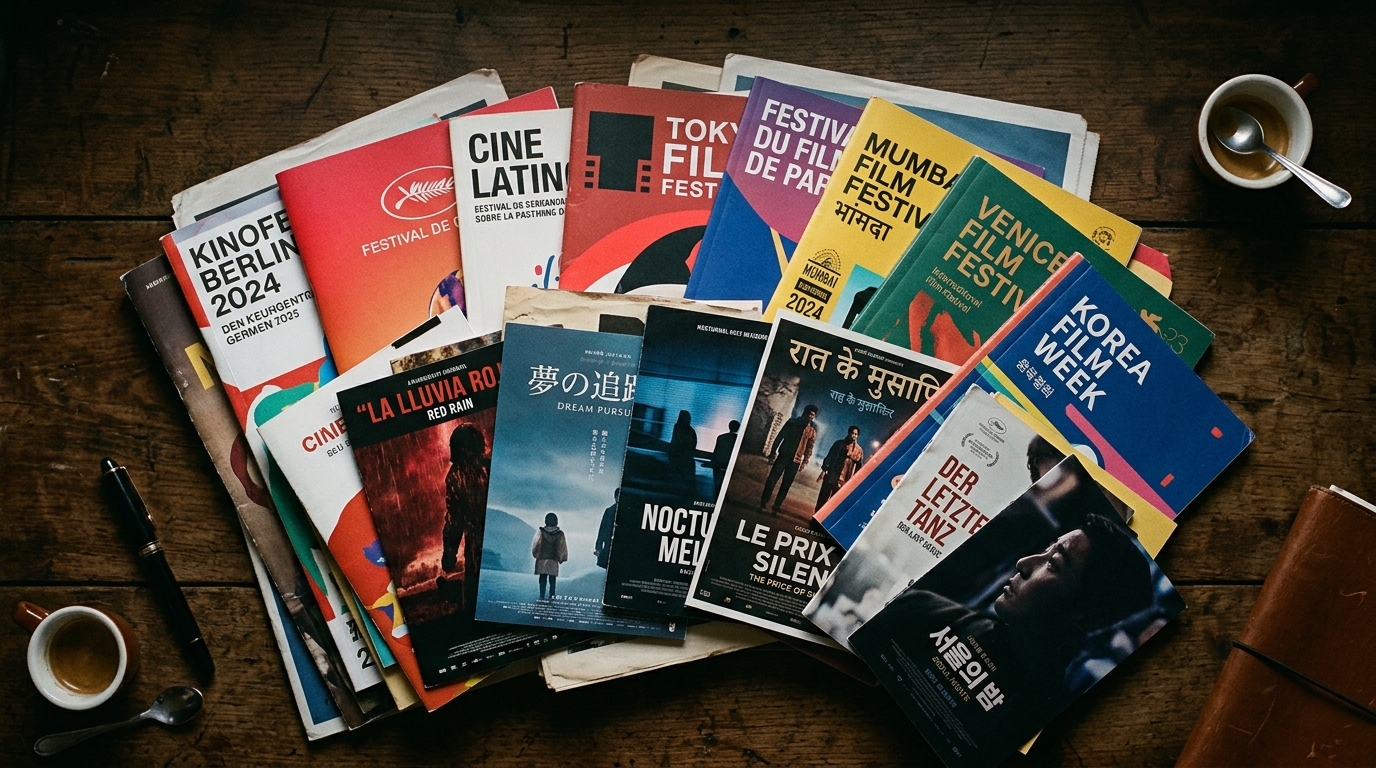
Six sources surface films the algorithm will not: curator-specific Letterboxd lists, director filmographies, country-specific best-of lists, niche festival winners, decade deep dives, and reverse-recommendation. It is worth being precise about what is being criticized here. Netflix's recommendation engine is, by the measure it's built for, an extraordinary piece of technology. It is very good at keeping you subscribed. It keeps churn low, which is the only thing it's designed to do. The fact that this is a different objective from finding you films you'll think about for the next three weeks is not a flaw in the algorithm. It's a flaw in the assumption that these two things are the same goal.
Hidden gems are films with genuine merit and a small audience. That combination is lethal for algorithmic surfacing. A small audience produces weak signal. Weak signal means the collaborative filtering system has little to work with. The algorithm doesn't surface these films not because it can't evaluate quality, but because quality was never the variable it was trained to maximize.
These six sources form a discovery system that consistently surfaces films the algorithm never will. Keeping the results in one place is easier with a watchlist system that actually works. It takes maybe 20 minutes to run through the full protocol once you know the steps. Here it is.
Why doesn't the algorithm find hidden gems?
The mechanism is worth understanding because it clarifies why no amount of algorithm refinement will solve the problem. Streaming recommendation systems are trained on watch-through rate, completion rate, and subscriber retention signals. A film that requires patience, subtitles, or prior cultural context will underperform on all three metrics, regardless of how good it is, because the audience willing to sit with those conditions is small and self-selected.
There's a second, subtler problem: the algorithm learns your recent behavior, not your considered taste. If you've spent three weeks watching network procedurals because you were sick and exhausted, the algorithm now thinks you're a procedural fan and will serve you more of the same. It has no way to distinguish "what I watch when I'm depleted" from "what I actually love." That distinction matters enormously for discovery.
Finally, the algorithm privileges content the platform owns or has a financial incentive to surface. A licensed film from a small distributor competes at an inherent disadvantage against an original production the platform needs to justify. These aren't conspiracy theories about algorithmic manipulation. They're just the natural outputs of a system that optimizes for business goals rather than viewer satisfaction at the level of individual films that change your life.
Method 1: Curator-specific Letterboxd lists
Letterboxd lists are the most underused discovery tool available to serious film fans, and the reason is that most people treat Letterboxd primarily as a logging and rating platform rather than a discovery one. The lists feature changes everything. Unlike algorithmic recommendations, curator lists represent genuine human taste at the level of specificity that algorithms can't replicate.
The key is finding good curators rather than good lists, because a good curator produces good lists consistently. My method for finding them: look at who critics I already trust are following; look at Letterboxd's featured lists section, which surfaces well-constructed lists from the community; and search by specific theme using the search bar. A search for "underseen 2000s Korean films" or "cinematographers who changed shot language" will surface lists built by people who care deeply about the specific territory you're looking for.
What distinguishes a useful Letterboxd list from a decorative one: it's specific rather than general, the curator has written short annotations explaining why each film is there, and the list has been updated in the last year. A list called "great films" with 500 titles and no annotations is not a discovery tool. A list called "Argentine films of the 1990s that nobody talks about" with 18 titles and a brief note on each one is an extraordinary resource.
Good search terms to start with: "underseen [decade] [country/genre]," "films that deserve more attention," "overlooked [director's nationality] cinema," and "films with [specific technical or thematic criterion]." Go specific. The more specific the list, the better the curation tends to be.
Method 2: Director filmographies
Most people know a director from one or two films and have never explored the rest of their catalog. This is one of the most reliable discovery protocols available because it's generative: one director you love becomes a structured path through films you've never seen, and those films come with built-in quality signal in the form of your existing trust in the filmmaker's sensibility.
The protocol is straightforward: pick a director from a film you loved, then watch their filmography in chronological order. What this surfaces is earlier, less-distributed work, films made before the director had the marketing muscle to reach a broad audience. A director who made a celebrated film in 2019 probably made four or five films before that. Those earlier films received a fraction of the attention, not because they were lesser, but because the director hadn't yet accumulated the reputation that drives press coverage and awards campaigning.
A worked example: someone who loved "Parasite" (2019) and has never seen "Mother" (2009) or "Memories of Murder" (2003) is sitting on two extraordinary films that received minimal English-language distribution. Both are fully available on streaming. They've been hiding in plain sight.
The secondary move, once you've exhausted a director's filmography, is to look at who they cite as influences and start working through that list. Bong Joon-ho has cited Hitchcock extensively in interviews, but he's also discussed the influence of Claude Chabrol, Kim Ki-young, and a range of American genre directors from the 1970s. Each of those citations is a thread into a different territory.
Method 3: Country-specific best-of lists
Every film culture has its own canon, covered in more depth in the beginner's guide to international films, and that canon barely intersects with the English-language recommendations you'll encounter through any mainstream discovery channel. The Romanian New Wave, Thai art cinema, Argentine cinema of the 1990s and 2000s, Iranian film since the 1980s, South Korean genre cinema of the early 2000s: each of these traditions has produced dozens of films that were critically significant in their home context and essentially invisible in English-language streaming markets.
The subtitle friction is real as a structural problem, but it's worth being direct about what that means: films that require subtitles underperform on algorithm metrics because a percentage of the audience won't complete them, which reduces the signal that drives surfacing. The quality of the films is orthogonal to this. A film can be a masterwork and still have weak completion-rate data because of the subtitle dropout effect. That's the gap my discovery protocol is designed to exploit.
The method: pick one country whose film tradition you know nothing about, find the 10-film consensus canon for that country's cinema over the last 30 years, and start there. A search for "essential [country] films" or "best [country] cinema" combined with a Letterboxd list search will surface this quickly. Work through the consensus films first, then move outward. The consensus exists because these films are genuinely good, and once you've seen the consensus, you'll have enough grounding to navigate deeper into the tradition with more independence.
Method 4: Niche festival winners
Major festival winners from Cannes, Venice, and Berlin are now somewhat algorithm-adjacent: a Palme d'Or win gets covered by mainstream outlets, acquires distribution, and enters mainstream recommendation feeds within 18 months. The discovery value of tracking major festival winners has declined as those festivals have become part of the awards-industrial complex.
The more productive categories are the niche festivals with strong programming that fly under mainstream coverage. Sundance's Midnight section is the best concentrated source of independent horror and genre films in the world, and Midnight films rarely get the same press as the Dramatic Competition winners. Fantasia International Film Festival in Montreal is the premier genre and horror festival globally, running annually with an enormous program of films that are often the best work being done in genre cinema before those films acquire distribution. The Annecy International Animation Film Festival is where the world's best non-studio animation surfaces first, years before these films reach streaming platforms with any visibility. SXSW's Narrative Competition is where American independent films with genuine ambition appear before they have distribution deals.
A straightforward search protocol: "[Festival name] [year] winners" returns organized results immediately. I add these to my watchlist the moment I see a title that interests me, because the gap between festival win and streaming availability is often 12 to 18 months. Building the list early means I'm ready when the film arrives rather than scrambling to remember why I wanted to see it.
Method 5: Decade-specific deep dives
A decade slot is also one of the eight categories in the 52-film challenge. The most productive decade for film discovery right now is the 1970s in American cinema, which was the most formally experimental period in Hollywood history and remains dramatically underseen outside cinephile circles. The studio system had collapsed, the ratings system had just been introduced, and a generation of directors educated on European art cinema was making films for major studios with almost no interference. Most of the output of this decade is available on streaming and almost none of it shows up in algorithmic recommendations because the audience engagement signals are decades old and thin.
Other productive territories for decade deep-dives: 1990s Hong Kong action cinema, which produced an enormous body of work across Jackie Chan, John Woo, Johnnie To, and dozens of others, almost none of which has made it onto major streaming platforms in quality versions; and 2000s South Korean thrillers, the decade that produced "Oldboy," "A Tale of Two Sisters," "Memories of Murder," and "A Bittersweet Life," among dozens of films that received international distribution only years later, if at all.
The method for building the decade list: take the major critics' polls for that decade (Sight & Sound's decade-specific polling, the Village Voice's retroactive decade rankings), cross-reference with what's currently available to stream, and start with the consensus titles before moving outward. The consensus exists for a reason. It's where the best films with the most sustained critical support live. Start there and use those films as context for the less-discussed ones.
Method 6: Reverse-recommendation
Most discovery starts forward: you like X, so you might like Y. Reverse-recommendation starts backward: the filmmakers you admire have made their taste legible through interviews, and that taste is a direct path into films you've never seen.
Kubrick's stated influences include Max Ophüls, Vincente Minnelli, and Orson Welles, along with an almost obsessive engagement with the documentaries of Frederick Wiseman. Tarantino's stated influences span Brian De Palma, Sergio Leone, Hong Kong cinema of the 1970s and 1980s, and Blaxploitation films of the same era. The Daniels (directors of "Everything Everywhere All at Once") have cited Michel Gondry and Yorgos Lanthimos in interviews, both of whom have extensive filmographies worth exploring.
The protocol: find a long-form interview with a director you admire, or a director's commentary track on a Criterion or Kino Lorber release, and extract every film they cite by name. Start working through that list. Criterion's supplements are particularly good for this because they're built around the idea of contextualizing a film within its influences. A Criterion interview with any major director will give you eight to 12 specific film titles worth investigating. That's a month of discovery from a single afternoon of reading.
A worked example
Starting film: "Everything Everywhere All at Once" (2022). Five genuinely overlooked films, six discovery sources, under 20 minutes.
From a Letterboxd curator list ("Underseen 2010s Sci-Fi"): "Coherence" (2013), 89 minutes, made for roughly $50,000, about quantum mechanics and a dinner party. It has a Letterboxd average above 3.8 with 200,000-plus ratings, which means it has a devoted audience but no mainstream presence. The algorithm has essentially never surfaced it.
From director filmography: the Daniels previously made "Swiss Army Man" (2016), a film about a man stranded on an island who befriends a flatulent corpse played by Daniel Radcliffe. It is genuinely one of the strangest and most committed films of that decade, and most people who loved "Everything Everywhere" don't know it exists.
From country-specific best-of: the film's visual language is deeply influenced by Hong Kong action cinema, specifically the kinetic editing and spatial logic of films by Wong Kar-wai. "Chungking Express" (1994) is the direct entry point, a film that looks and feels unlike almost anything in American cinema and remains relatively underseen by general audiences.
From Sundance Midnight: the same festival year that "Everything Everywhere" was circulating, Sundance's Midnight section included "Barbarian" (2022), a horror film that is genuinely terrifying and consistently underseen relative to its quality. It's on streaming now, with almost no algorithmic visibility.
From reverse-recommendation: the Daniels have cited Yorgos Lanthimos and Michel Gondry in interviews. That's "The Lobster" (2015) and "Eternal Sunshine of the Spotless Mind" (2004), both of which are fully available on streaming and have the kind of tonal register that maps directly onto what "Everything Everywhere" does.
Five films, one starting point, under 20 minutes of research. All five are good. Two are great. None of them would have appeared in my algorithmic recommendations unprompted.
Save your discovery sessions as you go
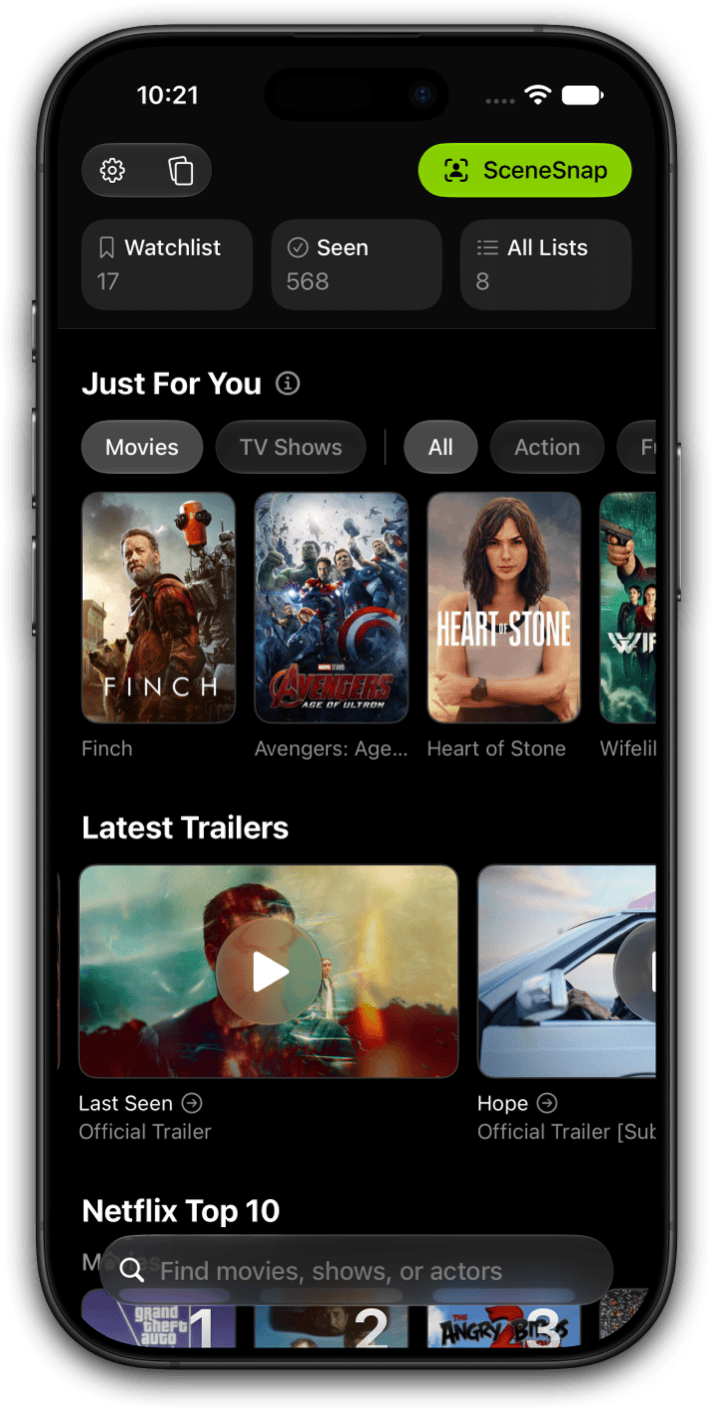
Limelight lets you add films to your watchlist in real time while you're working through a discovery session, so nothing gets lost between the research and the watching.

The algorithm is very good at its actual job. That job just isn't the same as finding you films you'll remember for years.
Running the full protocol takes time, but it doesn't have to happen all at once. I keep a running list of discovery sessions: a filmmaker whose filmography I'm working through, a country I'm exploring, a festival section I'm tracking for the year. The protocol builds on itself. Once you've run the reverse-recommendation method on three or four directors, you start to see the connections between film traditions, and the connections themselves become a discovery engine.
The payoff relative to the algorithm is large enough to make streaming homescreens redundant as a discovery tool. The six sources above, run with any consistency, will keep you supplied with good films to watch indefinitely. The algorithm will keep you subscribed. Only one of those outcomes is actually satisfying.
Your watchlist for every film you find
Limelight keeps your watchlist and seen list separate, so your discovery sessions build into a real record of what you've watched and what you're saving.
Frequently asked questions
A hidden gem is a film with genuine artistic or entertainment merit that has a significantly smaller audience than its quality warrants. The defining characteristic is the gap between quality and reach, not just low viewership. A bad film with few viewers is not a hidden gem. A great film that got no marketing, limited distribution, or was buried by an algorithm is. The term is relative to the person using it: a film that's well-known in cinephile circles might still be a hidden gem to a mainstream viewer.
For discovering hidden gems specifically, yes. IMDB's discovery features surface popular films because its rating and recommendation systems are driven by volume: films with more votes rank higher and get recommended more. Letterboxd's curated lists are driven by human taste rather than popularity, which means they surface films with smaller but more devoted audiences. IMDB remains useful for basic information like cast, runtime, and aggregate ratings, but it's a reference tool rather than a discovery tool.
The most reliable method is country-specific best-of lists rather than general foreign film recommendations. A search for "best Romanian films of the 2000s" or "essential Thai cinema" surfaces country-specific canons shaped by critics who actually know that film culture. General "best foreign films" lists tend to cluster around the same dozen internationally distributed titles. Going country-specific gets you past that layer and into the actual depth of each film tradition.
A few signals are useful when reviews are scarce: festival selection (even a nomination in a credible section indicates peer review by programmers with strong taste), a Letterboxd average rating with at least a few hundred reviews, and whether any critics you already trust have mentioned it, even briefly. The absence of reviews is not a negative signal for hidden gems. It often means the film didn't have a distribution deal that generated press coverage, which is a logistics failure rather than a quality indicator.
Occasionally, but not by design. The algorithm surfaces overlooked films when they happen to share watch patterns with popular content, which creates accidental discovery rather than intentional surfacing of quality. Netflix's "Because you watched" recommendations sometimes land on genuinely underseen titles, but this is a byproduct of collaborative filtering rather than a curatorial intention. The structural problem remains: the algorithm optimizes for watch-through rate and subscriber retention, and genuinely overlooked films tend to underperform on both metrics because they lack the social proof that drives completion rates.