Start with Korean cinema, keep the subtitles on, and give it three films. Subtitle reading becomes automatic faster than almost anyone expects. I resisted foreign films for longer than I want to admit. Not because I thought they'd be bad, but because subtitles felt like homework, a layer of work between me and whatever the film was doing. The first two subtitled films I watched, I spent the first 20 minutes consciously tracking the text at the bottom of the frame, aware I was missing things in the image. It felt effortful in a way that English-language films didn't.
By the third film, something had changed. The subtitle reading had become automatic. I stopped being aware of it in the same way you stop being aware of the physical act of reading a book after the first few pages. The text processed and the images registered at the same time, without competition. The cognitive overhead I'd been dreading turned out to be temporary, a learning curve rather than a permanent condition.
This guide is about getting you to that third film efficiently, and foreign cinema is where most of the hidden gems are hiding. The 12-film starter ladder at the end is ordered specifically to make that transition as smooth as possible, starting with films that are forgiving for subtitle readers and building toward films that reward the tolerance you've developed. The regional sections cover five of the most rewarding foreign film traditions for English-language viewers, with gateway recommendations rather than a prestige list.
Why do subtitles feel harder than they actually are?
The cognitive load of reading while watching is real, and it's worth understanding the mechanism so you know what you're dealing with. When you watch a subtitled film for the first time, your brain is managing two visual channels simultaneously: the subtitle strip at the bottom of the frame and the image itself. These are competing for the same visual attention, and the competition is effortful. You're not imagining the difficulty. It's a genuine neurological demand.
What makes it temporary is that the brain is very good at developing routines for repetitive tasks. After a few films, subtitle reading becomes automatic in the same way that reading printed text is automatic for an adult literate person: you don't consciously decode each letter, you pattern-match at the word and phrase level. Subtitle integration works the same way. Once the brain builds the routine, the effort disappears and the two channels stop competing.
The films that accelerate this transition most reliably are visually driven films with clean, direct dialogue and strong image-based storytelling. A film where a significant portion of the narrative is carried by what you see rather than what's said gives a subtitle reader permission to split their attention without losing the thread. The image carries the story while the subtitles supplement it, rather than being the primary information delivery mechanism. This is exactly why the starter ladder begins with Wild Tales and Parasite rather than something dialogue-heavy like a French New Wave film. Build the routine on forgiving material, then move toward the more demanding work.
The other thing worth saying directly: after three or four films, you will likely stop noticing the subtitles at all during emotionally engaged viewing. The text will integrate. The occasional moments where a subtitle cuts quickly will still register, but they won't break immersion the way they do in the first film. This is a promise I can make because it happened to me, and because I've heard the same thing from every person I know who made the transition.
Dubs vs. subs: the straight answer
Every beginner asks this question and most advice is either dismissive ("only subs, obviously") or falsely neutral. A useful answer has to be more specific than either position.
Subtitles are almost always the right choice for adult viewers watching live-action films made after approximately 1990. The reason is performance fidelity. The original performance (the actor's voice, pacing, breath, emotional register) is an integral part of what the director made. A dub replaces that performance with a translation delivered by a different actor in different acoustic conditions, and the result is almost always a reduction in the film's emotional impact. This isn't a snobbish position. It's just a description of what's lost in the translation.
Dubs make sense in three specific situations: animation aimed at children, where lip-sync expectations are lower and subtitle reading is a genuine barrier for young viewers; very old films where the original audio quality is poor enough that the dub isn't degrading much; and viewers with reading disabilities or visual processing differences where subtitle reading creates genuine barriers. If you fall into the third category, dubs are completely reasonable, and no amount of cinephile orthodoxy should make you feel otherwise.
For everyone else: the subtitle discomfort is temporary, the performance fidelity is worth it, and the first few films are the hardest part. State the case, make the choice, and watch the film. The argument has diminishing returns after the third viewing.
Korea: the best entry point for most viewers
Korean cinema is the single best entry point for foreign film beginners, and the reason is structural. Korean films sit high in the 50 best movies of the 21st century. Korean films often use genre scaffolding (thriller, horror, family drama, action) that gives Western viewers familiar narrative handholds while delivering storytelling they've genuinely never seen in those genres. The pacing is typically faster than European art cinema and slower than Hollywood action, which puts it in a readable middle register for viewers developing their subtitle tolerance. Nothing about Korean cinema requires prior context or cultural familiarity to follow. It's immediately legible in a way that, say, Iranian or French cinema often isn't on first encounter.
Five gateway films, ordered by accessibility:
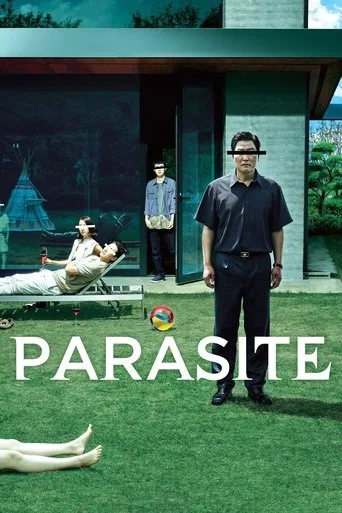
- Parasite (2019): the safest first recommendation on this list. Thriller structure, zero prior context required, pacing that carries subtitle readers through without effort. If you've seen one Korean film, it's probably this one, and there's a reason for that.
- Train to Busan (2016): genre horror with genuine emotional investment. Extremely accessible, moves fast, and demonstrates that Korean cinema does genre work at a level that Hollywood rarely matches.
- The Wailing (2016): more demanding than the above two, slower in places, and requires patience for ambiguity. Worth watching after you're comfortable with the Korean register.
- Burning (2018): deliberately slow and ruminative. Rewards viewers who have developed tolerance for films that don't explain themselves. Best watched after several other Korean films.
- Memories of Murder (2003): Bong Joon-ho's early work, a procedural thriller that is formally extraordinary. Essential once you've seen Parasite and want to work backward through his filmography.
Japan: where to start beyond Studio Ghibli
Most Western viewers have seen at least one Studio Ghibli film, which is a reasonable entry point into Japanese cinema even if animation is a different tradition from live-action. The gateway beyond Ghibli is primarily the work of Hirokazu Kore-eda, who makes family dramas with the kind of emotional clarity and directness that translates without friction for viewers new to Japanese film.
- Shoplifters (2018): Kore-eda's most accessible film for international audiences. A family drama with a devastating late reveal. Very approachable for viewers new to Japanese live-action.
- Spirited Away (2001): if you haven't seen it, start here regardless of the animation. It remains the most globally resonant Japanese film of the last 30 years for a reason.
- Still Walking (2008): quieter and slower than Shoplifters, but rewards patience with the same kind of precision. A good second Kore-eda after Shoplifters.
- After the Storm (2016): gentler in register than most of Kore-eda's catalog. A softer entry point if Still Walking feels too austere.
- Drive My Car (2021): nearly three hours and requires sitting with silence and ambiguity. The most formally demanding film on this list, and the most rewarding once you've built some tolerance for Japanese pacing. Best watched after several other Japanese films.
France: getting past the intimidation
French cinema has a reputation for being slow, talky, and intellectually pretentious, a reputation earned by about 15 percent of French films that has been unfairly applied to the other 85 percent. The intimidation is largely a product of which French films get written about in English-language criticism, which skews heavily toward the Nouvelle Vague and the more formally demanding end of contemporary French production.
The gateway films are not those films. The gateway films are visually rich, emotionally direct, and don't require any theoretical framework to follow:
- Portrait of a Lady on Fire (2019): visually stunning, emotionally direct, and built around a story that carries subtitle readers through with strong image-based narration. The best first French film for most viewers.
- The Class (2008): docu-drama register, set in a Paris middle school, very immediate. The low-fi visual approach makes subtitle reading feel less like formal film-watching.
- Blue Is the Warmest Color (2013): emotionally direct and not intellectually demanding. A relationship film that requires nothing but attention to follow.
- Amour (2012): devastating and slow, but not alienating. Works for viewers who have already seen two or three French films and are ready for something more austere.
- The 400 Blows (1959): the essential historical entry point for understanding where Nouvelle Vague came from. Best watched after the contemporary films above, so you have a French-cinema baseline to place it against.
Spain and Latin America: the underappreciated region
Spanish-language cinema from both Spain and Latin America is vastly underseen by English-language audiences despite producing consistent world-class work across every decade since the 1970s. The combination of genre competence, visual ambition, and emotional directness makes Spanish-language cinema arguably the most immediately accessible foreign film tradition for viewers who grew up on Hollywood storytelling.
- Wild Tales (2014, Argentina): an anthology of six darkly comic revenge stories. The format means no long commitment to a single storyline, and the films are kinetic enough that subtitle reading barely registers as effort. One of the best first foreign films for most viewers.
- Y Tu Mamá También (2001, Mexico): a road movie with genuine emotional depth under its surface energy. Alfonso Cuarón's naturalistic direction makes it feel immediate in a way that more formally composed films don't.
- Pan's Labyrinth (2006, Spain): fantasy-horror with wide demographic appeal. Guillermo del Toro's visual language is so strong that the subtitles feel entirely secondary.
- A Fantastic Woman (2017, Chile): recent, emotionally immediate, and built around a performance by Daniela Vega that is one of the decade's best. Accessible without any prior context.
- Roma (2018, Mexico): quieter and more formally demanding than the above. Cuarón's most personal film, and the most rewarding on this list for viewers who have already seen several Spanish-language films.
Iran and the Middle East: the most rewarding region for patient viewers
Iranian cinema is among the most formally accomplished in the world and among the least-watched by Western audiences. It makes a strong country slot in the 52-film challenge. The intimidation is understandable: Iranian films often move more slowly than other foreign film traditions and require more patience for ambiguity and silence. The payoff for viewers who get past that initial resistance is substantial.
The best entry point is Asghar Farhadi, who uses thriller-adjacent structures to create moral dramas with immediate emotional stakes. His films are not slow in the way that concerns most foreign film beginners. They move with genuine narrative urgency, and the moral complexity they deliver is earned through story rather than through formal experimentation:
- A Separation (2011): thriller register, morally complex, extremely accessible for viewers new to Iranian cinema. The best first Iranian film for almost every viewer.
- The Salesman (2016): slightly more demanding than A Separation, but the same structural competence. A good second Farhadi film.
- Close-Up (1990, Kiarostami): formally unusual in a way that rewards viewers who have developed some tolerance for films that don't follow conventional narrative logic. One of the great films of the 20th century.
- Taste of Cherry (1997, Kiarostami): demanding, slow, and extraordinary. Best watched after several other Iranian films, when the register feels familiar enough to sit with.
Save your foreign film watchlist as you go
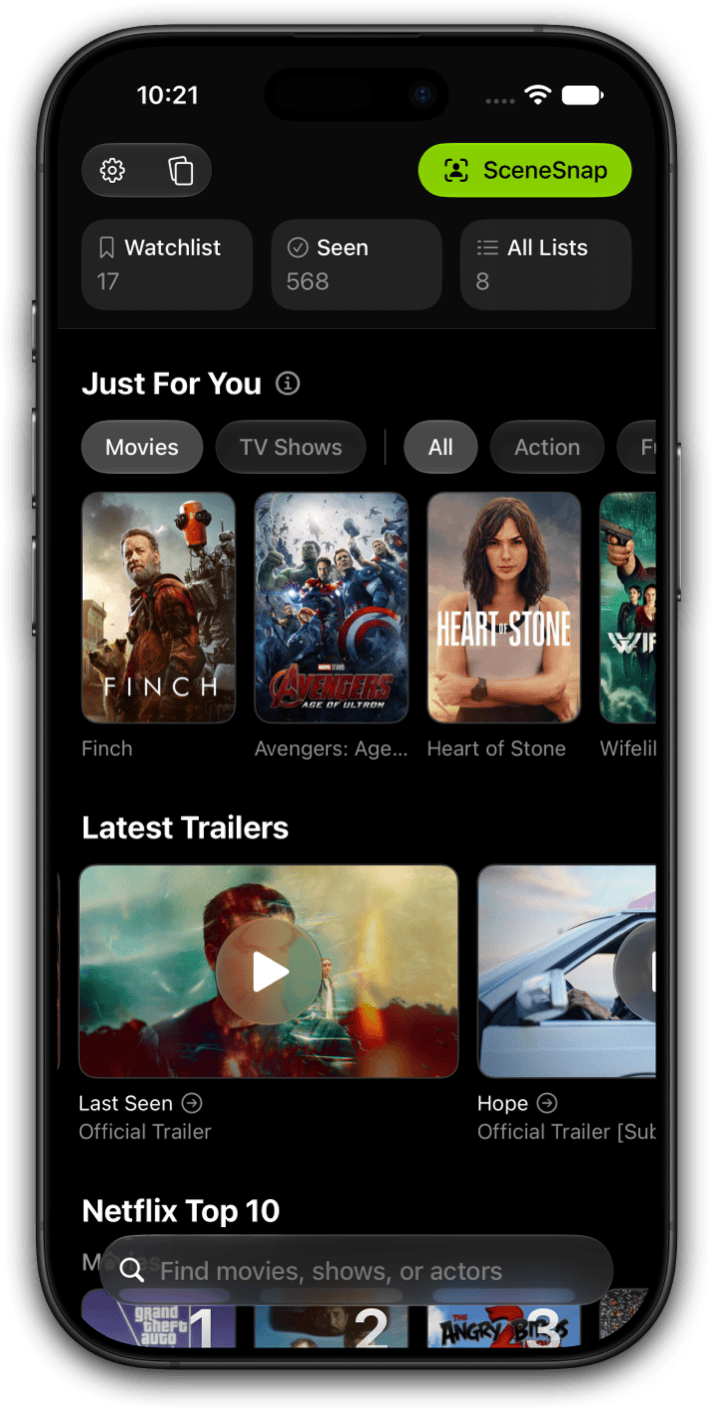
Limelight tracks streaming availability for international films across all major platforms. Build the ladder, find where each film is streaming.

The 12-film starter ladder
The films below are sequenced to build subtitle tolerance and regional familiarity progressively over one season, roughly 12 weeks at one film per week, or however quickly you want to move. The first three are the most accessible foreign films I know of for viewers with no prior exposure. The last three are films that reward everything you've built up by working through the earlier ones. The sequence is not arbitrary: each film prepares you for the one that follows.
By the third film, the subtitle reading becomes automatic. You stop noticing it, the same way you stop noticing the act of reading after the first few pages of a book.
The 12th entry is intentional. Portrait of a Lady on Fire is worth watching twice: once as a gateway French film, and once after you've seen what the rest of the ladder shows you. The second viewing is a different film.
| # | Film | Year | Country | Platform |
|---|---|---|---|---|
| 1 | Wild Tales | 2014 | Argentina | Netflix, MUBI |
| 2 | Parasite | 2019 | Korea | HBO Max, Hulu |
| 3 | Train to Busan | 2016 | Korea | Netflix, Shudder |
| 4 | Portrait of a Lady on Fire | 2019 | France | MUBI, Criterion Channel |
| 5 | Shoplifters | 2018 | Japan | Netflix, MUBI |
| 6 | Y Tu Mamá También | 2001 | Mexico | Netflix, Prime Video |
| 7 | Pan's Labyrinth | 2006 | Spain | HBO Max, Prime Video |
| 8 | A Separation | 2011 | Iran | MUBI, Criterion Channel |
| 9 | City of God | 2002 | Brazil | Netflix, HBO Max |
| 10 | Burning | 2018 | Korea | Netflix, MUBI |
| 11 | Drive My Car | 2021 | Japan | HBO Max, MUBI |
| 12 | Portrait of a Lady on Fire (revisit) | 2019 | France | MUBI, Criterion Channel |



Platform availability shifts regularly. Limelight shows current streaming availability for any of these films across all major services, so you're not spending 10 minutes searching before each viewing.
A few notes on the sequencing. Wild Tales goes first because the anthology format removes the commitment pressure of a single sustained story, and because it's genuinely entertaining in a way that makes subtitle reading feel incidental. Parasite and Train to Busan follow because Korean genre cinema is the most subtitle-forgiving live-action tradition I know of for new viewers: the narrative momentum carries the reading without effort. Portrait of a Lady on Fire comes fourth after you've developed some comfort with subtitles, because it's more deliberately paced and rewards attention in a way that the earlier films don't require.
City of God at position nine is not a mistake. It's a kinetic, visually driven film that belongs alongside the more accessible material on this list, but it works better after you've seen what Korean and Japanese cinema do with restraint. The contrast makes it more legible. Burning and Drive My Car come late because both require sitting with ambiguity and silence in a way that the earlier films don't ask of you. By the time you reach them, you'll have built the tolerance they need.
Find every film in the ladder, on whatever platform has it
Limelight shows you where any international film is streaming right now across all major services. Free.
Frequently asked questions
Subtitles are almost always the right choice for adult viewers. The performance quality in the original language is consistently better than dubbed alternatives, and the subtitle discomfort is temporary. It diminishes significantly after three or four films. Dubs make sense for: animation aimed at children, very old films where original audio quality is poor, and viewers with reading disabilities or visual processing differences where subtitle reading creates genuine barriers. For everyone else, the brief learning curve is worth it.
Wild Tales (2014, Argentina) or Parasite (2019, Korea) are the two best starting points, depending on your taste. Wild Tales is an anthology of six darkly comic revenge stories. The format means no long commitment to a single storyline, and the films are kinetic enough that subtitle reading barely registers as effort. Parasite uses a thriller structure that carries you through with enough narrative momentum that the subtitles recede into the background by the 20-minute mark.
Yes. The 12 films in the starter ladder in this article are all available on at least one major streaming platform as of early 2026. Netflix has the strongest international film library overall, with particular depth in Korean, Spanish-language, and Japanese content. MUBI is the most reliable source for French and Iranian cinema. Amazon Prime and the Criterion Channel round out coverage for older titles and less-distributed work. Availability shifts, so checking a tracking app like Limelight for current streaming status is worthwhile before sitting down to watch.
The first time you watch a subtitled film, your brain is managing two visual channels simultaneously: the subtitle strip at the bottom of the frame and the image itself. That split attention is genuinely effortful, not an imagined difficulty. After a few films, the brain develops a routine for subtitle integration and the effort drops substantially. The cognitive load becomes automatic, the same way driving stops requiring conscious effort after enough practice. The films that ease this transition fastest are visually driven films where the image carries a significant portion of the story.
Parasite (2019) is the most reliable first Korean film for most viewers. It uses a thriller structure that requires no prior context, the pacing is fast enough to carry subtitle readers through without effort, and the storytelling is clear enough that nothing gets lost in translation. Train to Busan (2016) is a close second for viewers who prefer genre horror: the emotional stakes are straightforward and the film doesn't require any patience for slower registers.