The films closest to Inception are Memento, The Prestige, Arrival, Eternal Sunshine of the Spotless Mind, Primer, Predestination, Coherence, The Matrix, Ex Machina, Annihilation, Shutter Island and Paprika. The specific craving that Inception leaves behind isn't really about dreams. It's about the feeling of watching a film where the architecture of reality itself is the mystery, and where you can't be certain, even by the final shot, whether what you've been watching was real. That spinning top. Most films with "twist endings" resolve cleanly. Inception doesn't. It places the ambiguity right at the center and dares you to sit with it.
The problem with most "movies like Inception" lists is that they're really lists of confusing movies. The same trap catches most movies like Interstellar lists. Confusion is a low bar. What made Inception work was the combination: structural puzzle plus emotional stakes plus genuine cinematic ambition. The best films on this list share all three qualities, not just one of them.
What actually made Inception work?
Cobb doesn't want to understand dreams. He wants to get home to his children. That's the emotional motor, and it's simple and human in a way that keeps the increasingly abstract plot from floating away entirely. Every layer of the dream architecture is in service of something personal. The heist mechanics exist to create stakes around something that matters.
Films that try to replicate only the conceptual machinery, the nested realities, the unreliable narrator, without that emotional anchor tend to feel cold and clever rather than affecting. The ones worth your time on this list understand that intellectual daring and emotional truth aren't opposing forces. The best mind-bending films are mind-bending because they're trying to express something true about grief, or identity, or the cost of obsession. The structural complexity is in service of the feeling, not the other way around.
If you want more Christopher Nolan

Memento (2000)
The most structurally audacious film Nolan made before Inception, and arguably his most rigorous. Leonard Shelby can't form new memories. He documents everything in Polaroids, notes, and tattoos on his own body. The film tells his story in reverse chronological order, which means you experience the same disorientation he does: you know less than the character at every turn, and then less than that. By the time you arrive at the beginning, which is the end, the moral question the film has been building to lands with real weight.
Memento is simpler in concept than Inception but more economical in every other way. No special effects. One location to another. The structure is the film. It's worth watching twice, and the second viewing is a completely different experience because you already know the answer and can watch the tragedy of not-knowing play out with full information.

The Prestige (2006)
Two rival stage magicians in Victorian London destroy each other's lives in the pursuit of the perfect illusion. The Prestige is less obviously "mind-bending" than Inception but rewards exactly the same kind of active, attentive watching. The film hides its central reveal in plain sight. Nolan tells you what the film is doing in the opening monologue, and most viewers don't register it until the ending makes it undeniable. The twist works not because it's hidden but because you weren't paying the right kind of attention.
It's also a film about obsession masquerading as craft, which is a richer theme than most genre films attempt. The magic trick is a metaphor and a literal plot device simultaneously, and the two registers reinforce each other without collapsing into each other. It's the Nolan film I'd recommend to someone who found Inception's dream logic occasionally frustrating.
If you want the same emotional weight

Arrival (2016)
Arrival is the film I'd recommend first to anyone who loved Inception. Denis Villeneuve's adaptation of Ted Chiang's "Story of Your Life" uses its science fiction premise, a linguist assigned to communicate with alien spacecraft, to deliver a gut-punch about time, loss, and the nature of choice that I wasn't remotely prepared for the first time I watched it. The structural reveal is less a twist than a recontextualization: the film has been telling you the same story from two directions, and you don't understand until the end how they fit together.
What it shares with Inception is the commitment to anchoring its conceptual ambition inside something irreducibly human. The alien language is interesting. Louise's grief is devastating. The film knows which of those things matters more and uses the first one to deliver the second. If you want the Inception feeling at its most emotionally realized, this is it.

Michel Gondry's film isn't a science fiction puzzle in the Nolan sense. It's a love story told through the experience of having your memories of a relationship erased, and it uses the unreliable interior world of the mind the same way Inception uses dream architecture: as a space where the rules of reality can be bent in service of something emotionally true. Joel is trying to hold onto Clementine even as the erasure procedure works backward through their relationship.
The film is messier and warmer than Inception. Kaufman's screenplay is interested in what it means that the memories we'd most want to erase are often the ones that made us who we are. That's a harder question than any of Inception's plot mechanics, and the film asks it in a way that leaves a mark.
Find your next mind-bender
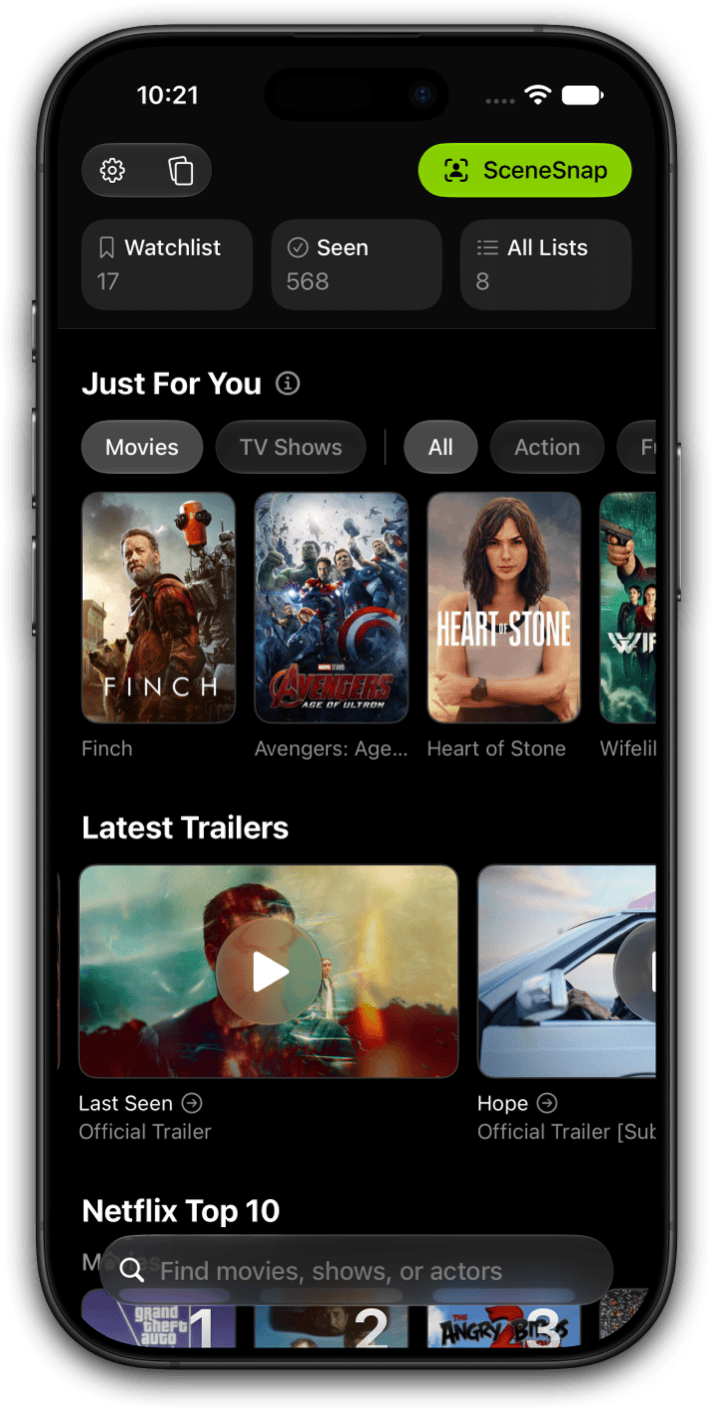
Limelight lets you search any film, see where it's streaming, and build a watchlist organized the way your brain actually works.

If the structural puzzle is what you're chasing

Primer (2004)
Two engineers in a suburban garage accidentally build a time machine, realize what they have, and immediately start trying to exploit it. Primer was made for approximately $7,000. Shane Carruth wrote, directed, produced, composed, and starred in it. What makes it worth watching is its absolute refusal to simplify: the characters speak like engineers solving problems, the timeline complexity is genuine rather than handwaved, and the film demands the same active attention as a difficult proof. There are timeline diagrams available online. You'll want one. Primer is also a reliable hidden gem if you have never heard of it.
Primer is the most intellectually demanding film on this list. It's also the most morally interesting. The time travel reveals character in a way that most films about time travel don't bother with. By the end, you're not entirely sure what happened, and you're not entirely sure you'd have done differently.

Predestination (2014)
If you haven't seen Predestination, don't read anything about it. Go watch it. The premise involves a temporal agent pursuing a criminal across multiple timelines, and the film earns its structural complexity by anchoring it in a character study that becomes stranger and more affecting the more you understand what's actually happening. The Spierig brothers based it on a Robert Heinlein short story from 1959. The twist is one of the few in recent science fiction that genuinely recontextualizes everything that came before it rather than just surprising you.

Coherence (2013)
Eight friends at a dinner party notice strange things happening after a comet passes overhead. Nearby quantum realities start overlapping. Shot over four nights with improvised dialogue and no completed script, Coherence achieves something that bigger-budget films rarely do: it's genuinely frightening. The horror isn't supernatural. It's the slow realization that the people you know and trust might not be the specific version of those people you thought they were. A single location, a tiny cast, and an idea that keeps compounding until the ending refuses to resolve. It runs 88 minutes and gets under your skin.
If you want the philosophical stakes raised

The Matrix (1999)
The obvious comparison. What if consensus reality is a simulation? The Matrix answers that question with action sequences and a messiah narrative. Inception asks a similar question with structural ambiguity. They're doing different things with a similar premise, but The Matrix is still the most influential film on this list for how it shaped the public imagination around constructed reality. The sequels are a different conversation. The original holds up as a piece of genre filmmaking that took its own ideas seriously enough to build a coherent world around them.

Ex Machina (2014)
Alex Garland's directorial debut is smaller in scope than Inception and harder to escape. A programmer is invited to a remote research facility to assess whether an AI can pass as conscious. The film withholds information deliberately and never confirms who the unreliable narrator is, exactly. Is Caleb evaluating Ava, or is Ava evaluating Caleb? The answer to that question, when it arrives, is one of the most devastating reveals in recent science fiction. It's a film about what we mean by intelligence, by consciousness, and by the test. All three of those questions stay open after the credits.
If you want to go stranger and deeper

Annihilation (2018)
Garland again. An environmental biologist joins a team of scientists entering the Shimmer, a zone of mutation expanding from an unknown origin point. Inside, the rules of biology, identity, and memory start dissolving. Annihilation shares Inception's interest in unreliable interiority but pushes it further into horror, and the alien intelligence at its center is genuinely alien: it doesn't have motives in any human sense. The film is based on Jeff VanderMeer's novel. Garland has said he didn't reread the novel before filming, relying instead on his memory of it. That choice shows. It has the texture of a dream you can't quite hold onto.

Shutter Island (2010)
Scorsese's most formally playful film. A US Marshal investigates the disappearance of a patient from a psychiatric institution on an island. The film commits completely to its unreliable perspective and earns the ambiguity it creates. It's less formally innovative than Inception but more viscerally unnerving, and DiCaprio's performance is one of his best. The kind of film that rewards knowing the ending in advance on a rewatch: you see everything you missed the first time.

Paprika (2006)
The anime film Christopher Nolan has cited as an influence on Inception. Satoshi Kon's final completed feature involves a device that allows therapists to enter patients' dreams. When the device is stolen, dream and reality begin bleeding into each other in ways that are formally inventive and visually overwhelming. If Inception is a meticulously engineered puzzle box, Paprika is what it would look like if the box started reassembling itself in real time. It runs 90 minutes and packs more ideas into that runtime than most films twice its length. It is one of the most underrated films of the 2000s, and Limelight will tell you where to watch it in your country.
Keep your watchlist organized
Add any of these to your Limelight watchlist and see exactly where each one is streaming right now. No ads.
Frequently asked questions
Two qualities: an unreliable or layered reality where you can't fully trust what you're seeing, and an emotional core that goes beyond intellectual cleverness. Inception works because it anchors a structural puzzle inside genuine emotional stakes, a father trying to get home to his children. Films that are only structurally tricky without that emotional weight tend to feel cold by comparison.
Memento is actually simpler in concept, though the experience of watching it the first time is disorienting by design. The premise is straightforward: Leonard can't form new memories, and the film tells his story in reverse chronological order to replicate his experience. Once you understand that structural device, the film becomes very clear. Inception's layered dream structure, with four simultaneous nested realities running at different time speeds, is arguably more conceptually complex. But Memento is the more emotionally economical film, which makes it feel demanding even when the rules are simpler.
Arrival is the film I'd recommend first. It shares Inception's emotional anchor, its genre-bending structure, and its commitment to a premise that is genuinely strange. If you want to stay in Nolan's filmography, The Prestige rewards the same kind of active attention with a different genre. If you want something smaller and stranger, Coherence delivers a similar sense of ontological unease for a fraction of the budget in under 90 minutes.
Primer (2004) follows two engineers who accidentally build a time machine in a garage and immediately start trying to exploit it. Made for approximately $7,000, it was written, directed, and scored by Shane Carruth, who also starred in it. What makes it worth watching is the absolute commitment to taking its premise seriously: the characters speak like engineers, the physics is as accurate as the budget allows, and the timeline complexity is real. It rewards rewatching and benefits from having a timeline diagram available online.
Christopher Nolan has cited Satoshi Kon's Paprika (2006) as an influence on Inception. The two films share the central concept of traveling through other people's dreams, and several specific visual sequences in Inception closely parallel scenes in Paprika. Paprika was released four years before Inception. It's more frenetic and formally playful than Inception, and shorter at 90 minutes. It's available on several major streaming platforms.
Dark (Netflix) is the closest television equivalent in terms of structural complexity, running across three timelines and three generations with a level of narrative density that demands active attention. Severance (Apple TV) shares Inception's interest in layered, controlled realities and its workplace setting. Westworld seasons one and two explore similar themes around constructed consciousness. All three reward the same kind of engaged, puzzle-solving viewership that Inception does.