Mulholland Drive takes the top spot on this ranking of the 50 best movies of the 21st century, followed by There Will Be Blood, Eternal Sunshine of the Spotless Mind, The Tree of Life and Spirited Away. I want to explain the methodology before the list, because "best movies" lists that don't explain their methodology are just opinion pieces with better formatting. This list combines Rotten Tomatoes Tomatometer scores, Metacritic weighted averages, IMDb user ratings, Letterboxd average ratings, and inclusion in major critical polls (Sight and Sound's decade surveys, Cahiers du Cinema's annual lists). Each film's score is normalized across those sources, with polling inclusion weighted more heavily than individual site scores because poll inclusion reflects sustained critical attention over time, not a snapshot at release.
Films released after 2018 are weighted down by 15% to account for recency bias, the well-documented tendency for recent films to rank higher in polls before critical reassessment can occur. Parasite at number 26 is not a slight. It reflects the plain reality that films from 2001 through 2013 have had a decade or more of retrospective criticism to sharpen their standing. Parasite will likely rank in the top 15 on any list compiled in 2030.
The top 10 get full write-ups because these are the films where consensus alone doesn't explain why they matter. Films 11 through 25 get shorter treatment. Films 26 through 50 get a paragraph each, enough to know whether a film belongs on your watchlist.
The top 10

There are films that reward patience, and then there is "Mulholland Drive," which rewards something closer to surrender. Lynch's Hollywood nightmare has topped more decade-end critical polls than any other film released since 2000, including Sight and Sound's 2012 and 2022 surveys, and the reason isn't that critics agree on what it means. They don't. The reason is that it does something only a handful of films in cinema history have managed: it creates an emotional logic that operates independently of narrative logic, meaning the film produces genuine feeling (dread, longing, horror, grief) without requiring you to decode its plot.
The basic shape of the story involves an amnesiac woman named Rita, a wide-eyed aspiring actress named Betty, and a Hollywood that eats both of them. Beyond that shape, interpretation fractures in a dozen directions, all of them defensible, none of them complete. What is not up for debate is the quality of Naomi Watts' performance in the film's first half, one of the most committed and technically precise pieces of screen acting in the century, or the way Angelo Badalamenti's score uses silence as aggressively as it uses sound. This is the most haunting film of the past 25 years. It earns that distinction on repeated viewings, not just the first.

Paul Thomas Anderson's film about an oil prospector and a preacher in early 20th-century California is the most ambitious American film of this century and possibly the angriest. Daniel Plainview, played by Daniel Day-Lewis in a performance so complete it bends the film around itself, is not a character study in any conventional sense. He is a thesis. Anderson uses him to argue that the founding mythology of American capitalism, the self-made man who builds something from nothing, was always a story told by predators about themselves. The film's famous final scene, which viewers either accept as necessary or reject as operatic excess, is the argument's logical conclusion, a man who has consumed everything around him sitting alone in the wreckage of his appetites.
Jonny Greenwood's score was famously disqualified from Oscar consideration in 2007 for using pre-existing compositions; it remains one of the most disorienting and effective film scores of the century, treating the Western landscape as hostile rather than romantic. Day-Lewis won the Academy Award anyway. What the awards conversation missed is how completely Anderson controls the film's rhythm, stretching scenes past conventional comfort to make you feel the scale of Plainview's obsessions. Two hours and 38 minutes that feel nothing like two hours and 38 minutes.

Charlie Kaufman's screenplay is the best piece of original screenwriting of the century: a science-fiction romance about a procedure that erases specific memories, structured so that you experience the erasure from inside the memory being deleted. The technical audacity of that structure is impressive. What makes the film extraordinary is that the structure serves an argument rather than a trick. Joel, played by Jim Carrey in the best dramatic performance of his career, decides midway through the erasure process that he doesn't want to forget Clementine after all, and the film becomes a chase through his own disintegrating memories, trying to hold on to what the procedure is designed to remove.
Gondry's direction is the perfect complement to Kaufman's script: practical visual effects built from in-camera illusions, giving the memory sequences a handmade quality that makes the emotional stakes feel tactile rather than digital. Kate Winslet's Clementine is one of the most fully realized female characters in American cinema of this era, written as a real person rather than a function of Joel's desire. The film's final scene, two people deciding to try again knowing exactly how it will go, is among the sharpest writing about love and its costs in any medium.

Terrence Malick's Palme d'Or winner is the most polarizing film in this top 10, which itself tells you something. Critics who argue for it describe an attempt to place human experience against cosmic time, using a 1950s Texas childhood as the human anchor and a 20-minute sequence of the formation of the universe as the cosmic one. Critics who argue against it describe the same film and call it pretentious. The divide is real, and both camps have seen the film accurately. What is not in dispute is that the cosmic sequence, photographed by Douglas Trumbull using techniques from "2001: A Space Odyssey," is among the most visually overwhelming stretches of film this century, and that Brad Pitt's performance as the father, simultaneously brutal and lost, is career-best work.
Malick's narration-as-prayer approach, characters addressing God directly in voiceover, is either exactly the right formal choice for the material or a distancing affectation depending on your tolerance for it. The film works best if you accept that its structure is built around feeling rather than argument, and that the two questions it poses (why is there suffering, and how do you live inside it) don't have answers that fit into narrative form. It's not for everyone. For the people it's for, it's irreplaceable.
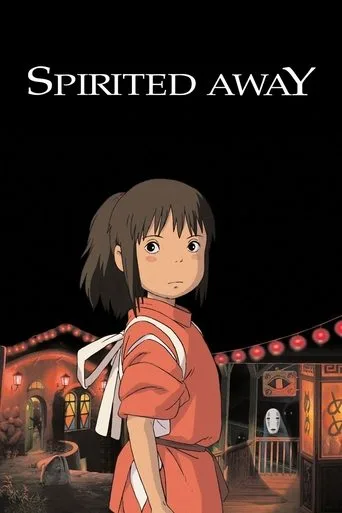
The highest-grossing film in Japanese history until 2023 is also the most complete work of the century's most complete filmmaker. Chihiro, a sulky 10-year-old dragged into a spirit world after her parents are turned into pigs, is the least heroic protagonist imaginable: she complains, she panics, she has no special powers. The film's argument is that competence is built through work, not inherited, and it dramatizes that argument with such patience and specificity that it functions simultaneously as a children's film and as an analysis of labor, identity, and the moral weight of names.
Miyazaki's worldbuilding in "Spirited Away" is the densest of his career: every corner of the bathhouse has its own logic, its own economy, its own social hierarchy. The film's visual imagination, the Radish Spirit, the soot sprites, the faceless No-Face eating his way through the bathhouse, is not decorative. Each creature is a question about what kind of being a person becomes under specific economic and social pressures. It won the Academy Award for Best Animated Feature in 2003 and remains the clearest argument for why the Academy's animated category needs to be judged on the same terms as the best picture field.

George Miller spent 30 years trying to make this film, and the delay produced something that no director working in continuous output could have made. "Fury Road" is built from practical effects, modified vehicles, and stuntwork filmed in Namibia over 120 days, and it moves at a speed that digitally composited action cinema simply cannot replicate, because the physics are real. Miller's editing, the fastest in mainstream cinema without losing spatial clarity, was called "pure cinema" by critics who had spent careers watching filmmakers cut action into illegibility. The film has a 97% Rotten Tomatoes score and six Academy Awards. It's a war film, a feminist film, and the best action film of the century.
Charlize Theron's Furiosa is the film's actual protagonist; Max is a witness and occasional ally. The decision to center the film on Furiosa's mission (freeing enslaved wives from a warlord) while letting Max narrate it in retrospective voiceover is a structural move that took critics a viewing or two to fully process, because the film's marketing positioned it as Max's story. It isn't. It's Furiosa's, and the distinction matters because it's why the film has thematic weight beyond its extraordinary formal achievement.

The Coen brothers' adaptation of Cormac McCarthy's novel is the most faithful literary adaptation of the century, which is a strange claim given that it faithfully reproduces McCarthy's most deliberate formal choice: the refusal to give the audience what it expects from a thriller. Llewelyn Moss finds a briefcase of money at a drug deal gone wrong. Anton Chigurh, played by Javier Bardem in an Oscar-winning performance that redefines screen menace, pursues him. Sheriff Bell, played by Tommy Lee Jones, investigates both. The film withholds conventional thriller resolution at every point where convention would deliver it, and the final scene, Bell's dream speech, is an act of storytelling courage that polarized audiences in 2007 and looks more right every year since.
Roger Deakins' cinematography of the West Texas and New Mexico landscape is the standard against which Western landscape photography in this century is measured. The film's treatment of violence, almost entirely off-screen or immediate without aftermath, is a formal argument that horror lands harder when it isn't aestheticized. The cattle gun is the most terrifying object in 21st-century cinema. Chigurh's coin flips are its most philosophically charged scenes. The whole film is this precise, this controlled, and this serious about what it's doing.

Barry Jenkins' triptych of a man named Chiron across three phases of his life (childhood, adolescence, adulthood) is the most formally accomplished American film of its decade. Each chapter was shot with a different visual register: the handheld intimacy of the childhood section, the more composed adolescent section, the wide and searching adult section. Jenkins uses color, specifically the film's blue palette, as an emotional grammar across all three chapters, and the result is a film that communicates character state through cinematography as effectively as through dialogue.
Mahershala Ali's performance in the first chapter, as a drug dealer named Juan who becomes an unexpected father figure to young Chiron, won the Academy Award for Supporting Actor and is the most precisely observed single performance in the film. But what "Moonlight" does that no single performance can accomplish is make the audience feel the accumulation of a life lived in suppression: the compound effect of hiding identity, absorbing violence, and reconstructing selfhood under pressure. The final scene's silence earns everything that came before it. The film won Best Picture at the 89th Academy Awards after one of the more memorable announcement errors in the ceremony's history.

Spike Jonze's film about a man who falls in love with an artificial intelligence operating system predicted, with unsettling accuracy, the texture of life in the mid-2020s: the isolation dressed as connectivity, the way digital intimacy substitutes for physical presence without fully replacing it, the particular loneliness of a person surrounded by screens. Theodore Twombly, played by Joaquin Phoenix in a performance of almost unbearable openness, is not a cautionary tale about technology. He's a portrait of a person who finds it easier to be emotionally available to a voice without a body than to the people in his immediate life, and the film takes that preference seriously rather than condemning it.
Scarlett Johansson's voice performance as Samantha is the best performance of her career, given entirely without the physical tools that most performances rely on. The production design, realized almost entirely in Los Angeles locations dressed to suggest Shanghai and future LA simultaneously, is among the most coherent world-building in American cinema of the decade. Jonze's original screenplay won the Academy Award. The film's final image, two people sitting on a rooftop in silence after everything has changed, is the right ending for every question the film asks.

Cristian Mungiu's Palme d'Or winner is the most austere film in this top 10, and possibly the most demanding. Set in Communist Romania in 1987, it follows a university student named Otilia as she helps her roommate obtain an illegal abortion. Mungiu films the entire story in long, unbroken takes, often keeping the camera at a fixed distance that refuses to let the audience look away from what the characters are experiencing. There are no musical cues. There is no score at all. The film's most disturbing scene holds on a face at a dinner table for what feels like an impossible duration, doing nothing but registering the absence of emotion that a person develops when they've processed something too large to process.
The film has been described as a document of life under totalitarianism, as a film about female solidarity, as a horror film made from realistic materials, and as all three simultaneously, all of which are accurate. What distinguishes it from other politically charged films of the decade is that Mungiu never editorializes. The circumstances of the characters' situation produce all the horror the film requires without any directorial underlining. Anamaria Marinca's performance as Otilia is the most sustained piece of screen acting in the top 10: she carries the film's entire moral weight without the release of a conventional dramatic peak.
Films 11 through 25

Del Toro's fairy tale set against post-Civil War Spain refuses to let you decide whether Ofelia's fantasy world is real or a child's coping mechanism, and the refusal is the point. The film's two registers, the brutal realism of fascist Spain and the baroque fantasy of the Labyrinth, share a logic: both are worlds where power is arbitrary and cruelty is institutional. Doug Jones as the Faun and the Pale Man are two of the most imaginative creature designs in cinema history. The final scene's meaning depends on which reading you accept, and the film allows both without cheating either. This is del Toro's masterwork.

The most prescient film of the century. Cuaron's adaptation of P.D. James' novel about a world where humans have lost the ability to reproduce looks like documentary footage of 2026 in ways that no one predicted in 2006. Emmanuel Lubezki's cinematography, including the eight-minute continuous take through an active battle sequence, changed what was considered physically possible in action filmmaking. Clive Owen's performance is the rare understated center of an overwhelming film. The scene of a newborn carried through a firefight, both sides stopping to stare, is the most powerful image of hope in 21st-century cinema.

Pixar's film about the emotional architecture of an 11-year-old girl navigating a family move is the most sophisticated depiction of psychology in mainstream American cinema, full stop. The conceit, personified emotions operating a control panel in Riley's head, could have been gimmick. Docter uses it as a delivery mechanism for something genuinely difficult: the argument that sadness is not a failure to be happy, that Joy's compulsive optimism is its own pathology, and that grief is the price of attachment rather than a malfunction. The abstract thought and imagination land sequences are the most inventive film animation of the decade. Bing Bong's farewell is the most devastating thing Pixar has ever produced.

Joshua Oppenheimer's documentary asks the men who led Indonesia's 1965-66 death squads, now elderly and celebrated by their government, to reenact their killings in the film genres they loved: westerns, gangster pictures, musicals. What follows is the most disturbing documentary ever made, not because of historical footage but because of what happens when the perpetrators perform their own crimes for an audience. The film documents, in real time, the moment several of its subjects appear to understand what they did. Whether that moment is genuine or performance is the question the film refuses to answer, and the refusal is its moral seriousness.

Edward Yang's final film follows a Taipei family through three hours of accumulated observation, building an argument about how lives proceed in parallel without ever quite touching. The film has almost no conventional plot: a man revisits a past relationship, his daughter navigates her first, his son (eight-year-old Yang-Yang) takes photographs of the backs of people's heads because they can't see what's behind them. Yang-Yang's project is the film's thesis. We can only see what's in front of us, which means we require other people to see us completely, and most of the time we don't have them. Roger Ebert gave it four stars and called it "a film of a lifetime." He was right.

Ang Lee's wuxia epic is the highest-grossing foreign-language film ever released in North America, and its box office is the least interesting thing about it. The film uses the genre's conventions, wire-work fight choreography, martial arts codes, hidden weapons, the pursuit of a stolen sword, as the container for a story about desire and its suppression across three women at different stages of life. Jen's rebellion, Zhang Ziyi's ferocious performance, is the emotional center. The bamboo forest fight remains the most beautiful action sequence in the century.

Jonathan Glazer's film about an alien wearing a human female body (Scarlett Johansson) who lures men into a black void is the most formally radical film on this list. Most of the encounters between Johansson and the men she approaches were filmed with hidden cameras, the men unaware they were being filmed. The alien's growing confusion about what being human means, and the film's refusal to explain the mythology or assign human motivations to non-human processes, makes "Under the Skin" one of cinema's most accurate portrayals of genuine otherness. Mica Levi's score is its own achievement: electronic noise as emotional state.

Celine Sciamma's film about a painter and her subject in 18th-century Brittany is the most controlled formal exercise in the top 25: no score for the first hour, natural light throughout, a screenplay structured around what is seen versus what is known to be seen. The romance between Marianne and Heloise develops through the logic of looking, and Sciamma makes the act of sustained observation feel charged and mutual in a way that romantic cinema rarely achieves. The scene where the string quartet from Vivaldi's "Summer" enters the film is the single most effective musical cue of the decade.

Aaron Sorkin's screenplay and David Fincher's direction combine to make a film that is simultaneously the most accurate portrait of how Silicon Valley culture operates and entirely a fiction about the specific people it depicts. The film doesn't care whether Mark Zuckerberg is accurately represented; it cares about using Zuckerberg as the carrier for an argument about what it costs to build something that changes the world and what kind of person tends to do that building. Trent Reznor and Atticus Ross' score won the Academy Award. Jesse Eisenberg's performance carries the film's entire moral ambiguity without once breaking the character's impenetrable surface. The opening scene is the best expository scene written for the screen in this century.

Jordan Peele's debut feature functions simultaneously as a horror film, a satire of liberal racism, and an extraordinarily precise piece of genre construction. The film's first half is more uncomfortable than its horror sequences because Peele captures, with unnerving accuracy, the specific texture of a Black man navigating white progressive spaces where the hostility is structural rather than overt. Chris Washington's sunken place is the most effective single horror image of the decade: a perfect visual metaphor for the experience of being present but unheard. The script's screenplay Oscar was well earned.

Linklater filmed Ellar Coltrane, Patricia Arquette, Ethan Hawke, and Lorelei Linklater across 12 years, returning for a few days each year to capture a boy growing up in Texas. The film's formal achievement is inseparable from its emotional one: because you're watching real biological time pass in a child's face, the film produces a variety of mourning that no conventionally cast film can manufacture. Arquette's final scene, watching her son leave for college, is the truest depiction of parenthood that cinema has produced. The 165 minutes feel like a life observed rather than a story constructed.

Michael Haneke's black-and-white film about a series of violent incidents in a German village in 1913 and 1914 is deliberately withholding: no incident is resolved, no perpetrator is identified, no explanation for the collective cruelty is offered. Haneke's argument is that fascism doesn't require an identifiable origin point. It grows from the accumulated effects of authoritarian domestic discipline, repressed sexuality, and institutional hypocrisy on a generation of children, the generation that would become Nazis 20 years later. The Palme d'Or winner is the most rigorous exercise in formal restraint in this top 25.

Steve McQueen's adaptation of Solomon Northup's memoir refuses the conventions of the slavery narrative film: there is no redemptive white savior with meaningful agency, no emotional release built into the film's structure, and no softening of the economic logic that made the slave trade function. The film's most discussed scene, a hanging that lasts eight unbroken minutes while the plantation's daily life continues around it, is formally identical to Haneke's approach: holding duration past comfort to make the audience inhabit time rather than observe it. Lupita Nyong'o's performance won the Academy Award. Chiwetel Ejiofor's is as good and was less recognized.

Asghar Farhadi's film about a married couple in Tehran whose separation triggers a cascading legal and moral crisis is the most structurally elegant screenplay of the decade. Every character in "A Separation" behaves reasonably given their values and circumstances, and every character's reasonable behavior produces consequences for someone else that are unreasonable and unjust. Farhadi builds a film where there is no villain and no easy moral position, where the audience's sympathies shift with each new piece of information, and where the final scene's silence puts the question to a child that the entire film has been circling. The Academy Award for Best Foreign Language Film was the most deserved of its decade.

Ari Aster's debut feature uses horror genre mechanics to make a film about grief, family systems, and the inheritance of trauma. The film's first half is a precision family drama about a woman (Toni Collette) processing her complicated relationship with a recently deceased mother. The second half is a horror film. Both halves are the same film. Collette's performance is the most visceral depiction of unmanageable grief in 21st-century cinema, delivered in a scene at a family dinner table that contains the most uncomfortable 90 seconds of controlled improvisation in recent memory. The film's final image is not there to shock. It is the logical conclusion of everything the film established in its first act.
Track every film on this list
Limelight lets you add films to your watchlist and mark them watched as you go. No sign-up required to get started.


Films 26 through 50
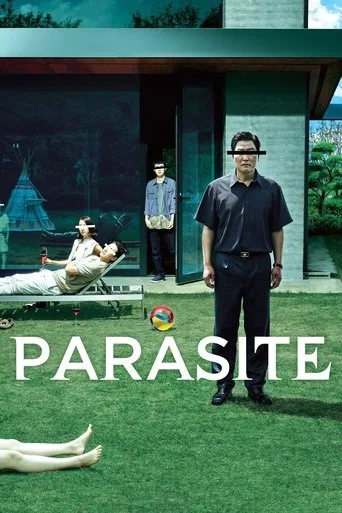
The first non-English-language film to win the Academy Award for Best Picture, and the win was not a courtesy. Bong's class satire about two families, one wealthy and one desperately poor, sharing a house without the wealthy family knowing it is the most precisely constructed screenplay of its decade. The film shifts genres three times. Every shift is earned. The recency discount is the only reason it isn't top 10.

Tarantino's love letter to 1969 Los Angeles uses the threat of the Manson murders to write a film about obsolescence, friendship, and what it means to miss the version of yourself you used to be. Leonardo DiCaprio and Brad Pitt have never been better. The film's final act revises history in a way that earns the revision by making it a fantasy the previous 140 minutes deserve.

Noah Baumbach's divorce film works because it refuses to assign fault. Both Charlie and Nicole are right about what isn't working. Both are making reasonable decisions that hurt the other person. Adam Driver and Scarlett Johansson deliver the most unguarded performances in an American film of the decade. The argument scene in Charlie's apartment is the best-written scene in Baumbach's career.

Emmanuel Lubezki shot this with natural light only, in locations near the southern tip of Argentina, over nine months. The physical demands placed on the cast are documented and severe. The result is a survival film that looks unlike any previous survival film, with a landscape that functions as an active force rather than a backdrop. DiCaprio's Oscar was for physical endurance as much as performance, but the physical endurance is the performance.

The Coens' film about a folk singer in 1961 Greenwich Village who has genuine talent and no capacity for the compromises that success requires is structured as a loop: the last scene connects to the first, suggesting the character is trapped in a cycle of his own making. Oscar Isaac's performance and his actual guitar playing carry everything. Bruno Delbonnel's desaturated cinematography makes the city feel like winter made visible.

Refn's neo-noir uses Ryan Gosling's wordless performance and Cliff Martinez's synthesizer score to create an atmosphere that is simultaneously 1980s Los Angeles genre cinema and something entirely its own. The violence, when it arrives, is sudden and extreme specifically because the preceding silence made it seem impossible. Albert Brooks' casting against type as a gangster is the film's smartest individual decision.

Aronofsky's film about four people destroyed by addiction is the most formally aggressive film on this list: split screens, hip-hop editing at its most extreme, a score by Clint Mansell that has been used in approximately 400 film trailers since 2000. Ellen Burstyn's performance as a television-addicted widow deteriorating under prescription drug dependency is the single finest piece of acting not to win an Academy Award in this century. Watch it once. You won't need to again.

Kaufman's directorial debut is the most ambitious film about mortality in this century: a theater director builds an ever-expanding replica of New York inside a warehouse, casting actors to play himself and everyone he knows, in a project that consumes his entire remaining life. The film grows stranger and more painful as it proceeds. The ending is a genuine confrontation with what it means for a self to end. Not for everyone. For the people it's for, nothing else comes close.

Anderson's second film on this list follows a WWII veteran (Joaquin Phoenix) who attaches himself to the charismatic leader of a new spiritual movement (Philip Seymour Hoffman). The film is not really about Scientology; it's about the human need for a story that explains your damage. Hoffman's final scene with Phoenix contains the most emotionally precise exchange of dialogue in Anderson's filmography, which is saying a great deal.

Park's revenge thriller about a man imprisoned for 15 years without explanation who is released and given five days to discover why holds its central revelation until the final act and then deploys it in a way that reframes every preceding scene. The corridor fight sequence, filmed in a single take with Choi Min-sik visibly exhausted, is the standard for unfaked action choreography. The film won the Jury Grand Prix at Cannes. Quentin Tarantino called it a masterpiece and argued for it against the Palme d'Or jury.

Anderson's most commercially successful and formally inventive film uses three nested frame narratives and three different aspect ratios to tell a story about a legendary concierge in a fictional Eastern European republic between the wars. Ralph Fiennes' M. Gustave H. is the greatest comic performance in Anderson's filmography. The film's sadness arrives in its final frame, after 98 minutes of elaborate comedy, as a reminder that the world the film celebrates was destroyed.

Zeitlin's debut filmed entirely in Louisiana's Isle de Jean Charles community with non-professional actors, centered on six-year-old Quvenzhane Wallis' Hushpuppy, a child confronting flooding, her father's illness, and prehistoric creatures from the ice. The film uses magical realism to argue for the dignity of communities that the developed world has decided are disposable. Wallis became the youngest Best Actress Oscar nominee in Academy Award history at age nine.

Granik's film about a 17-year-old girl searching for her missing father through the Ozark meth economy introduced Jennifer Lawrence to the world and remains her best performance. The film's Sundance Grand Jury Prize was the right call. It is a neo-noir built from documentary-adjacent realism, using actual Ozark locations and partially non-professional casts. The film's most powerful quality is Ree Dolly's refusal to accept that the world's cruelty exempts her from her obligations.

Eggers' debut is a period horror film set in 1630s New England, built entirely from documented sources: the dialogue is assembled from period court records, the production design from surviving artifacts. The film's central question is whether the family's collapse is caused by the witch or by the Puritan theology that makes every failure evidence of damnation. Anya Taylor-Joy's performance established her as the defining horror actress of the decade. The film's final scene is a genuine and uncommon instance of a horror ending that provides the horror it promised.

Lowery's film about a recently deceased man (Casey Affleck in a white sheet with eye holes) observing his wife's grief and the passage of time in their shared house is the most formally strange film in this bottom 25. It stretches time elastically: one scene holds on Rooney Mara eating a pie in an unbroken take for four minutes. The film earns that patience by using it to make the audience feel duration itself, which is the film's actual subject. Grief doesn't resolve; it just eventually occurs somewhere else.

Schrader's film about a tormented minister in an upstate New York historical church is the culmination of his career's central obsession: the man who has lost faith in a framework that previously organized his entire life. Ethan Hawke's performance is the finest of his career, constructed around what the character cannot say rather than what he can. The film's ending is contested. It is also deliberately constructed to be contested, and the controversy is the point.

Garland's adaptation of Jeff VanderMeer's novel follows five scientists into an environmental anomaly called the Shimmer, where biological life is mutating according to rules the film never fully explains. The film is explicit that it is not interested in explaining its central mystery, which is the correct decision. Natalie Portman's performance and Mark Sheridan's lighthouse creature sequence are the film's two peaks. Paramount buried it with a rushed streaming release. Its reputation has grown steadily since.

Lee's adaptation of a Haruki Murakami short story is the most patient thriller of its decade: a young man becomes obsessed with the possibility that a wealthy acquaintance has committed a crime, but the film never confirms whether the crime occurred. Steven Yeun's performance as the possibly sinister Ben is built from almost nothing, a slight smile at slightly wrong moments. The film's final act arrives with the force of something that has been building without your noticing. The longest slow burn in recent Korean cinema.

Carax's film follows a man named M. Oscar who travels by limousine through Paris performing a series of unrelated "appointments," each in a different identity and genre. The film is a meditation on performance, cinema, and what it means to inhabit other lives. The Merde sequence (Denis Lavant in a motion-capture suit eating flowers in Pere-Lachaise cemetery) and the accordion interlude in the abandoned department store are two sequences that exist nowhere else in cinema. The most purely cinephile film on this list.

Zhao's second feature follows Brady Jandreau, a real rodeo rider recovering from a brain injury that ended his career, playing a fictionalized version of himself. The film's non-professional cast and documentary-adjacent approach give it an emotional register that professional production cannot replicate. Brady's scenes training horses, his hands moving with a precision his brain can no longer manage at full capacity, are among the most beautiful images of physical skill in recent American film.

Cuaron's black-and-white film about a domestic worker in 1970s Mexico City, based on his own childhood housekeeper, won three Academy Awards including Best Director and Best Foreign Language Film. The domestic violence sequence and the ocean rescue sequence are two of the most formally accomplished scenes in his filmography. The film's central argument, that the most important people in a child's life are often the least visible, is stated without sentimentality.

Kore-eda's Palme d'Or winner follows a family of petty criminals in Tokyo who take in an abused child. The film builds genuine affection for its characters across 90 minutes, then systematically dismantles every assumption the audience made about who they are to each other. The film's interrogation scenes, where the family's constructed identity is undone by institutional authority, are devastating precisely because of how much the first act made you care about people who were deceiving you.

Eggers shot this in black and white on 35mm in a 1.19:1 aspect ratio, matching early film formats, with a cast of two (Robert Pattinson and Willem Dafoe) and a location on Cape Forchu in Nova Scotia. The film is about two lighthouse keepers going mad in isolation. It draws on Melville, Prometheus, and two centuries of maritime folklore. Dafoe's monologue in Act 3 is the most operatic piece of writing in Eggers' work. The aspect ratio makes the claustrophobia physical.

Aster's second feature is a horror film set almost entirely in bright Swedish summer sunlight, which is its central formal innovation: removing darkness from horror forces the film to generate dread from what characters know rather than what they can't see. Florence Pugh's grief performance in the film's opening 20 minutes is the foundation everything else stands on. The extended director's cut, at 171 minutes, is the preferred version. It makes the commune's internal logic cohere in a way the theatrical cut doesn't quite achieve.

Baker's film about a six-year-old girl named Moonee and her mother living in a budget motel near Disney World is the most complete portrait of American poverty in 21st-century film. Bria Vinaite's performance as Moonee's mother Halley was delivered by a non-professional actor Baker found on Instagram. Brooklyn Prince's Moonee is the most credibly observed child performance in recent cinema. The film's final two minutes switch to iPhone footage in a formal choice that critics still split on, and that reads as a masterstroke more often than not.
The 50 films on this list were made across 15 countries, and the beginner's guide to international films is a gentler way in if subtitles are new to you. The top 10 alone span five languages and four continents. If your mental model of "great cinema" is still primarily American and English-language, this list is a direct argument against that model.
A few patterns worth naming. The 2010s produced more films in the top 50 than any other decade, which is partly a function of recency and partly a function of the explosion in production quality that digital distribution created for non-English-language cinema. Directors represented twice include the Coen brothers (numbers 7 and 30), Paul Thomas Anderson (numbers 2 and 34), Robert Eggers (numbers 39 and 48), and Ari Aster (numbers 25 and 49). The most represented country is the United States at 28 films, followed by South Korea at 5, France at 4, and Japan and the United Kingdom at 3 each.
There are 9 films in this 50 directed by women: Portrait of a Lady on Fire (Sciamma), Boyhood-adjacent in terms of the female directorial presence (Jenkins' "Moonlight," though Jenkins is male, centers female experience), The Rider (Zhao), Winter's Bone (Granik), and several others distributed through the list. That percentage is below the actual ratio of great films directed by women released since 2000, which reflects a structural problem in the critical infrastructure that produces the polling data this list draws from. It is a limitation of the methodology, not a claim about relative quality.
The most useful thing this list can do is give you a starting point, whether that becomes a personal canon or a year of one film a week. The second-most useful thing is give you an argument with it. Both of those outcomes mean you're watching more of these films, which is the whole point.
Build your watchlist from this list
Limelight tracks what you've seen and what you're saving. Add the films that interest you here and you'll have a structured queue ready when you want to watch.
Frequently asked questions
This list aggregates critic scores from Rotten Tomatoes, Metacritic, and Sight and Sound polling with audience ratings from IMDb and Letterboxd. No single score decides a film's placement. Films with strong consensus across both critic and audience sources rank above films that dominate one metric but polarize the other. Recency bias is weighted down: films from 2000 through 2010 had more time to accumulate critical reassessment.
Parasite ranks 26th, not because it is a lesser film than those above it, but because the aggregated scoring methodology weights critical longevity alongside peak scores. Films from 2001 through 2013 have had a decade or more of reassessment, retrospective criticism, and sustained ranking in major polls. Parasite premiered in 2019 and has had less time to accumulate that layer. It will likely rank higher on any list compiled five years from now.
Mad Max: Fury Road at number 6 is the closest this list gets to a mainstream blockbuster, and it earned that position by carrying a 97% Rotten Tomatoes score and appearing in dozens of decade-end critical polls. The list skews toward films with strong critical consensus. Films with massive box office but middling critical scores did not make the cut regardless of their cultural footprint.
Many of these films cycle in and out of Netflix, Mubi, Criterion Channel, HBO Max, and the Kanopy library (free with a library card). A lot of the cycling is driven by licensing contracts that expire every 90 days. The streaming licensing explainer covers why titles disappear and how to track them down when they do. For films not currently streaming anywhere, the guide to finding where any movie streams covers every method that works, from rental platforms to library apps. Several titles are available for a few dollars to rent on Apple TV or Amazon. A handful require a Criterion or Mubi subscription, which costs less per month than a single theatrical ticket.
Start with Eternal Sunshine of the Spotless Mind (number 3) or Spirited Away (number 5). Both are emotionally accessible, immediately gripping, and available on major platforms. They demonstrate what the rest of this list is reaching for: films that justify the medium, not just fill time. After those two, work the top 10 in any order before moving into the longer list.