You open the app to watch the film you bookmarked three weeks ago. It's gone. No explanation, no warning. The poster is just missing from your list, and searching for the title brings up a screen that says it isn't available. This experience is so common that most streaming subscribers have simply accepted it as a feature of how the medium works. It isn't a feature. It's a structural consequence of how streaming rights are bought and sold, and understanding the mechanics makes the whole situation considerably less mysterious and considerably more manageable.
The short version: streaming platforms don't own most of the films they show you. They license them for a defined period of time, and when that period ends, the film leaves. The studios that own the rights can renegotiate, sell to a competitor, or let the title sit unavailable while a new deal gets worked out. None of this is visible to the viewer, which is why it feels random. It isn't random. It's contractual.
Here is the longer version, with five tactics for working around it at the end.
Why does a film disappear from streaming in the first place?
The fundamental economics of streaming rights work like this: a platform like Netflix, Max, or Hulu wants to offer a film to its subscribers. The film is owned by a studio, a production company, or an individual rights holder. The platform negotiates a licensing deal that grants it the right to stream the film for a specific territory (the United States, Western Europe, global) for a specific period of time, typically 12 to 36 months. The platform pays a licensing fee, the studio gets paid, and the film appears on the platform for that window.
When the window closes, one of three things happens. The platform and the rights holder renegotiate, and the film stays. The rights holder licenses the film to a different platform, and the film moves. Or no new deal is signed yet, and the film disappears entirely while both parties figure out what to do next. The third outcome is more common than most viewers realize, and it explains why some films seem to be simply missing from streaming for months at a stretch before reappearing.
The title didn't get delisted because it was bad, because it underperformed, or because of any quality judgment. The contract expired. If no new deal was in place when it expired, the film had to come down. This is not a decision any platform makes casually. Removing a title creates a worse product for subscribers. Platforms would rather keep everything up. But they can only show you films they have the legal right to show you, and legal rights have end dates.
There is one important caveat to all of this, and it explains why some content never moves. Films and shows that a platform produces itself are a different category entirely. Netflix Originals are owned by Netflix. They don't license them from anyone, and there's no expiration date to negotiate around. This asymmetry is central to understanding why the streaming landscape looks the way it does now.
Why do originals stay when licensed films disappear?
When a streaming platform produces an original, it owns the content outright. There is no licensor on the other side of the deal. There is no competing bid from another platform. There is no expiration date. Netflix Originals will always be on Netflix. HBO Originals will always be on Max. Disney+ Originals will always be on Disney+. The original content strategy is, at its core, a solution to the licensing instability problem, and the platforms understood this from early on.
Library content, meaning films and shows that were produced by studios or production companies before the current streaming era, works differently. The rights were created under a different set of commercial assumptions, before any streaming platform existed. Those rights have to be licensed every time they're used, in every territory, for every defined window. The licensing is a perpetual negotiation, and each negotiation creates a potential failure point where the content goes dark.
Studios discovered this asymmetry and began using it strategically. The pivotal shift came when major studios realized that licensing their library content to Netflix was, in effect, strengthening a competitor. Every Disney film on Netflix was a reason not to subscribe to Disney's own eventual streaming service. Every Warner Bros. film on Netflix was a reason to stay on Netflix rather than move to Max. The studios began pulling their content back to seed their own platforms.
Disney pulled its Disney, Pixar, and Marvel films from Netflix to launch Disney+ in 2019. NBCUniversal pulled its library from competing services to launch Peacock. WarnerMedia pulled its library to strengthen what became Max. Each withdrawal made one platform stronger and every other platform weaker, and the viewer who had been relying on any given platform for reliable access to any given studio's content found that access simply gone. This was not a bug in the strategy. It was the point of the strategy.
How the studio content wars accelerate title rotation
The consequence of every major studio building its own streaming service is that the same film that was available on four platforms in 2020 may now be exclusively on one. If you don't subscribe to that one, you cannot watch it without renting or purchasing. This is a direct reduction in access for viewers, and it has happened while subscription costs have increased. The math is unfavorable in both directions.
The studios are acting in their financial interest, which is rational. Building a streaming service with a strong exclusive library creates a differentiated product that justifies subscription revenue. That differentiation requires exclusivity. Exclusivity requires pulling content from competitors. Each step follows logically from the previous one, and the viewer's experience of reduced access is a side effect rather than an intention. Understanding this doesn't make it less frustrating, but it does clarify that the situation is structural rather than capricious.
The secondary effect is that platforms have responded to losing licensed library content by accelerating original production. More originals mean more permanently stable content on each platform, which is genuinely good for subscribers of that specific platform. It also means that an increasing percentage of every platform's library is content that can never leave and can never be found anywhere else, which fragments the total available library across more subscription costs than most viewers want to maintain simultaneously.
The net result for viewers: total available library on any given platform has decreased over the past three years even as subscription costs have increased. The studios are better off. The platforms are competing harder for differentiation. The viewer is paying more for less coherent access to the full catalog of film that exists.
Tactic 1: Rotate streaming services strategically
The most effective cost control strategy in the current environment is treating your streaming subscriptions as a portfolio that you actively manage rather than a fixed monthly overhead. Most households maintain three or four subscriptions simultaneously as a baseline, but the content any specific household is actually watching rarely justifies all four at once.
The rotation strategy works like this: keep two services permanently, the ones whose libraries you consistently use and whose originals you follow. Rotate one or two additional slots monthly based on what's arriving and leaving those platforms. Sites like JustWatch publish what's arriving and leaving each platform in the coming month, usually releasing the next month's list in the final week of the current month.
The practical application: a film you've been meaning to watch is leaving Netflix in 12 days. That's your signal to watch it this week rather than continuing to defer it. A director's retrospective is arriving on the Criterion Channel next month. That's your signal to subscribe to Criterion Channel next month and evaluate whether to continue. The key shift is from passive subscription to active calendar management. You are scheduling your access rather than assuming it's always available.
This approach requires slightly more attention than setting up autopay and forgetting about it, but it reduces the total annual cost of streaming considerably and removes the worst frustration of the current system, which is paying for four services simultaneously and still not finding the thing you want to watch.
Tactic 2: The library DVD option that nobody uses
Public library DVD collections are dramatically underused by streaming-era viewers. The streaming transition created a cultural assumption that physical media is obsolete and that anything worth watching is available digitally somewhere. Neither assumption is true, and the gap between them is filled by library DVD collections that most cardholders never touch.
Most urban and suburban library systems maintain extensive DVD collections that include foreign films, older American titles, independent productions, and exactly the kind of content that rotates off streaming services and becomes unavailable digitally for extended periods. The collection is free with a library card, the checkout period is typically one week, and the title you can't find on any streaming service is often sitting on a shelf two miles from your house.
Kanopy is the streaming extension of this. A free service available through participating library systems, Kanopy's catalog is built around art-house, independent, documentary, and classic cinema, which overlaps heavily with the category of content that commercial streaming platforms don't carry reliably. If your library system participates, you get a defined number of films per month at no cost. The catalog is not exhaustive, but it covers a significant range of titles that are genuinely difficult to find elsewhere.
Hoopla is a similar library-adjacent service with different catalog strengths, including more recent independent releases and a stronger selection of genre titles. The two services are complementary, and together with physical DVD checkout, they cover a substantial portion of the content that commercial streaming has made unreliable. All three are available at no additional cost beyond a library card.
Tactic 3: The digital purchase math
For films you watch more than once, digital purchase is often the better economic choice compared to maintaining a streaming subscription specifically to access them. The math is straightforward once you run it explicitly.
A digital purchase on Vudu, Apple TV, or Amazon typically costs $10 to $15 for a standard definition or HD copy and is yours permanently. There's no licensing window, no risk of it disappearing, no need to maintain a subscription to the specific platform that currently holds the rights. One payment, permanent access.
Compare that to one month of a streaming subscription at $15 to $18. If you're maintaining that subscription primarily to access one or two specific titles, the purchase price and the monthly cost are roughly equivalent. In the second month you'd need access to those titles, the purchase has already broken even. For a film you return to regularly, the difference compounds over time in favor of ownership.
The more important calculation is emotional rather than financial: a film you care about enough to watch repeatedly is a film you care about enough to own rather than borrow indefinitely from a platform that can revoke access whenever its licensing situation changes. Ownership is the only permanent solution to licensing instability, and for the films that matter most, it's the right one.
Tactic 4: Using a cross-platform watchlist that tracks availability
The most frustrating specific experience in current streaming is the one that brought many people to this article: you added a film to your mental list or your platform's built-in watchlist, you sat down to watch it weeks later, and it was gone. The built-in watchlists on streaming platforms only track availability on that platform. When a title leaves, it disappears from the list with no explanation and no forwarding address. You have no way to know which other platforms might now carry it, or when it might return.
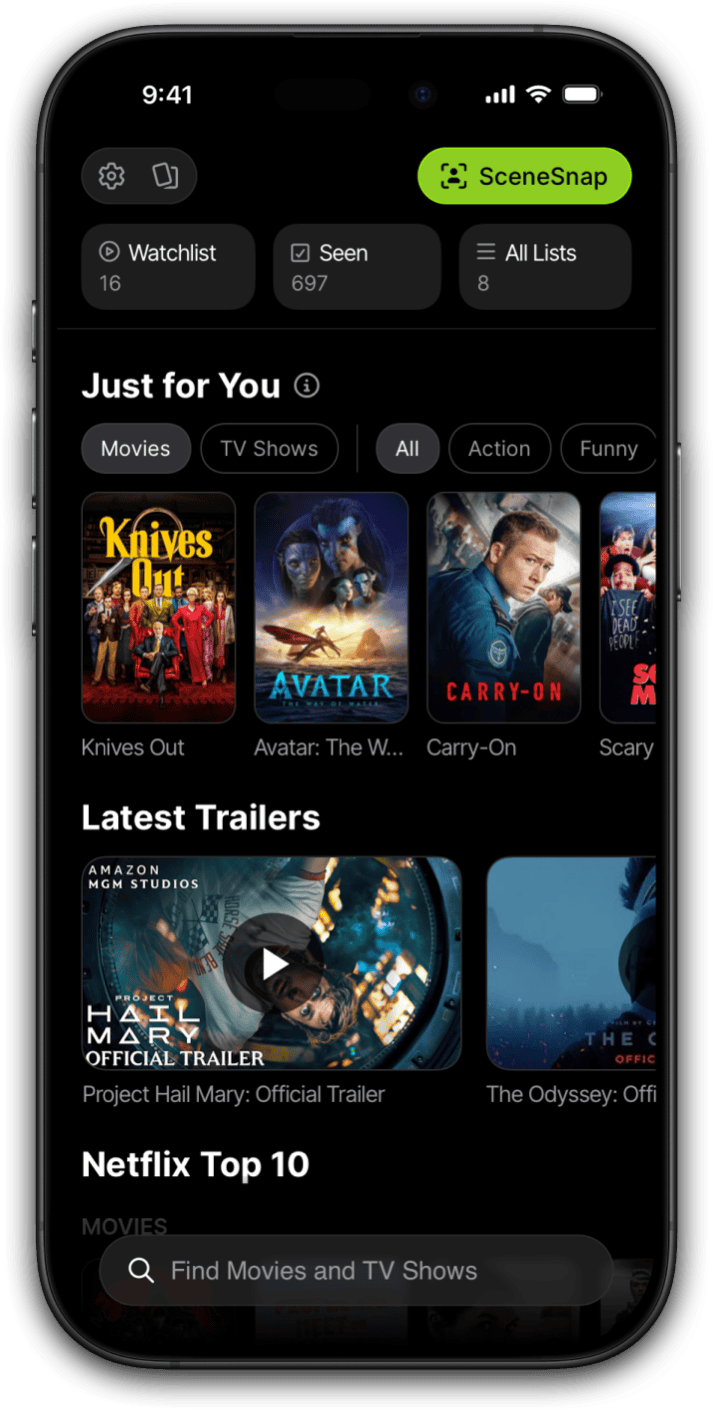
A cross-platform watchlist solves this at the infrastructure level. I built Limelight to solve exactly this problem among others. When you add a film to your Limelight watchlist, the app tracks that film's streaming availability across all major platforms simultaneously. If the film leaves Netflix, Limelight shows you whether it's available on Max, Hulu, Prime Video, Apple TV+, or any other service. If it's currently available nowhere, the film stays in your watchlist and the app surfaces it again when it returns to streaming.
The mechanism is availability indexing that runs continuously across platforms, not a static database that updates monthly. When a title's licensing situation changes, the change propagates into the app. This turns the passive experience of losing a film into an active system where no film stays permanently lost. It doesn't make the licensing situation better, but it does mean the information is in one place rather than scattered across however many platform-specific watchlists you currently maintain.
Stop losing films you planned to watch
Limelight's watchlist tracks streaming availability across platforms so you know when a title you're saving returns to streaming.

Paying for streaming and having reliable access to the films you want to watch are two different things. The gap between them is the licensing market, and it exists whether or not you're aware of it.
The five tactics above are not a complete solution to the structural problem. The structural problem is that streaming rights are temporary and the studios have strong financial incentives to keep the licensing market fragmented. That won't change in the near term. What the tactics do is reduce the practical impact of that structure on your actual watching experience. Better information about what's leaving and arriving, free alternatives for content that commercial streaming doesn't carry, ownership for the films you care most about, and a tracking system that keeps no film permanently lost.
The underlying situation is that streaming promised universal access and delivered conditional access. The condition is the licensing deal, and the deal is always temporary. The viewer who understands this and adjusts accordingly ends up significantly better off than the viewer who treats streaming as a static library that should always contain what they want. The library is dynamic, it has always been dynamic, and the platforms have limited control over how dynamic it is. Working with that reality rather than against it is the only practical response available.
Track what you want across every platform
Add films to your Limelight watchlist and get notified when they return to streaming. Free.
Frequently asked questions
Movies disappear from Netflix because streaming rights are licensed for a fixed term, typically one to three years, not purchased permanently. When a licensing deal expires, Netflix must renegotiate or let the title go. If the studio wants more money, if the rights have been sold to a competitor, or if the studio is pulling content to its own platform, Netflix simply can't show the film anymore. The title didn't get worse. The contract ended.
Yes. Sites like JustWatch publish monthly lists of what's arriving and leaving each platform. Netflix itself sometimes surfaces a "leaving soon" label on titles within the app, though this is inconsistent. The most reliable method is using a cross-platform watchlist app like Limelight, which tracks availability across services for every title you've saved and shows you when a tracked film is newly available or about to disappear.
Yes, through several channels. Digital rental or purchase through platforms like Vudu, Apple TV, or Amazon gives you access to most films regardless of streaming availability. Public library DVD collections carry a wide range of titles, including foreign films and older releases, for free. Kanopy and Hoopla are library-adjacent streaming services that offer titles rarely found on commercial platforms. For titles between licensing deals, these alternatives often cover the gap.
Films that appear on many services simultaneously are usually older titles or titles from studios that haven't built their own competing streaming service. The rights holder has no platform to protect, so licensing broadly is pure revenue. Films that appear nowhere are often caught in one of three situations: the rights are tied up in a studio exclusivity deal, the rights holder is holding out for a better offer, or there's a legal or ownership dispute over the title. The licensing market is a negotiation, and not every negotiation resolves quickly.
The math depends on how much you'll watch it. A digital purchase on Vudu, Apple TV, or Amazon typically costs $10 to $15 and is yours permanently. If you'd watch the film more than once, or if you love it enough that losing access would genuinely bother you, buying is usually the better choice. For a film you're curious about but unsure of, a $5 to $6 rental is lower risk. The key insight is that streaming access is temporary by design, so any film you care deeply about is worth owning rather than licensing from a platform indefinitely.