
Most people subscribed to streaming services in 2020 and have never seriously revisited those decisions. A lot has changed since then: prices have gone up across the board, catalogues have shifted, and the originals that justified a subscription two years ago have either already been watched or quietly cancelled. What hasn't changed is the inertia. Streaming services are designed to be forgotten. The billing cycle arrives, the charge goes through, and the service stays on because cancelling requires a decision and staying on requires none.
I've run a version of this audit on my own subscriptions twice now. Both times I found at least one service I was paying for that I hadn't used in over a month and couldn't name a single upcoming title I was waiting for. The audit takes about 20 minutes if you have your subscription list and viewing history in front of you. The savings on one cancelled service typically cover the time investment inside a week.
Here is the full framework, including the cost-per-hour calculation, the five criteria for "worth keeping," the platform-by-platform assessments, and the rotation strategy that lets you access everything you want without paying for everything all the time.
What is the cost-per-hour audit and how do you run it?
The framework is simple, but most people have never applied it to their streaming subscriptions. For each service you currently subscribe to, do three things:
- Note the monthly cost, after any bundling discounts.
- Estimate the hours you actually watched that service in the past month. Be honest here. Not hours the TV was on. Not hours the app was open. Hours you were actively watching content on that specific platform.
- Divide cost by hours: $15 divided by 3 hours equals $5 per hour.
The $5/hour threshold is the review trigger. Any service above that number is either underused relative to its price or overpriced relative to your actual usage pattern. It doesn't mean you should automatically cancel everything above $5/hour, but it means those services deserve an honest look at the five criteria below rather than automatic renewal.
To put this in context: a movie theater ticket runs roughly $15 for two hours, or $7.50/hour. A streaming service at $5/hour is delivering better per-hour value than a theater trip, which is a reasonable baseline for what "worth it" means for passive entertainment. A service at $15/hour is delivering roughly the same value as going to the cinema while also giving you no particular reason to leave the house. That's hard to defend if you're watching more than a couple of titles per month across other platforms.
Run through all current subscriptions with actual numbers before you do anything else. Write them down. This is the mechanical part of the audit, and it's worth being unsparing about the math. The numbers tell you where to look. The five criteria below tell you what to do once you're looking.
What makes a streaming service actually worth keeping?
Cost per hour is a diagnostic, not a verdict. A service might have high cost-per-hour for good reasons: you binge-watched one season of something exceptional last month and have another season arriving next month. Or you're in a household where you're the only person using it. The five criteria below turn the diagnostic into a real decision.
Exclusives you actually watch. Not "there's content I might watch someday" but content you've watched in the past 90 days that is only available on that platform. If you can't name two or three pieces of platform-exclusive content you've watched in the past three months, the exclusivity argument doesn't apply to your actual usage. The theoretical value of a library you aren't watching is zero.
Upcoming releases you're genuinely planning to watch in the next 60 days. A concrete title you're waiting for can justify a subscription even if recent usage was low. The distinction is between a specific title you've already decided to watch and a vague sense that something good will probably come out eventually. The latter is subscription inertia dressed up as anticipation.
Household usage across all members. A service that one person in a household watches daily is cheaper per hour than the individual cost suggests. When you calculate cost per hour, account for everyone's usage, not just your own. A service that looks overpriced for one person might be solid value when two people in the same household are each watching regularly.
Catalogue depth in genres you care about. Some services have exceptional depth in specific areas that justifies a lower average monthly usage. Max's HBO drama library is not replaceable elsewhere. The Criterion Channel's art cinema catalogue is the deepest curated collection of classic and international film available to stream. Shudder's horror depth is unmatched in that genre. If a service has exceptional depth in something you actually care about, that has catalogue value even when you're not actively watching every week.
Feature value beyond the catalogue. Download capability for travel, quality levels (4K, Dolby Vision, Atmos), simultaneous streams across family members, and ad-free tiers all have household-specific monetary value that the content calculation misses. A service that allows four simultaneous streams is effectively delivering four subscriptions for the price of one in a household with four active viewers. That changes the per-person cost-per-hour calculation meaningfully.
A service that scores well on two or three of these criteria is worth keeping. A service that scores on none of them is a cancellation candidate regardless of how long you've been subscribed or how much you feel like you should be watching it.
How to structure two permanent and two rotating slots
The most useful structural change you can make to your streaming subscriptions is distinguishing between services you genuinely can't imagine cancelling regardless of the monthly release calendar, and services you're subscribing to because of specific upcoming content.
The rotation strategy works as follows: identify one or two services that are permanent, meaning you'd keep them regardless of what's releasing this month. These are typically the services with the deepest catalogue value in genres you watch consistently, or the services where your household's regular viewing is concentrated. Everything else becomes a rotating slot, meaning you subscribe based on what's releasing, then cancel once you've watched it.
This is practical because services like JustWatch publish monthly arrival and departure calendars for every major platform. You can see, in early November, exactly what's arriving on each service in November and December. If Max has a new season of something you've been waiting for arriving in three weeks, you subscribe to Max in week three. If there's nothing scheduled in the month after that, you cancel and pick up Hulu when the next season of something you want drops in January.
Over a full year, this approach typically halves the standing subscription cost while still giving you access to everything you actually want to watch. The constraint it requires is a willingness to cancel things rather than assuming you'll get around to them. Services are deliberately designed to make inertia the path of least resistance. The rotation strategy makes cancellation a routine rather than a decision.
A useful rule: if you decide to cancel something, cancel it in the same session where you made the decision. The services know you might cancel and have built friction into the cancellation flow. If you close the browser tab with the intention of cancelling later, the probability of it actually happening drops sharply. Decision and execution need to happen together.
A quick read on what each major platform is actually good at
Brief, honest assessments for the "worth keeping" calculation:
Netflix has the largest catalogue and the worst discovery UX of any major service. The homepage is heavily algorithmic and surfaces content Netflix has a financial interest in you watching rather than content you'd actually love. The catalogue depth is real, but navigating it requires effort the interface doesn't make easy. Worth keeping as a permanent slot if you watch Netflix originals regularly. Worth rotating if you don't.
Max has the best quality-to-title ratio of any major streaming service. The HBO library alone, which includes the full back catalog of prestige television from the last 25 years, is a permanent-slot argument on its own. Serious TV and film viewers should probably keep this one. The Warner Bros. film library adds considerable depth. Max is a case where the catalogue value justifies the subscription even in months where you're not actively bingeing.
Disney+ has a well-defined catalogue: Marvel, Star Wars, Pixar, Disney Animation, and National Geographic. If your household watches these regularly, the value calculation is straightforward. If you don't, the catalogue doesn't have meaningful depth outside those franchise categories and the rotating-slot model applies.
Hulu offers the strongest live TV component among streaming services, which changes the value calculation entirely if your household wants live sports or news. For film and TV viewers without live TV interest, it has solid general catalogue breadth and is worth keeping as a rotating slot around specific season drops.
Apple TV+ has the smallest catalogue of any major service and the highest hit rate per title. The originals are genuinely excellent on average. But the library is thin enough that you can exhaust the content you actually want in a few months. Worth keeping for one or two months per year around major Apple Original releases rather than as a year-round subscription.
Amazon Prime Video is often bundled with Prime membership, which changes the audit: if you'd pay for Prime shipping regardless, include the streaming component at zero marginal cost. If you wouldn't, the standalone streaming value has to carry its own weight. The catalogue is vast but uneven, and the discovery UX is the worst of any major service, partly because Amazon surfaces its own content prominently and buries third-party licensing. Factor in the appropriate standalone cost when auditing.
Peacock and Paramount+ derive most of their value from live sports and specific franchise content (Peacock for the Premier League and NBC Sports; Paramount+ for NFL and CBS content). For viewers without live sports interest, both are typically rotating-slot services organized around specific original series arrivals rather than permanent subscriptions.
Criterion Channel and MUBI are specialist services for viewers who watch classic, international, and art cinema. At $10 to $12 per month, both are extraordinary value for the specific viewer they serve. If you're the kind of person who watches two or three films per week and cares about directors, cinematography, and film history, one of these is probably worth more to you than any of the general services listed above. If you're not that viewer, neither makes sense.
How to run the audit in 20 minutes
Pull up your subscriptions, pull up your viewing history for each service, and run the following sequence:
- List every active streaming subscription and its monthly cost. Include bundles at their effective per-service cost. Check your credit card or bank statement rather than guessing, because prices have changed and most people are underestimating what they're paying.
- Open the viewing history in each service's account settings. Netflix, Max, Apple TV+, Disney+, and most others make this available in the account or profile section. Tally the hours for the past 30 days. Be conservative: if you started something and abandoned it after 20 minutes, don't count it as a full episode.
- Calculate cost per hour for each service. Write the number down.
- For any service above $5/hour, apply the five criteria. Write down your scores, or at least your honest gut response to each one.
- Make a decision: keep permanently, move to rotating, or cancel. Then execute the decision in the same session.
- Set a calendar reminder 90 days out to run the audit again. Subscription value changes as release calendars shift and your own viewing habits evolve. A service that's essential in March might be dead weight in June.
The most important rule is also the easiest to ignore: if you've decided to cancel something, cancel it before the next billing cycle rather than putting it off. Services are designed to make cancellation forgettable. You'll land on a retention offer, or a "are you sure?" page that lists content you might like, and the path of least resistance is to close the tab. The decision and the execution need to happen in the same session, or the decision effectively didn't happen.
See what's streaming before you subscribe
Limelight shows you exactly which streaming service has the films and shows you want to watch, so you can time your subscriptions around actual content.

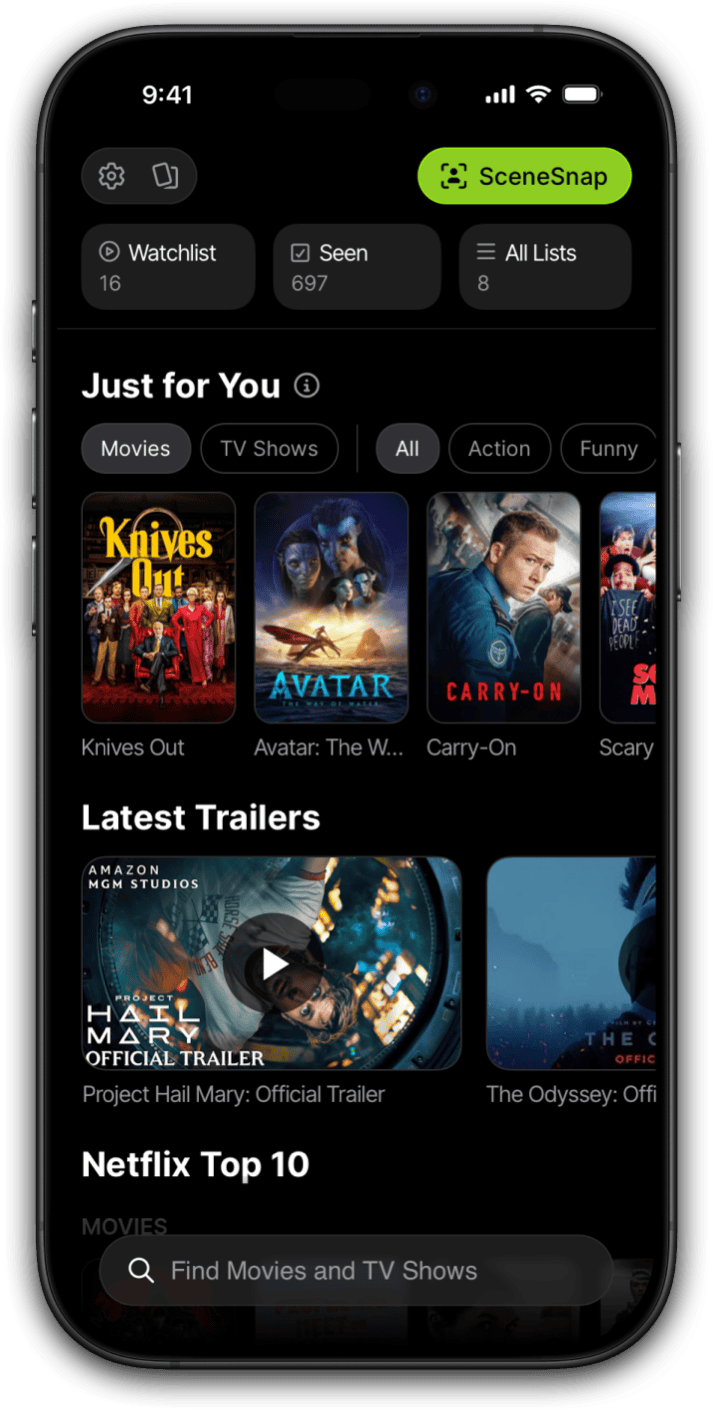
Streaming services are designed to be kept on without being thought about. The audit is how you make the decision rather than letting inertia make it for you.
Running the audit once produces savings. Running it quarterly produces a subscription stack that's actually calibrated to how you watch rather than how you imagined you'd watch when you signed up. The services you keep will be the ones you're genuinely using, and the rotating slots will be filled based on what you actually want to watch next rather than what sounded good eighteen months ago.
The broader habit the audit builds is treating streaming subscriptions as active decisions rather than passive defaults. That shift changes how you relate to the services you do keep: you know why they're there, you know what you're getting from them, and you have a concrete reason to keep them that isn't just "well, I've always had it."
Know what's where before you pay for it
Limelight tracks streaming availability across every major platform. Check before you subscribe, not after. Free.
Frequently asked questions
Take your monthly subscription cost and divide it by the number of hours you actually watched that service in the past month. For example: $15 per month divided by 3 hours watched equals $5 per hour. The key is using hours you were actively watching, not hours the TV was on in the background. Any service above $5 per hour deserves a review, either it's underused or the content isn't actually matching your habits the way you assumed it would.
Value is household-specific, but a few services consistently punch above their price point. Max offers the best quality-to-title ratio among major services thanks to the HBO library. Criterion Channel and MUBI are extraordinary value for serious film viewers at $10 to $12 per month. Netflix has the largest catalogue but the most uneven hit rate. The honest answer is that "best value" depends on what you actually watch, which is why running the cost-per-hour audit with your own numbers matters more than any general ranking.
Run the math. If you watched three hours of Netflix last month and pay $15.49, that's roughly $5.16 per hour, which is right at the review threshold. If you watched one hour, that's over $15 per hour, which is hard to justify. The question to ask is whether you're paying for content you actually watch or for content you theoretically might watch someday. If it's the latter, Netflix is a candidate for the rotating-slot model: cancel now, re-subscribe when a specific title you want arrives, then reassess.
Apply five criteria to each service: exclusives you've actually watched in the past 90 days, upcoming releases you're genuinely planning to watch in the next 60 days, household usage across all members, catalogue depth in genres you actively care about, and feature value like downloads or simultaneous streams. A service that scores well on at least two or three of those criteria is worth keeping. A service that scores well on none of them is a cancellation candidate, regardless of how much you feel you should be watching it.
The rotation strategy divides your subscriptions into two categories: permanent slots (services you'd keep regardless of what's releasing this month) and rotating slots (services you subscribe to based on what's releasing, then cancel when there's nothing scheduled). You keep one or two permanent services, then treat the remaining subscriptions as active monthly decisions. Services like JustWatch publish monthly arrival and departure calendars that make it practical to time subscriptions around specific content. Over a year, this approach can cut standing subscription costs roughly in half while still giving you access to everything you actually want to watch.