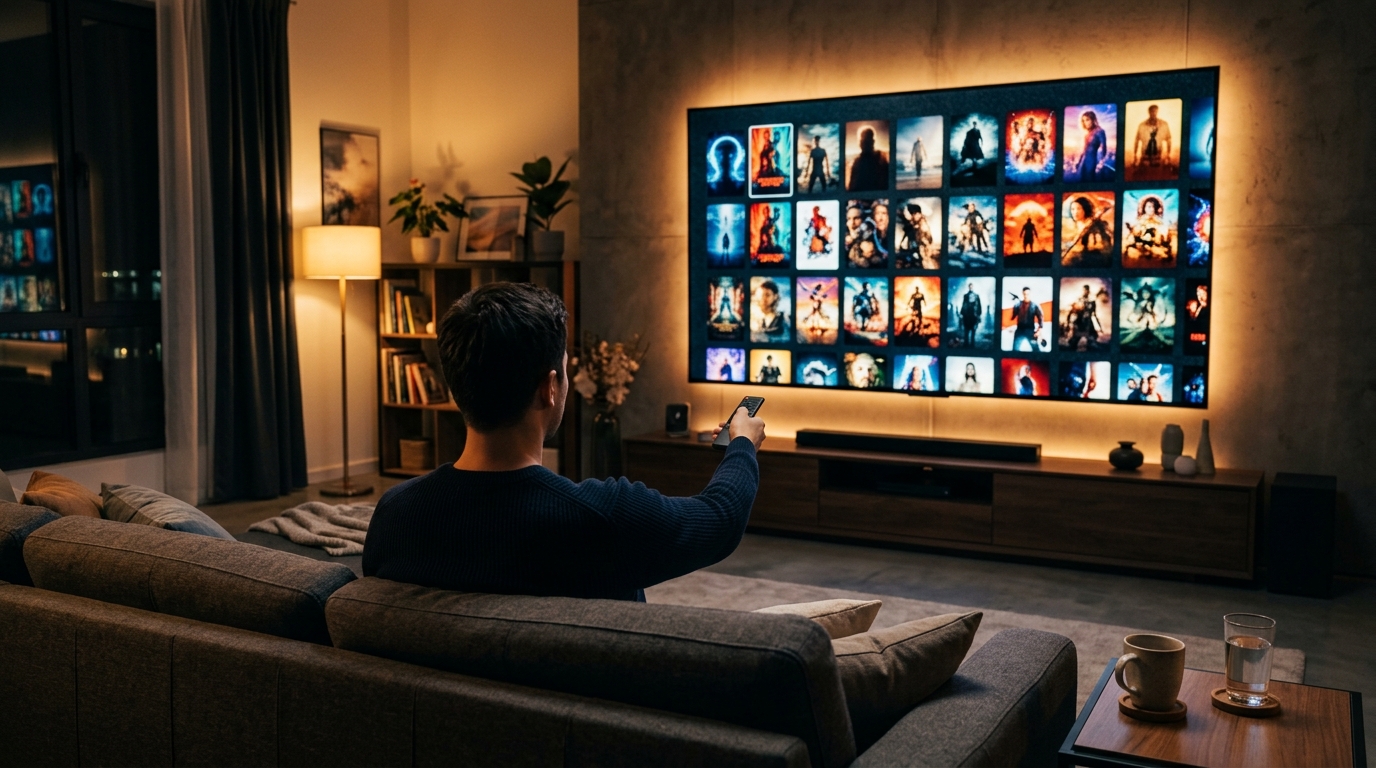
Four streaming services at standard ad-free pricing in 2026 run roughly $70 to $80 a month, or $840 to $960 a year. That is the number most people never add up, and the subscription fee is only part of what those services cost you.
I want to start with the arithmetic: if you're running four streaming services at standard ad-free pricing in 2026, you are very likely spending between $840 and $960 per year on streaming. That's not a rough estimate. That's the math, and I'm going to show you exactly how it works, what's driving it, and why the subscription fee is only part of what those services are actually costing you.
The streaming industry has a strong incentive to keep pricing diffuse and invisible. Monthly billing is specifically designed to feel smaller than it is. $19.99 per month sounds like nothing. $239.88 per year sounds like a decision worth examining. They are the same amount of money.
What does four streaming services actually cost per month?
You can run your own version of this in the streaming cost calculator. Here are the standard ad-free pricing tiers for the major services as of September 2026. These are not promotional rates, not bundle prices, and not ad-supported tier prices.
| Service | Plan | Monthly cost |
|---|---|---|
| Netflix | Standard (ad-free) | ~$19.99 |
| HBO Max | Standard (ad-free) | ~$18.49 |
| Disney+ | No ads | ~$18.99 |
| Hulu | No ads | ~$18.99 |
| Apple TV | (single tier) | ~$14.99 |
| Amazon Prime Video | Standalone, ad-free | ~$13.98 |
| Peacock | Premium Plus | ~$19.99 |
| Paramount+ | Premium (ad-free) | ~$13.99 |
A realistic "four service stack" for someone who wants broad coverage: Netflix for the catalog breadth, HBO Max for the HBO library, Hulu for current-season network TV, and Disney+ for the franchise content. That combination runs $19.99 + $18.49 + $18.99 + $18.99 = $76.46 per month. Annualized: $917.52 per year.
If you swap Hulu out for Amazon Prime Video (which many households pay for anyway, often rationalized as a shipping benefit), the monthly drops to about $71 and the annual figure comes in around $857. Still a meaningful number. If you're running five services rather than four, the annual figure clears $1,000 with almost any combination of the above.
For comparison: the average cinema ticket in the U.S. costs roughly $15. At $917 per year, you could attend roughly 60 cinema visits annually and still spend less than the four-service streaming stack. The average American goes to the movies fewer than five times per year. The streaming bill very likely exceeds what most subscribers spend on cinema tickets by a factor of 10 or more, and very few people have done this calculation explicitly.
The pricing architecture across all of these services follows the same logic: monthly billing, annual pricing buried in the settings, and ad-supported tiers designed to make the ad-free tiers feel like the reasonable default. The services aren't hiding these numbers, but they're not advertising them either. They're just monthly line items on a credit card statement that most subscribers never add up.
What is Netflix's discovery problem specifically?
Netflix has the largest catalog of any major streaming service and the most aggressively algorithmic homepage of any of them. Those two facts are not unrelated. The catalog is so large that without aggressive curation, users would face an impossible volume of options. Netflix's solution is to show you a small, heavily curated slice of the catalog at any given moment, weighted toward content Netflix has a financial incentive to surface: its own original productions.
The "97% match" badge, which Netflix has shown prominently next to titles for years, has been widely criticized as a dark pattern. Netflix has never disclosed the methodology behind the match percentage, which means it's not independently verifiable. What is verifiable is that the homepage surfaces Netflix Originals at a much higher rate than their proportion of the catalog would suggest, and that licensed library titles, including many films with genuine critical acclaim and strong viewer satisfaction signals, are effectively buried several layers into the interface.
Netflix's own internal research, reported on extensively in the press, showed that users who don't find something to watch within 60 to 90 seconds are significantly more likely to cancel their subscription. The entire homepage architecture is optimized to get a click within that window. Getting a click and helping you find the best film for you tonight are related goals in the short term and divergent goals over time. A click that leads to 20 minutes of watching before you give up and do something else keeps you subscribed that month. A film you loved keeps you subscribed for years. The algorithm, as built, is optimizing for the former.
The practical consequence for subscribers is that Netflix's catalog, which genuinely contains thousands of films worth watching, is functionally inaccessible without deliberate search. The homepage doesn't show you most of it. The browse interface is organized primarily by genre and trending, both of which privilege popular and recent content. The titles that would genuinely be the best match for a specific viewer on a specific night are frequently several pages deep in categories most subscribers never navigate to.
What does HBO Max do differently, and where does it fall short?
HBO Max has a structural advantage over every other major streaming service: the HBO library. The ratio of great films and series to total titles is higher on HBO Max than on any other major platform, which means that even an imperfect discovery experience tends to land you on something worth watching more often than the same experience would on Netflix or Hulu. HBO's programming history is genuinely exceptional, and that quality baseline is built into the HBO Max catalog by default.
The discovery UX, however, has gotten worse through each of the platform's rebrands, not better. The HBO Max to Max rebrand in 2023, reversed in 2025, introduced catalog organization that many subscribers found more confusing than what it replaced. The search function is inconsistent: it surfaces some titles and not others, and the catalog labeling between "HBO Max Originals," "HBO," and licensed content is opaque enough that most users don't have a reliable mental model of what the platform actually contains.
HBO Max's recommendation system weights its own original productions just as aggressively as Netflix weights Netflix Originals. This is a rational business decision and a poor discovery outcome. The HBO library contains some of the best television ever made, and subscribers often don't know it's there because the interface is built to surface current HBO Max Originals rather than the library content that represents the strongest reason to subscribe in the first place.
The net effect: HBO Max is the service where a subscriber willing to search deliberately gets the most value per dollar, and the service where a subscriber who relies entirely on the homepage recommendation engine is most likely to miss what makes the platform worth paying for.
What is the Disney+ bundle trade-off?
Disney+ is the clearest case of a service where the discovery problem is lower because the scope of the catalog is narrower and more legible. If you want Marvel content, Star Wars content, Pixar films, Disney animation, or National Geographic documentaries, the Disney+ catalog is organized in a way that makes finding those things reasonably straightforward. The scope is defined enough that you can navigate it without significant friction.
The problem is value proposition, not discovery. Disney+ is worth its monthly cost if you have consistent demand for franchise content or if you have children who watch Disney and Pixar regularly. If neither of those conditions applies, the cost-per-hour of actual use is likely high. The catalog, while extensive within its defined scope, doesn't have the breadth to function as a primary entertainment service for a subscriber whose interests extend beyond the Disney, Marvel, and Star Wars franchises.
The Hulu bundle adds breadth, but it also adds cost and adds the Hulu discovery problem on top of the Disney+ one. The Disney bundle pricing is structured to make the bundle feel like a better deal than the individual services, which is true in a narrow sense but doesn't address the underlying question of whether you actually need both services. Many subscribers end up paying for the bundle because the per-item comparison makes it look attractive, without stopping to calculate whether they're actually using both services enough to justify the combined cost.
What are the hidden costs beyond the subscription fee?
The subscription price captures the financial cost of streaming, but it doesn't capture the full cost. Three additional costs are worth naming explicitly.
Time cost. Nielsen's 2025 Gracenote report puts the average time US viewers spend finding something to watch at 12 minutes. A viewer watching four evenings per week and spending 12 minutes each time loses 48 minutes per week to that decision. Over a year, that's about 42 hours spent not watching anything, just deciding. That's more than a full workweek, and roughly the runtime of 20 feature films. The time cost of the decision problem is real and it compounds across multiple services, because each additional service adds another interface to cycle through and another set of options to evaluate.
Opportunity cost. Every session that ends in a compromised choice, where you settled for something you were adequately interested in rather than something you were genuinely excited about, is a session where you paid the full subscription cost but got partial value. This is harder to quantify than the time cost, but it accumulates in a way that's genuinely measurable in viewer satisfaction. Subscribers who regularly find content they genuinely love report higher satisfaction with their streaming spend even when the dollar figure is identical to subscribers who routinely settle. The difference is almost entirely a function of whether the discovery process produced a good outcome.
Subscription lock-in cost. Streaming services are designed to make cancellation harder than it should be. The settings for canceling a subscription are typically buried two to four clicks deep in account menus that are not prominently linked from the main interface. Ad-supported tiers, which are genuinely fine for many viewing patterns, are positioned in the interface as the obviously inferior choice, which nudges subscribers toward ad-free tiers that cost more. Password-sharing restrictions introduced across most major platforms between 2023 and 2025 pushed millions of subscribers from shared accounts into individual paid accounts, increasing the industry's total subscription revenue while providing those subscribers with no additional value. These are intentional design and policy decisions, not UX oversights. The services are optimized for subscriber retention, which means they're optimized to make leaving harder than arriving.
The real cost of streaming isn't the monthly fee. It's the monthly fee plus the hours you spend not watching anything good.
What's the alternative to paying for four services and scrolling all of them?
Two approaches work, and they're not mutually exclusive.
The first is being deliberate about which services you keep versus which you rotate. The rotation strategy, treating streaming services as something you subscribe to for a specific season rather than as permanent fixtures in your monthly budget, dramatically changes the economics. Subscribe to HBO Max for three months when you have a specific series to watch and a backlog of HBO films you've been meaning to get to. Cancel, then pick up Apple TV for two months for a specific reason. This approach requires more intentionality than the default of just keeping everything active, but it typically cuts annual streaming spend by 30 to 50 percent without meaningfully reducing the amount of good content available to you.
The second approach is the one I built Limelight around: use a platform-agnostic discovery tool to decide what you want to watch before you open any streaming app. The discovery problem, the 12-minute average decision time, the compromised choices, the buried library content: all of it is a consequence of trying to decide what to watch inside the streaming interface. The streaming interface is built to serve the platform's interests. The decision about what you want to watch is yours, and it's worth making that decision with a tool that's actually built around your preferences rather than the platform's content priorities.
Limelight lets you search for and save films and shows based on mood, genre, director, cast, and other criteria, then check where everything is streaming. You arrive at Netflix or HBO Max or wherever knowing what you want to watch. The decision is already made. The 12-minute scroll becomes a 60-second search. The compromised choice becomes a film you actually wanted to see.
Know what you want before you open Netflix
Limelight lets you build your watchlist across all platforms so you arrive at any streaming app knowing exactly what you want to watch.

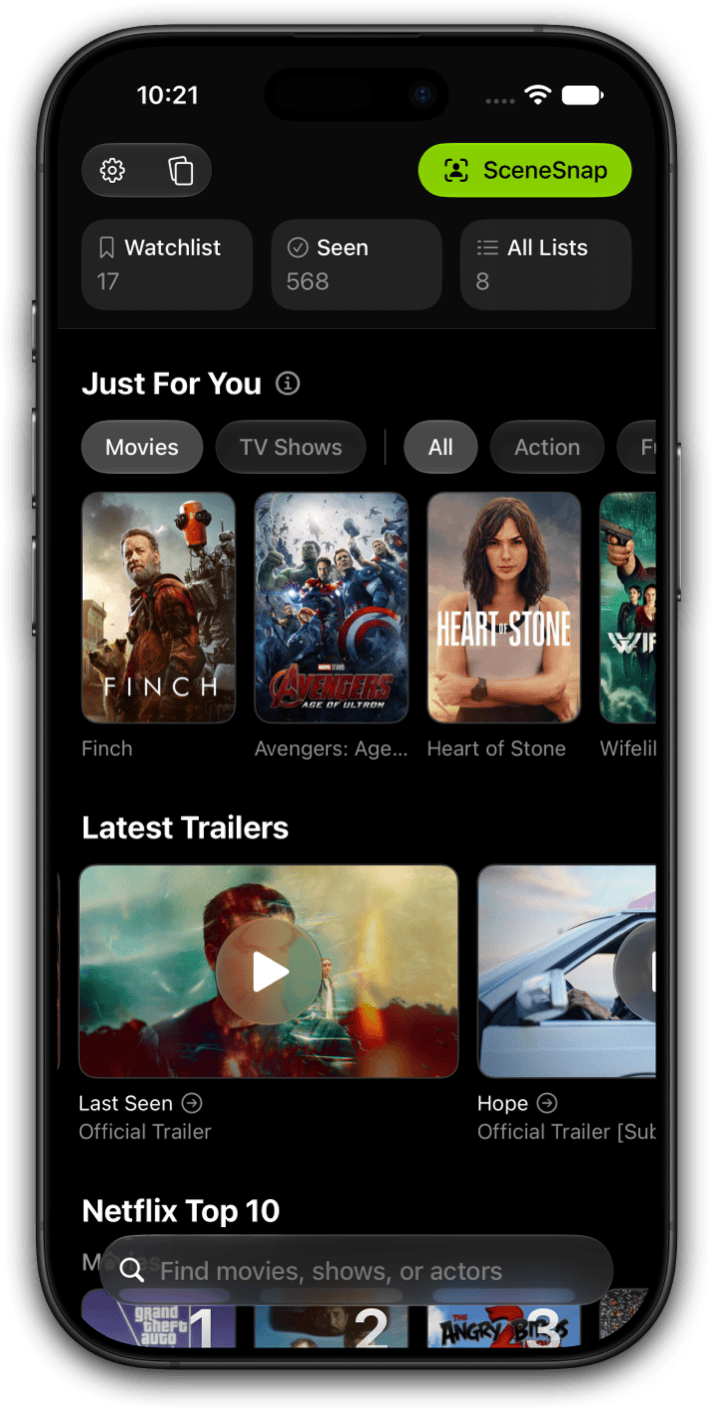
The rotation strategy and the platform-agnostic discovery strategy work best together. When you know what you want to watch, you can evaluate each service against a specific list rather than against a vague sense of whether you're "getting your money's worth." That specific list makes the rotation decision obvious. If your Limelight watchlist has 12 titles on Hulu and two on HBO Max this month, that's useful information when deciding whether to keep both subscriptions active.
Two guides pick up where the arithmetic stops: the cost-per-hour audit for deciding what to cancel, and why streaming recommendation algorithms fail you for the part of the bill you pay in time. If you are rebuilding the stack from scratch, the which-streaming-service quiz narrows it to the one service that fits what you watch.
The streaming industry's total subscription revenue has grown substantially over the past five years. That growth has come from a combination of new subscribers, price increases, and the conversion of shared accounts to paid individual accounts. What hasn't grown proportionally is viewer satisfaction or the discoverability of the content subscribers are paying for. The catalog size has increased. The catalog accessibility, the ability of a subscriber to consistently find something they genuinely want to watch, has not kept pace. That gap is where most of the hidden cost lives, and it's where the most value is left on the table by subscribers who stay with the default experience of opening an app and hoping the homepage surfaces something good.
Stop paying for confusion
Limelight is the cross-platform layer that makes every streaming service more useful. Build your watchlist once, check availability everywhere. Free.
Frequently asked questions
Estimates vary by source and year, but research from 2024 and 2025 consistently puts the average American household streaming spend at $45 to $60 per month across all active subscriptions. That figure accounts for households with fewer services pulling the average down. If you're running four services at standard ad-free pricing, you're very likely above that average, in the $70 to $80 range per month, and likely paying more than you realize when you account for price increases that rolled out across most major platforms between 2023 and 2025.
None of the major streaming services has a genuinely good discovery experience, because all of them optimize their discovery UX for business goals rather than viewer satisfaction. That said, Apple TV has the narrowest catalog, which makes it the easiest to navigate simply because there's less to sort through. HBO Max has the strongest quality-per-title of any major service, so even an imperfect discovery experience gets you to a good result more often. Netflix has the worst ratio of catalog size to discoverability: the catalog is enormous and the homepage buries most of it. The real answer is that the best discovery experience comes from deciding what you want to watch before you open any streaming app.
It depends on how much you use the service, but the math usually favors ad-free if you watch more than two or three hours per week on a given platform. A typical ad-supported tier runs four to five minutes of ads per hour of content. At three hours of weekly viewing, that's roughly 12-15 minutes of ads per week, or around 10-13 hours of ads per year per service. At the typical $5 to $11 per month premium for ad-free, you're paying about $60 to $130 per year to buy back those hours. Whether that trade is worth it is a personal calculation, but the hours are real and the ad experience on most platforms is deliberately unpleasant in a way that increases the subjective cost of watching.
The most useful audit method is to look at your viewing history over the last 90 days and calculate how many hours you actually watched on each platform, then divide the monthly cost by those hours to get a cost-per-hour figure. A service you watched for 40 hours at $16 per month is costing you $0.40 per hour, which is excellent value. A service you watched for 3 hours at $14 per month is costing you $4.67 per hour, which is cinema-ticket territory. Most people are surprised by how uneven this distribution is when they actually run the numbers. The services with the highest cost-per-hour are candidates for cancellation or rotation.
More services means more confusion at the point of deciding what to watch, in measurable ways. Research on decision fatigue shows that larger choice sets increase the time required to make a decision and reduce satisfaction with the decision made. In streaming terms, more services means more homescreens to cycle through, more interfaces to learn, and more options surfaced in more places with no consistent quality signal across all of them. The result is that many subscribers with four or five services spend more time deciding what to watch than they would with two services and a clear watchlist. Access to more content doesn't automatically translate to watching better content or enjoying the experience of choosing what to watch.