When you're tired, watch one of four kinds of film: a comfort rewatch you already know, something visually beautiful with a light plot, a funny film that works as background, or anything short enough to finish. Save the demanding ones for a night you can meet them.
At some point, watching films becomes a skill. You learn to read the room, including the room inside your own head. A friend told me once that watching a great film tired is worse than not watching it at all, because you're substituting a bad experience for the real one you haven't had yet.
I think about that whenever I catch myself about to put on Tár or Parasite at 10:30 on a Wednesday. Those films don't deserve 60 percent of my attention. More practically, I won't enjoy them properly, and I'll think I have, which is a stranger kind of failure than just not watching.
The four modes overlap with the psychology of comfort movies, and with the case for films under 90 minutes when finishing is the whole goal. If you would rather answer six questions than read a list, the what to watch quiz matches your mood and the time you have. What follows is a guide organized around four viewing modes, each of them a legitimate way to spend a tired evening. Plus the Never Watch Tired list, which is the half of this guide that will save you the most grief over time.
Which films work as comfort rewatches when you have no mental bandwidth?
Comfort rewatches work because you already know everything that happens. Your brain doesn't need to build a mental model of the characters, track a developing plot, or store new information about the world of the film. You're watching something that's already been partially processed, which frees up enough attention to enjoy it without effort. The criterion isn't quality alone. It's "do I know this well enough that drifting for five minutes loses me nothing?"
- The Princess Bride (1987, 98 min). You know every line. The film practically watches itself. Designed for repeat viewing in ways that were not accidental.
- Paddington 2 (2017, 103 min). Consistently cited as one of the warmest films ever made, and the warmth does not require effort to receive. No emotional labor required on your part.
- Jurassic Park (1993, 127 min). A bit long for a tired night on first viewing, but on a rewatch, the spectacle is familiar enough that you coast through the middle act without losing anything.
- The Grand Budapest Hotel (2014, 99 min). Wes Anderson's most accessible film, structured almost like a music box. Beautiful to look at and pleasant to absorb even when your attention drifts.
- Clueless (1995, 97 min). Sharper than it appears on the surface. Breezy, fast-paced, and satisfying without requiring anything from you in return.
- Ferris Bueller's Day Off (1986, 103 min). Pure forward momentum. No complicated subtext, no emotional weight. A film that's happy to entertain you without demanding reciprocation.
- Ratatouille (2007, 111 min). Pixar's most visually sumptuous film. The kitchen sequences alone justify watching it at any level of tiredness.
- Home Alone (1990, 103 min). The benchmark comfort film. You've seen it. You could sleep through the middle third and not miss a single emotional beat.
What should you watch when you want visual beauty but can't follow a complex plot?
Visual beauty with light plot is the category for nights when you want the experience of watching something without the cognitive overhead of processing it. The criterion: stunning to look at, story you can follow even half-asleep, nothing that requires your full attention to appreciate. These films let your eyes enjoy what your brain can't quite handle.
- Planet Earth II (any episode, approximately 50 min). No plot at all. David Attenborough narrates and the world is beautiful. Possibly the purest form of television ever made.
- Baraka (1992, 96 min). No dialogue. The entire film is visual and musical. Closer to a long meditation than a narrative, which is exactly the point on a tired night.
- Amélie (2001, 122 min). The visual invention is relentless and warm rather than demanding. The story is simple enough that drifting for five minutes doesn't lose you anywhere important.
- The Secret Life of Walter Mitty (2013, 114 min). The location cinematography is genuinely impressive. The story is thin, which is a compliment in this context.
- Midnight in Paris (2011, 94 min). Beautiful streets, a light comic premise, nothing that taxes you. Under 95 minutes.
- Spirited Away (2001, 125 min). Miyazaki's visual imagination is bottomless. If you drift and snap back, you'll return to something beautiful every time.
- Moonrise Kingdom (2012, 94 min). Anderson's warmest film. Visually dense without being confusing.
- Portrait of a Lady on Fire (2019, 122 min). Quieter than the others on this list. Works tired because its pacing is slow and intentional rather than demanding, and every frame is worth looking at.
What are the best films for funny background noise when you're half-asleep?
Funny background noise serves a specific function: consistent amusement at a low cognitive cost, with enough forward momentum that you don't feel guilty for not paying full attention. The test for this category: if you miss 10 minutes, can you pick up the thread without rewinding? If yes, it qualifies.
- What We Do in the Shadows (2014, 86 min). The mockumentary format means every scene is essentially self-contained. Perfect for in-and-out attention.
- Knives Out (2019, 130 min). Funnier than its reputation suggests. The central mystery is clear enough that drifting for 10 minutes doesn't strand you.
- Hot Fuzz (2007, 121 min). Edgar Wright's most rewatchable film. The jokes work even when you're not tracking the mystery underneath them.
- Game Night (2018, 100 min). A simple premise executed competently. Good company for tired nights without asking anything of you.
- Clue (1985, 94 min). Campy chaos that rewards attention without requiring it. You can lose the plot entirely and still enjoy the performances.
- The Nice Guys (2016, 116 min). Ryan Gosling and Russell Crowe are magnetic in a way that doesn't need full comprehension to appreciate.
- Murder Mystery (2019, 97 min). Exactly calibrated for low-engagement viewing. Not a film you'd recommend enthusiastically to someone wide awake, but exactly the right film at 10 p.m. on a Thursday.
- Step Brothers (2008, 98 min). Pure stupid fun. Not asking anything of you and delivering exactly what it promises.
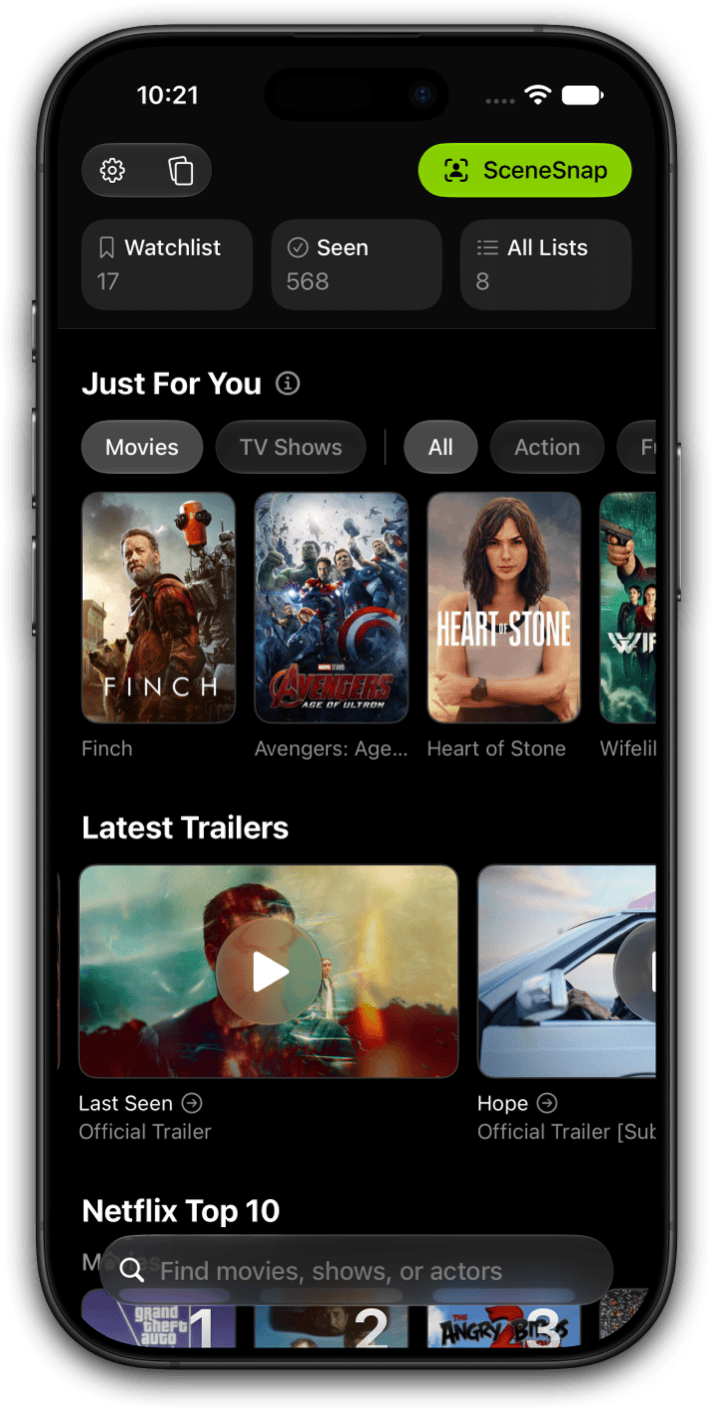
Build a tired-night list in Limelight before you need it
Create a custom list with your favorites from this guide. On tired nights, QuickSort filters it down to what's streaming on the services you already pay for. Both are Limelight+ features.

What films are short enough to actually finish on a tired night?
Short + Complete is for the nights when you can only promise yourself you'll watch something under 110 minutes, and you want a clean, satisfying ending rather than a cliffhanger or an ambiguous conclusion that requires more energy to sit with. You will finish these films. You will feel good about having watched something whole.
- Locke (2013, 85 min). One actor, one car, one phone call, one night. 85 minutes and completely self-contained. Unexpectedly compelling even at low energy.
- Hunt for the Wilderpeople (2016, 101 min). Short, funny, heartwarming, set in the New Zealand bush. Ends on a high. The ideal under-110 pick.
- Swiss Army Man (2016, 95 min). Very weird and very short. You'll finish it, and you'll have something to think about the next morning.
- The Truman Show (1998, 103 min). A complete idea in 103 minutes. You always know where you are in the story, which is exactly what tired brains need.
- Weekend (2011, 97 min). Quiet, contained, and completely satisfying. One of those films that feels longer than it is in the best way.
- Ponyo (2008, 101 min). Miyazaki for children, genuinely lovely for adults. 101 minutes and ends joyfully.
- Sing Street (2016, 106 min). A coming-of-age musical set in 1980s Dublin that ends on a note of pure optimism. 106 minutes.
- Big Fish (2003, 125 min). Slightly over the 110-minute threshold, but Tim Burton's warmest film and one of the better films about storytelling ever made. Ends gently. Worth the extra time.
Which films should you never watch when you're tired?
This is the most important part of the guide. These films are off the tired-night list for being good, and good films deserve your full attention. Watching them at 40 percent doesn't give you a diminished version of the experience; it gives you a different and lesser experience that you'll mistake for the real one.
Save these for when you're fully awake
- Parasite (2019). Subtitles plus a dense, twist-dependent plot plus tonal shifts that require active attention. Watching it tired means missing half the craft and ruining the turns.
- Oppenheimer (2023). Three hours of dense historical drama with nonlinear structure. Not a tired-night film under any circumstances.
- Tár (2022). A slow burn that reveals itself in fragments across 158 minutes. Half-asleep means watching a completely different film from the one Cate Blanchett is in.
- Hereditary (2018). Will not help you sleep. May prevent sleep afterward.
- 2001: A Space Odyssey (1968). One of the greatest films ever made and one of the most demanding. The HAL sequence lands completely differently when you're fully present.
- Mulholland Drive (2001). Challenging when fully awake, incomprehensible tired.
- The Godfather (1972). Three hours and every scene matters. Deserves better than your tired eyes. Reschedule it.
- Succession (any episode). Too much layered dialogue and subtext to track at partial attention. The show's best moments require you to catch what's not being said.
- Dunkirk (2017). Three parallel timelines running at different speeds, with intense sound design as a structural element. Tired brains lose the structure within 20 minutes.
The test for this list: if you've seen the film before and it's already a genuine comfort rewatch for you, it probably doesn't belong here. Familiarity changes the cognitive load. These are films you're still experiencing for the first time, or films that require full engagement even on a rewatch.
Watching a great film tired is not experiencing it. It's replacing the real experience with a worse one you'll remember instead.
How do I build a tired-night watchlist before I need it?
This is where a watchlist with separate buckets earns its keep. The worst time to build a tired-night list is at 10:30 p.m. when you're already too tired to make good decisions. The right time is now, when you can think clearly about which films from each category you actually want to watch and which ones are currently streaming on the services you pay for.
In Limelight, create a custom list, something like "Low-Key Night," and populate it from the categories above. When you sit down tired, open that list and use QuickSort to filter it by what's currently streaming on your services. The combination turns a potential 20-minute decision loop into a two-minute one. You'll watch something you actually wanted to watch instead of defaulting to the same three episodes of a comfort show you've seen 12 times.
One practical rule I've landed on: on a weeknight after 10 p.m., nothing over 110 minutes unless I've already seen it. That single constraint eliminates most of the films on the Never Watch Tired list by default, and keeps the decision fast when I'm least equipped to make one.
Stop defaulting to the same three episodes when you're tired
Build a tired-night custom list in Limelight before you need it. With Limelight+, QuickSort shows you what's streaming on the services you already pay for. No ads.
Frequently asked questions
Yes, without qualification. Rewatching something familiar is a legitimate viewing choice, not a failure to engage with new films. There's real cognitive value in revisiting something you already know, and tired nights are exactly the right context for it. Your brain processes familiar content differently and with less effort, which is the whole point.
Add it to your watchlist and try again when you're rested. Don't try to reconstruct what you missed from the final 20 minutes. Films that require narrative continuity deserve a fresh start from the beginning, not a half-remembered first viewing you'll always associate with falling asleep on the couch.
Yes. Comfort rewatch shows include Parks and Recreation (any middle season), The Great British Bake Off, and Ted Lasso. Visual beauty television includes Our Planet and any Attenborough documentary. For Short + Complete, miniseries under six episodes work well: Colin from Accounts, Fleabag's second season, and Somebody Somewhere all fit the format.
Light plot means the story doesn't depend on you tracking character histories, maintaining emotional investment in complex dynamics, or following twists that reframe what came before. If a trailer spends more time on premise than on character backstory, the film is usually light-plot. Romantic comedies, gentle dramas, and films where the visual or comedic experience is the point rather than the narrative generally qualify.
In Limelight, create a custom list (available in Limelight+) called something like "Low-Key Night" and populate it with films from this guide. When you sit down tired and undecided, open that list and use QuickSort to filter by what's streaming on the services you already pay for. You'll be watching something in under two minutes.