Nielsen's 2025 Gracenote State of Play report found that 51% of US streaming viewers say it's getting harder to find content they want to watch, and 49% say they'd be willing to cancel a service because of it. That's a majority of viewers describing a product getting worse at its most basic job: helping them decide what to watch.
There's a complaint I hear constantly from people who pay for multiple streaming services: they can't find anything to watch. I hear it from friends, I read it in comments sections, and I see it in the product reviews for every major streaming app. For a while I assumed it was the kind of ambient dissatisfaction that comes with any subscription product. Then I looked at the data, and the complaint turns out to be substantially accurate.
The same report puts a number on the consequence: 49% of viewers say they'd be willing to cancel a service because it's hard to find something to watch. Discovery is not a cosmetic complaint for these companies. It's a churn risk.
The rest of this article is an attempt to work through what the data actually shows, why the problem exists structurally, and what the implications are for viewers who are frustrated enough to want a different approach.
Why does finding something to watch feel harder than it used to?
Start with the Nielsen number: 51% of streamers say it's harder to find content than two years ago. This isn't a minority complaint from a vocal subset of power users. It's the majority response from people who are actively paying for and using these services. The finding is significant precisely because it comes from a period in which streaming catalogs have continued to grow, recommendation algorithms have been refined, and UI teams have had years of A/B testing data to work with. More investment in the product. Worse user experience. That's the paradox the data describes.
The intuitive explanation is the paradox of choice: more options makes decision-making harder. There's research supporting this, and it's part of the story. But the more important structural explanation is that the algorithm has gotten better at serving the platform's interests, not the viewer's. These two things are often treated as identical. They're not.
A recommendation system trained on subscriber retention and watch-through rate learns to surface content that keeps people from canceling. Content that keeps people from canceling is not necessarily content they'll love. It's content that's familiar enough to be low-risk, prominent enough to have social proof, and recent enough to feel current. This is a reasonable set of constraints for a churn-reduction tool. It is a poor set of constraints for a discovery tool.
The result is a homescreen that loops through the same categories with minor variation: trending now, because you watched, new releases, critically acclaimed. The algorithm has more data than it ever has and is using that data to surface a narrower effective range of content than it did five years ago. That's not a paradox. It's what optimizing for the wrong objective looks like at scale. The full mechanics are set out in the breakdown of why streaming recommendation algorithms fail you.
How many people would cancel a streaming service because they can't find anything?
49%. Nearly half of streaming viewers say they'd be willing to cancel a service because it's hard to find something to watch. It's the most striking data point in the research on the discovery problem, because it attaches a financial consequence to what could otherwise be dismissed as a UI complaint.
The framing matters here. These aren't people who canceled because the content library was objectively bad. They're people who canceled because they couldn't navigate to content they would have liked in the time they had. The library failed them at the discovery level, not the content level. There's a meaningful difference. A streaming service can have extraordinary content and still produce this outcome if the discovery layer is broken enough that subscribers can't find their way to it.
Platforms typically respond to churn by adding more content, which is the wrong answer to a discovery problem. More content in a broken discovery environment doesn't help viewers find what they want. It makes the problem worse by adding more items to a catalog that's already too large to navigate efficiently. The 49% figure measures how many viewers are ready to walk away over that failure. If you're wondering whether your current subscriptions are worth what you're paying, the streaming service audit framework has a cost-per-hour method for making that call methodically.
What this means for viewers is that the frustration they feel when they close an app without watching anything isn't a personal failure of decision-making. It's a product failure. The app didn't do its job. The question is what to do instead, which gets to the structural problems in sections below.
How long does the average viewer spend deciding what to watch?
12 minutes. US viewers spend an average of 12 minutes finding something to watch, up from 10.5 minutes in 2023, according to the same report. The figure has climbed as catalogs have grown, and it represents a meaningful portion of any viewing session when you put it in context.
For a 90-minute film, 12 minutes of decision time is more than 10% of the total potential viewing experience. For a 45-minute TV episode, the decision phase approaches 20% of the total time. These aren't trivial numbers. The decision phase isn't a brief friction point before the content starts. It's a substantial and growing chunk of the viewing session, and for a meaningful percentage of sessions it results in no viewing at all.
The 12-minute figure is also an average, which means a large percentage of sessions involve significantly more decision time, or end in abandonment without any content being watched. The viewers who feel like they "spent an hour scrolling and didn't watch anything" aren't exaggerating their experience. They're describing a real outcome that the average obscures. The decision cost of using a streaming service has gotten high enough that it competes with the value of the content itself.
This is worth holding onto when thinking about what better discovery would actually mean. A tool that cuts the decision phase from 12 minutes to 4 or 5 minutes doesn't just save time. It changes the viewing session from a frustrating experience to an efficient one. That shift in how the session feels has compounding effects on how often people open the app and whether they continue to subscribe.
Why do Gen Z viewers trust social media recommendations more than streaming platforms?
54% of Gen Z report getting better movie and TV recommendations from social media than from streaming platform algorithms. This is one of the more damning findings for the platforms, because Gen Z represents both the next generation of subscribers and the generation most likely to shape the habits of younger cohorts behind them. They're already routing around the on-platform discovery experience in favor of external sources, and doing it at majority rates.
The platforms are aware of this. The response has been to add social features, trending content sections, and in some cases TikTok-style vertical video previews to their homescreens. None of these address the underlying reason Gen Z prefers social recommendations, which is structural rather than cosmetic.
A social recommendation carries information that an algorithmic recommendation cannot replicate: whose recommendation it is, what their taste is, why they liked the specific thing they're recommending, and what the response from their community has been. When someone I follow on Letterboxd or TikTok recommends a film, I know their sensibility, their relationship to the genre, and the context in which they're making the recommendation. An algorithmic card on a streaming homescreen has none of that. It's a confidence signal with no content behind it.
TikTok's film and TV discourse, YouTube's essay video culture, and Letterboxd's social layer are, collectively, outperforming multi-billion-dollar recommendation engines not because they have better data, but because they deliver a richer signal. The data the platforms have is more comprehensive. The signal it produces is weaker because it strips out the human context that makes a recommendation useful. Gen Z understood this before the researchers did, and they voted with their attention accordingly.
Is the problem too much content, or something else entirely?
The obvious hypothesis is content volume: more titles means harder discovery, and streaming catalogs are very large. But the data suggests something more specific, and the distinction matters if you want to understand why the problem has gotten worse over time rather than better.
The problem isn't total catalog size. It's the composition of what gets surfaced. Platforms surface what they need viewers to watch, which is different from what any individual viewer is most likely to enjoy. Originals with large committed budgets need to perform to justify the investment. Titles with expiring licenses need to be watched before they leave. Content that performs well on engagement metrics for the platform's demographic targets gets surfaced disproportionately regardless of whether it matches any individual viewer's taste.
The algorithm isn't neutral. It has a business agenda, and that agenda operates through the recommendation layer in ways that are largely invisible to viewers. You see a homescreen that looks personalized. You don't see the business logic that selected which items to personalize around. The result is an experience that feels like it should be serving your interests and routinely doesn't.
This is the structural problem that adding more content doesn't solve. A larger catalog filtered through a biased surfacing mechanism produces the same outcome regardless of how good the underlying content is. The issue is the layer between the content and the viewer, not the content itself. Fixing that layer requires either changing the business incentives of the platforms (which viewers can't do) or bypassing the layer with a different discovery approach (which viewers can do).
What does Limelight do differently?
I built Limelight partly because I was frustrated by exactly what this data describes. I was paying for multiple streaming services, spending more time scrolling than watching, and feeling like the recommendations I was getting were optimized for something other than my actual preferences. That frustration is what drove the initial design decisions, and those decisions are still the core of how the app works.
The central design premise is platform-agnostic discovery: you search for and save films and shows without the platform's business interests filtering what you see. When you open Limelight, nothing is paying for placement. The recommendations aren't weighted by which studio signed a deal with which platform. There's no homescreen designed around keeping you subscribed to a particular service. The filters, runtime, mood, genre, streaming service, exist to serve you, not to route you toward content a platform needs to perform.
The practical result is that the 12-minute decision phase shrinks considerably. You're not scrolling a homescreen built around someone else's priorities. You're filtering a catalog around your own. The difference in how that feels is substantial, and the data above explains why: you're operating with a tool aligned to your interests rather than a tool aligned to the platform's interests.
Discovery without the platform agenda
Limelight surfaces films and shows based on your filters, not the platform's business priorities.

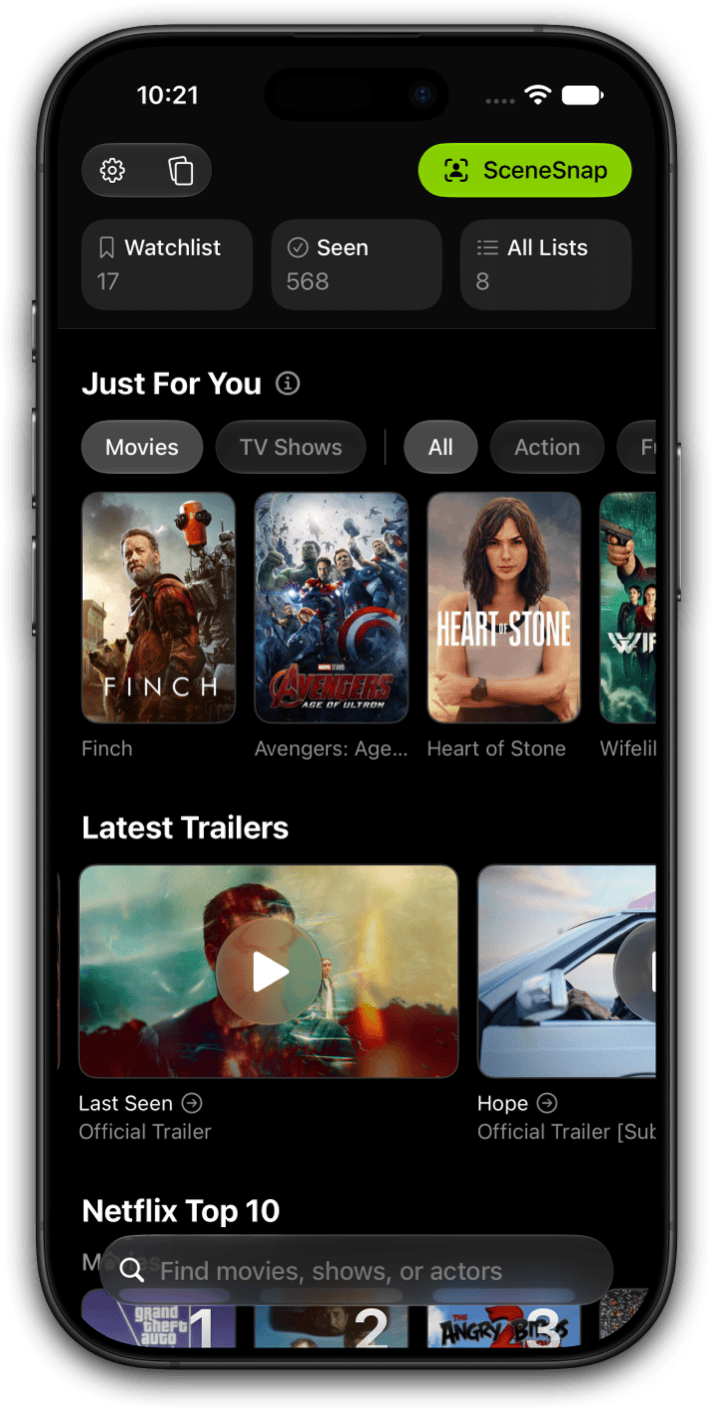
Platforms optimize for what keeps you subscribed. That's not the same thing as what you actually want to watch, and the gap between those two goals is where the discovery problem lives.
The data in this article isn't a collection of abstract industry statistics. It's a description of what paying customers are experiencing every time they open a streaming app and close it without watching anything. 51% say it's gotten harder. 49% say they'd cancel over it. The average US viewer spends 12 minutes finding something before watching anything. These are measurements of a product failure, not of a user failure.
If the numbers describe your own week, the practical follow-ons are what four services actually cost per year and a watchlist system that survives a real month.
The platforms have every incentive to keep you subscribed and no particular incentive to solve the specific version of the problem that costs them revenue only indirectly. The viewer's interest in finding the right film for tonight is genuinely secondary to the platform's interest in preventing cancellation. Understanding that misalignment clearly is the first step to routing around it.
Find what you actually want to watch
Limelight is the platform-agnostic alternative to scrolling a homepage built around someone else's interests. Free.
Frequently asked questions
The 51% figure comes from Nielsen's 2025 streaming report, which surveyed a large sample of active streaming subscribers across major platforms. The report asked whether respondents found it harder or easier to find content they wanted to watch compared to two years prior. 51% reported that the experience had gotten harder, making it a majority finding rather than a marginal complaint. Nielsen is one of the few research bodies with the panel size and methodology to make this kind of claim with statistical credibility.
The short answer is that better AI doesn't mean better outcomes for viewers if the AI is optimizing for the wrong goal. Streaming recommendation systems are trained on signals like watch-through rate, completion rate, and churn reduction. A more powerful AI trained on those signals becomes better at keeping you subscribed, not better at finding you content you'll love. The two objectives overlap sometimes, but they diverge in ways that systematically disadvantage discovery. A film that requires patience, subtitles, or familiarity with a specific cultural context may be exactly what you'd love, but it will underperform on every metric the algorithm is built to optimize.
According to Nielsen's 2025 Gracenote State of Play report, US viewers spend an average of 12 minutes finding something to watch, up from 10.5 minutes in 2023. This figure has grown as catalogs have expanded. The 12-minute average is a meaningful part of any viewing session: for a 90-minute film it's more than 10% of the total time, and for a 45-minute TV episode it's more than 20%. The decision phase is not a minor friction point. It's a substantial chunk of the viewing experience.
54% of Gen Z report getting better movie and TV recommendations from social media than from streaming platform algorithms, according to survey data from multiple generational media studies. The reason is structural: social recommendations carry social proof, personal context, and taste filtering that algorithmic recommendations cannot replicate. When someone you follow on TikTok or Letterboxd recommends a film, you know their taste, their relationship to the genre, and often why the film moved them. An algorithmic recommendation has none of that context. It's a confidence signal without content.
The real answer is no, not in any structurally meaningful way. Every major streaming platform's discovery system faces the same underlying constraint: it optimizes for retention and engagement rather than individual viewer satisfaction at the level of finding the specific film you'd love most. Some platforms have better catalog depth for certain genres (MUBI for arthouse, Criterion Channel for classic and world cinema), but their discovery interfaces share the same limitations. The better approach is to use a platform-agnostic discovery tool alongside your streaming subscriptions, so the discovery layer is separated from the subscription layer entirely.